
Baking a full tray
You want to bake your usual batch of cheese scones in as few rounds as possible, so you’re comparing the usable tray and oven dimensions. Laura's Bakery’s recipe makes eight scones.


Start by checking the space your baking tray and usual batch need, then make sure the oven has the setting specified in your recipe. A freestanding oven could be an option if you don’t have a suitable built-in space. A built-in oven may work if your housing is suitable, while an air fryer is mainly worth considering for smaller batches and a suitable baking tin. Laura's Bakery’s recipe uses 220 °C with conventional top and bottom heat. Don’t use this setting unchanged if you’re using a fan oven.
You want to bake your usual batch of cheese scones in as few rounds as possible, so you’re comparing the usable tray and oven dimensions. Laura's Bakery’s recipe makes eight scones.
You’re looking for a place for a freestanding oven or want to know whether an existing built-in space is suitable. The Consumers’ Association also recommends checking the internal dimensions and whether your bakeware will fit when choosing a built-in oven.
You want to be able to use the specified conventional top and bottom heat, or deliberately switch to a fan setting. To do this, compare the settings on the exact model and check the guidance on adapting a recipe.
Choose this if: you don’t have a suitable built-in space and want to use a baking tray on your worktop.
Consider: your worktop space and the installation instructions will limit your options. The oven’s capacity in litres doesn’t prove that eight scones will fit on the tray.
Choose this if: you have, or are having, a suitable housing installed, and want to use larger trays or cook other dishes too.
Consider: check both the housing dimensions and the usable interior space. The stated capacity alone won’t tell you which bakeware will fit.
Choose this if: you want to combine oven cooking with using a microwave.
Consider: according to the Consumers’ Association, combination microwaves often have fewer oven settings and sometimes no bottom heat. Check the features of the exact model.
Choose this if: you usually bake small batches and your tin or individual scones fit in the basket with enough room for air to circulate.
Consider: a suitable basket or baking tin won’t necessarily give you the tray space of a larger oven, and recipe times and temperatures aren’t directly interchangeable.
First compare the space you need for your batch and the options for positioning the appliance. Then check which oven setting suits your recipe and what else you’ll need alongside the appliance.
| What to consider | What should you check? | Who is this important for? |
|---|---|---|
| Tray space and batch size | Compare the baking tray and usable interior space with the size of your shaped scones, leaving room between them. | If I want to bake a whole batch in as few rounds as possible, I need to know how many will actually fit on the tray. Around 40% of consumers prioritise tray space. |
| Positioning | Measure your worktop or housing and follow the installation instructions for the exact model. | I want to know in advance whether the oven will fit in the space I have, including the required clearance. Around 30% of consumers prioritise positioning. |
| Oven settings | Check whether conventional top and bottom heat are available. If using a fan setting, follow the guidance for the exact model. | If I want to use the oven setting specified in my recipe, I’ll check which settings the oven has. Around 20% of consumers prioritise oven settings. |
| Buying and using the oven | Check which baking tray is included and what installation and maintenance the model requires. | I want to know in advance what else I’ll need and what’s involved in installation and maintenance. Around 10% of consumers focus mainly on their overall buying and usage needs. |
The Consumers’ Association points out that the stated capacity isn’t the same as the usable interior space. Laura's Bakery’s recipe makes eight scones, but that doesn’t mean they’ll all fit on a particular tray with enough room between them.
Check the internal dimensions and the actual size of the included tray before assuming a whole batch will fit in one round.
You may need a test batch to get the settings right for your oven.
A freestanding oven may need clear space around it, while the dimensions of the housing are important for a built-in oven.
Measure the available space and check the installation manual for the exact model before positioning or having the appliance installed.
According to the Dutch Government, your statutory right to a product that is fit for purpose is separate from any additional manufacturer’s warranty or cover you’ve purchased.
Compare the additional terms to see what they actually offer. If a product is faulty, contact the retailer.
According to Tristar’s product information, the OV-3625 is a 28-litre freestanding convection oven supplied with a baking tray.
The TO 2058 is a freestanding baking and toast oven. Severin lists a capacity of 42 litres, a fan setting and four shelf positions.
The HBG7741B1 is an example of a built-in oven in the 60 × 60 cm size.
This selection at Joybuy includes freestanding convection ovens and built-in ovens with fan settings. Compare the baking space, available settings and space needed in your kitchen with your own requirements.
 No image available
A good option if you’re looking for a freestanding convection oven with several shelf positions.
35 L capacity, a four-level oven rack, a thermometer and an LED display. The description says it can be used on a worktop.
 No image available
A good option if you’re looking for a built-in oven with both conventional top and bottom heat and a fan setting.
66 L capacity; temperature range 50–275 °C; timer; top and bottom heat and 3D fan cooking. Follow the supplied manual for installation.
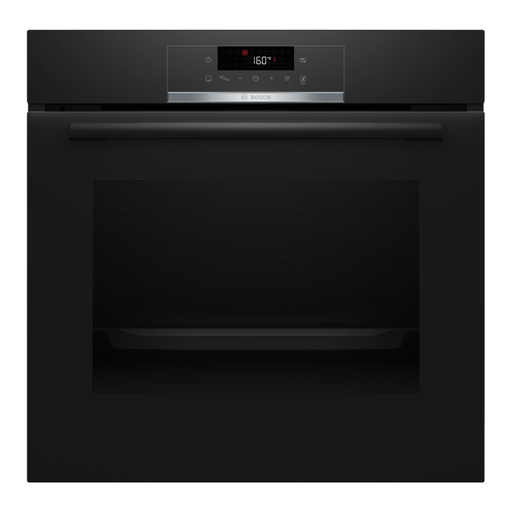 No image available
A good option if you want to choose between conventional top and bottom heat and a fan setting in a built-in oven.
71 L capacity; temperature range 30–275 °C; top and bottom heat and a fan setting. The description lists the included baking trays and racks, and housing dimensions of 59,5 × 56,8 × 55 cm.
 No image available
A good option if you’re looking for a freestanding oven supplied with a baking tray and rack.
The description lists top heat, bottom heat, both together and convection, as well as a 90-minute mechanical timer. According to the product description, leave at least 10 cm of space at the sides and 30 cm above the oven.
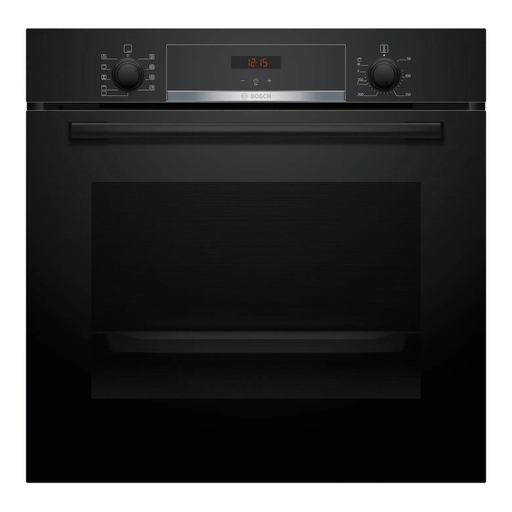 No image available
A good option if you’re looking for a built-in oven with convection cooking and a larger interior.
71 L capacity, seven cooking programmes and a temperature range of 50–275 °C. The description lists convection cooking and a grill function.
Not as an untested, like-for-like conversion: Laura's Bakery’s recipe specifies 220 °C with conventional top and bottom heat. Bosch gives 20 °C lower as a general guide when switching to a fan setting, not as a guaranteed setting for cheese scones. Check the guidance for your oven and keep an eye on how the scones are baking.
Measure the appliance and the available space, and follow the instructions for the exact model. Inventum recommends leaving at least 10 cm of clear space around the freestanding OVCB70S oven and placing it on a sturdy, level surface. This clearance doesn’t automatically apply to other models.
According to Milieu Centraal, you can return an old or broken electrical appliance to a shop free of charge when you buy a new, similar appliance, including when you buy online. You can also take it to a recycling centre.
If a product is faulty in the Netherlands, contact the retailer. According to the Dutch Government, there is no fixed statutory warranty period. What you can expect from a product depends, among other things, on the product itself and the information provided. A manufacturer’s warranty is additional.
For online product purchases, you generally have a statutory cooling-off period of up to 14 days after delivery, subject to legal exceptions. ACM ConsuWijzer explains this period. The right to change your mind is different from a remedy for a faulty product.