
Recipe-focused scone baker
You mainly want to bake using the setting and temperature specified in your chosen recipe. The Arla cheese scone recipe we looked at makes a clear distinction between conventional heat and fan-assisted heat.


Choose an oven with a proper baking function, and check that your baking tin fits and that the settings and temperature match your recipe. The Arla cheese scone recipe we looked at calls for 250 °C with conventional heat or 225 °C with fan-assisted heat; these settings won’t necessarily apply to other recipes. A larger model can be useful for a bigger batch, while a freestanding or combination appliance may suit your kitchen better if you don’t have a suitable built-in space.
You mainly want to bake using the setting and temperature specified in your chosen recipe. The Arla cheese scone recipe we looked at makes a clear distinction between conventional heat and fan-assisted heat.
You want to check that your tin or batch will fit in the oven without being crammed in. Capacity and baking functions vary between the models we looked at.
You may be looking for a freestanding or combination appliance. Consider the space available, ventilation and the actual oven function together.
Choose this if: you have a suitable built-in space and want to bake using a muffin tin or make a larger batch. The Bosch HBA534BS0 we looked at has conventional heat and fan-assisted heat; Bosch lists its temperature range as 50–275 °C.
Bear in mind: the oven must fit the housing and be able to release heat in accordance with the installation instructions.
Choose this if: you don’t want a built-in oven and have a suitable spot with enough space for ventilation. According to Inventum, the OV457B has conventional heat and fan-assisted heat up to 230 °C.
Bear in mind: the space available for your tin and the maximum temperature. According to its product specifications, the Severin TO 2067 reaches a maximum of 230 °C and doesn’t list a fan function.
Choose this if: you also want to use the appliance to reheat food and the model has a suitable oven function. According to Panasonic, the NN-CD88 has a convection setting up to 220 °C.
Bear in mind: 220 °C is lower than the 225 °C fan setting in the Arla recipe we looked at, so check that the setting suits your recipe.
Choose this if: you want to bake small portions and can use a suitable ovenproof tin. Philips describes using muffin cases in its air fryers.
Bear in mind: leave space around the tin for air to circulate, and don’t assume you can use the same batch size, cooking time or temperature as for an oven recipe.
| What to consider | What should you check? | Who is this important for? |
|---|---|---|
| Baking setting and temperature | Check the oven settings and temperature range of the exact model. The Arla recipe we looked at specifies 250 °C with conventional heat or 225 °C with fan-assisted heat. | If I want to follow a recipe exactly, I check that the right oven setting and temperature are available. Around 28% of consumers prioritise having the specified recipe settings. |
| Space for your tin and batch | Measure your baking tin and compare it with the usable interior space and the available baking tray or rack. | For lunch with several guests, I want to know whether my tin and batch will fit without cramming the oven. Around 22% of consumers prioritise having enough space for each batch. |
| Kitchen space and ventilation | For built-in models, compare all the housing dimensions; for freestanding appliances, check the space available and the ventilation instructions. | If my kitchen has limited space, I want to choose a model that fits the area available and can release heat properly. Around 22% of consumers let kitchen fit determine their choice. |
| Combining baking and reheating | Check that the appliance has a separate oven function and that its temperature and baking space suit your recipe. | If I also want to reheat meals, I look for one appliance that can also bake dough. Around 17% of consumers prioritise this combination. |
| Energy use per bake | Compare energy use per bake only on a like-for-like basis, and take the oven space you need into account. | For small batches, I want to weigh energy use against the size of the appliance and the space I need. Around 11% of consumers prioritise energy use per bake. |
The stated capacity alone won’t tell you whether your baking tin will fit or how many scones you can bake at once.
Measure your own tin and compare it with the interior space and the instructions for the appliance you’ve chosen.
If your tin doesn’t fit, you may need another one or have to bake in several batches.
Oven settings and maximum temperatures vary between models. A microwave or grill function isn’t the same as the baking setting required by a recipe.
Compare the exact recipe setting with the specifications for the oven function, rather than relying on the product name alone.
If the settings aren’t suitable, you may need a different recipe or appliance.
A built-in model must fit and be able to release heat in accordance with the instructions.
Measure the housing and check the installation and ventilation instructions for the exact model before buying.
If the housing isn’t the right size, modifications or installation work may be needed.
For anyone with a suitable built-in space, the HBA534BS0 we looked at offers conventional heat and fan-assisted heat.
For anyone looking for a freestanding oven, the OV457B we looked at offers conventional heat and fan-assisted heat.
If you’re looking for a built-in oven with conventional heat and turbo fan-assisted heat, the OM165ZT we looked at is one model worth comparing.
The compact freestanding TO 2067 has switchable top and bottom heat.
For anyone who also wants to reheat food, the NN-CD88 we looked at has a separate convection oven function.
Air fryers may suit small portions and appropriately sized baking tins, but they aren’t automatically a substitute for a full oven tray.
This Joybuy selection includes combination microwaves with a convection function and freestanding mini ovens. Check the setting, temperature and space for your baking tin for each model.
 No image available
An option if you want to use a microwave as well as bake; the product information lists convection as a baking function.
20-litre capacity; the name lists grill and convection functions.
 No image available
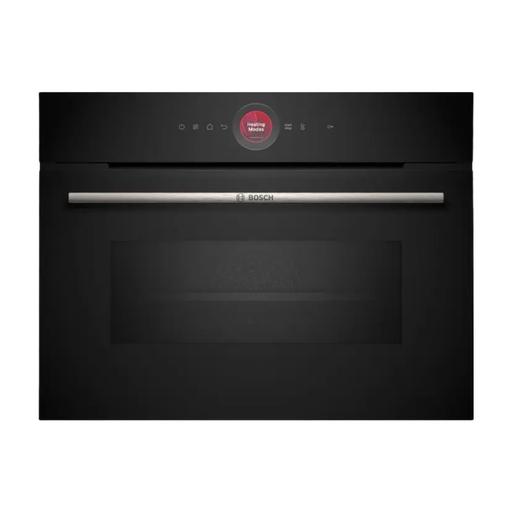
A built-in option if you also want a microwave function; the product information lists convection cooking and a maximum temperature of 230 °C, which is above the 225 °C fan setting in the Arla recipe we looked at.
45-litre capacity; the product name lists a microwave power of 900 W. Check the housing dimensions for your kitchen.
 No image available
A freestanding option if you want to use a baking tin up to 25 cm; the product information lists a fan setting up to 230 °C, suitable for the 225 °C setting in the recipe we looked at.
The product information also lists an included baking tray. Check the ventilation clearance needed when positioning it.
 No image available
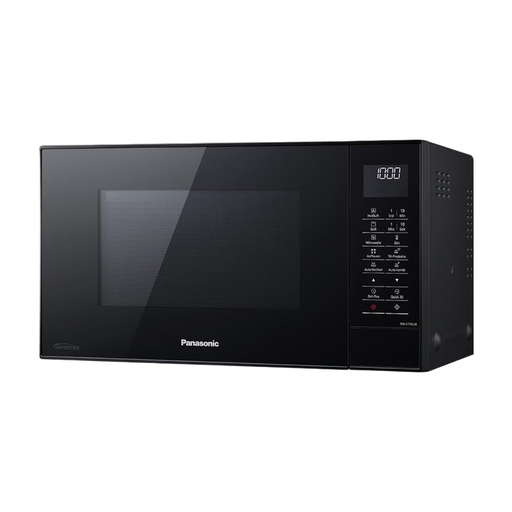
An option if you want to combine baking and microwave use. The product information lists convection, but its maximum temperature of 220 °C is below the 225 °C setting in the Arla recipe we looked at.
27-litre capacity; the product name lists grill, convection and a microwave power of 1000 W.
 No image available
A compact option for small tins; the product information lists top and bottom heat and a maximum temperature of 230 °C. That’s lower than the conventional 250 °C setting in the Arla recipe we looked at.
The product information lists a baking tray up to 20 cm. Check that your tin will fit.
Follow the setting in your own recipe. The Arla recipe we looked at specifies 250 °C with conventional heat or 225 °C with fan-assisted heat, and a baking time of 10–12 minutes in the middle of the oven; these settings apply to that recipe.
For dough, use the oven or fan function on a combination microwave. Consumentenbond distinguishes baking with oven heat from reheating with a microwave and browning with a grill.
For a built-in oven, compare the housing dimensions with those of the exact model and follow the installation manual. For both built-in and freestanding appliances, make sure heat can escape in accordance with the installation instructions; Brandweer Nederland highlights the need for ventilation around ovens.
Clean the appliance according to its manual and compare energy use per bake on a like-for-like basis. Don’t automatically skip preheating if your scone recipe specifically calls for it.
If a product is faulty, contact the seller; the Dutch government states that there is no fixed statutory warranty period in the Netherlands. For eligible distance purchases, there is generally a 14-day cooling-off period. Check the terms that apply to your specific purchase.