
Baking a cake for a shared lunch
You want to bake one cake in time without letting it dry out unnecessarily. The size of your tin, the oven setting and allowing enough time for the cake to cool matter more to you than extra cooking programmes.


First, choose an oven that fits your cake tin with enough room around it and that you can position safely in your kitchen in line with the installation instructions. Conventional top and bottom heat is a good starting point for one cake. A fan setting can circulate the heat, but you’ll need to pay attention to your recipe’s settings and the risk of the cake drying out. A larger model is mainly worthwhile if you also want to use larger tins or cook other dishes.
You want to bake one cake in time without letting it dry out unnecessarily. The size of your tin, the oven setting and allowing enough time for the cake to cool matter more to you than extra cooking programmes.
You’re looking for a freestanding oven that doesn’t need to be built in. Measure both your cake tin and the available space, and follow the guidance for safe positioning.
You want to bake larger cakes or cook other oven dishes as well as a cake for lunch. So you’re comparing a larger freestanding oven with a built-in model, provided you have a suitable space for it.
Best for: limited worktop space, as long as you’ve confirmed that your cake tin fits inside the oven.
The trade-off: the smaller interior may limit your choice of tins and dishes.
Best for: larger tins or other oven use, if you have enough worktop space.
The trade-off: a larger capacity doesn’t automatically resolve doubts about whether your tin will fit; check the internal dimensions.
Best for: a kitchen with a suitable housing unit, especially if you’ll also use the oven for everyday cooking.
The trade-off: check the dimensions of the housing unit and the installation requirements for the exact model.
| What to consider | What should you check? | Who is this most relevant to? |
|---|---|---|
| Oven setting and drying out | Check whether the model has both a fan setting and conventional top and bottom heat. Follow the recipe and the manual, and remember to check whether the cake is cooked through. | I want one cake to cook through without drying out unnecessarily; around 31% of consumers say the baking result is their top priority. |
| Tin size and portions | Measure the width, depth and height of your tin, then compare them with the usable interior space and shelf position. | If my tin needs to fit and I want to make enough cake for lunch, I look beyond the litre capacity; around 31% of consumers put tin size and portions first. |
| Positioning | Compare the external dimensions or, for a built-in model, the housing unit dimensions with the installation and ventilation instructions. | If I don’t have a suitable housing unit, I want to know whether the oven can be positioned safely and practically; around 23% of consumers make positioning their main priority. |
| Timing and controls | Check whether the timer, light and controls suit the way you want to monitor the baking process; allow time for checking the cake and letting it cool, too. | If the cake needs to be ready before lunch, I want to be able to plan the baking and cooling time; around 15% of consumers say convenience when it comes to timing is their top priority. |
Capacity alone doesn’t tell you whether your tin will fit in the oven or whether there’ll be enough room above the cake. The Dutch Consumers’ Association advises checking the internal dimensions.
Measure your cake tin and compare its dimensions with the usable oven space and shelf position before you choose.
If your own tin doesn’t fit, you may need a different one.
A fan setting circulates heat, but it can also make food dry out more quickly. Bosch recommends conventional top and bottom heat for delicate bakes.
Follow your recipe and the model’s manual, and check the cake towards the end of the baking time.
The European Commission excludes small and portable ovens from the stated scope of energy labels for household ovens. The absence of a label does not, by itself, prove a particular level of energy use.
First check the type of oven and whether the rules apply to it. Don’t infer its energy use from the presence or absence of a label alone.
According to the Dutch Government, there is no fixed statutory guarantee period in the Netherlands. If a product is faulty, the retailer is your point of contact.
Check what any manufacturer’s guarantee covers, and keep it separate from your legal rights against the retailer.
Freestanding ovens such as the 45-litre OV457B and 60-litre OV607B are options to compare if you don’t want a built-in model.
According to Tomado, the freestanding TEO4500B has a capacity of 45 litres and several settings.
The freestanding Optimo OF464810 is a compact oven option with a dedicated baking setting.
Built-in ovens such as the HBG7741B1 are worth considering if you have a suitable housing unit and also want to use the oven for other cooking.
This selection includes compact freestanding ovens and built-in ovens with baking settings for anyone looking to bake a cake; check the tin size and positioning requirements for each model.
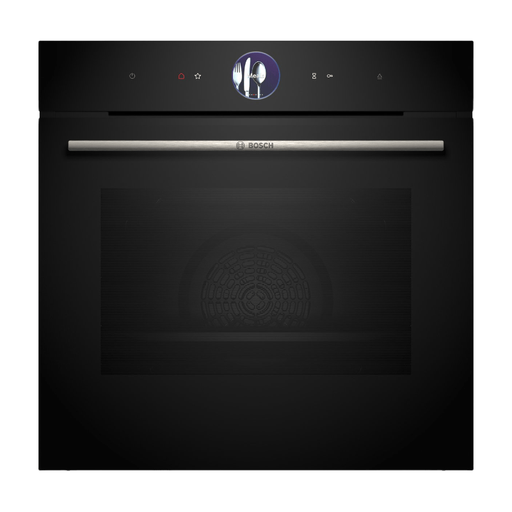 No image available
Best for anyone looking for a built-in oven with a choice of a fan setting and conventional top and bottom heat.
The product details list a 71-litre capacity and both of these heating settings. Follow the installation requirements for the housing unit and ventilation; the description specifies installation by a qualified electrician.
 No image available
Best for anyone looking for a built-in oven with a choice of a fan setting and conventional top and bottom heat.
The product details list a 71-litre capacity and the ability to bake on up to three levels at once. Check the housing unit and follow the model’s installation instructions.
 No image available
Best for anyone who doesn’t want a built-in oven and would like a choice of a fan setting and conventional top and bottom heat.
The product details list a 45-litre capacity and 2000 W. Place the oven on a stable, level, heat-resistant surface in line with the product instructions, and keep the ventilation openings clear.
 No image available
Best for anyone looking for a compact oven and using a round baking tin up to the stated size.
The product details list a 22-litre capacity, baking tins up to 25 cm, and several settings with conventional top and bottom heat and a fan. Follow the guidance on using a level, heat-resistant surface and ensuring sufficient ventilation.
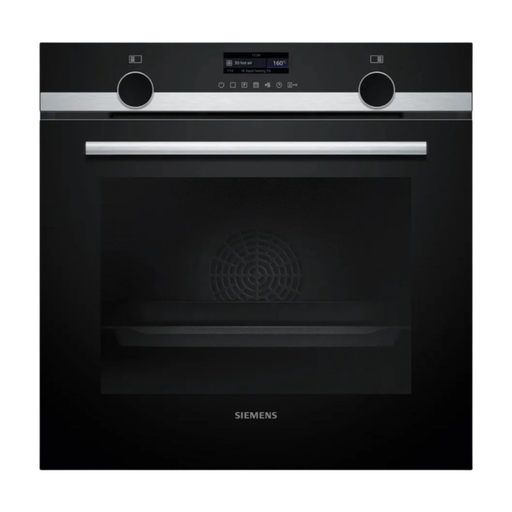 No image available
Best for anyone looking for a built-in oven with both fan heating and conventional top and bottom heat.
The product details list a 71-litre capacity. Check that the housing unit is suitable and follow the model’s installation instructions.
No. Start with the setting and temperature in your recipe, and check your oven’s manual. Bosch recommends conventional top and bottom heat for delicate bakes and warns that a fan setting can dry food out more quickly. Any adjustments to the recipe temperature won’t guarantee a particular result for every cake.
Measure the width, depth and height of your tin, then compare them with the usable internal dimensions and shelf position. The Dutch Consumers’ Association advises checking the internal dimensions; the capacity in litres alone won’t tell you whether your tin will fit.
Towards the end of the baking time, test the cake with a wooden skewer. According to Bosch’s baking instructions, the cake isn’t ready if batter sticks to the skewer. Remember to allow time for it to cool before lunch, too.
No. According to the Dutch Government, there is no fixed statutory guarantee period in the Netherlands. You’re entitled to a product that works as it should, and the retailer is your point of contact if there’s a fault. A manufacturer’s guarantee doesn’t replace these legal rights.
For a plain cake, the Netherlands Nutrition Centre recommends storing it in a kitchen cupboard for up to seven days and wrapping it well to prevent it drying out. For cakes with a perishable filling or topping, check the relevant storage advice separately.