
Baking for several buffet dishes
You want to bake plenty of portions on time and need to know how many of your own oven dishes will actually fit at once.


First, measure your largest oven dish and compare it with the oven’s internal dimensions and shelf space; the capacity in litres alone won’t tell you whether it will fit. A spacious built-in oven may suit several or larger dishes if you have a suitable housing unit, while a freestanding model is an option if you don’t have one, but you’ll need to check the space available. Make separate arrangements for keeping the rice pudding warm or cooling it: the oven’s baking function alone won’t guarantee a safe buffet temperature.
You want to bake plenty of portions on time and need to know how many of your own oven dishes will actually fit at once.
You’re looking for a freestanding oven and can plan to use smaller dishes or bake in successive batches if needed.
As well as baking, you need to arrange how the dish will stay warm while it’s being served. Food safety requirements apply to commercial preparation or sales; the NVWA sets out the rules for businesses that handle food.
Start by measuring your dish and the space where the oven will go, then consider the oven settings and your serving plan. The Consumentenbond distinguishes between an oven’s stated capacity and its usable space, so don’t treat the litre capacity as a substitute for checking the internal dimensions.
| What to consider | What to look for | Who this matters to |
|---|---|---|
| Space for dishes | Measure your largest dish and check the internal dimensions and shelf positions. | If I want to bake several portions at once, my dish needs to fit. Around 36% of consumers say that having room for their planned buffet dishes is their top priority. |
| Baking method and layout | Check the oven settings and whether the manual allows baking with several dishes. | If I’m making rice pudding in several dishes, I want to know which setting and shelf layout will work for my recipe. Around 29% of consumers prioritise a suitable baking method and how the dishes are arranged. |
| Positioning | For a built-in oven, measure the housing unit; for a freestanding model, check its external dimensions and positioning instructions. | If my kitchen has a fixed housing unit or limited space, the oven needs to fit and be positioned according to the instructions. Around 21% of consumers say where the oven will go in the kitchen is their most important consideration. |
| Serving and storage | Plan in advance how you’ll keep the dish warm or cool it quickly and serve it chilled. | If I’m serving the pudding at a buffet after baking, I also want to be able to manage its temperature while it’s being served. Around 14% of consumers say organising serving and storage is their top priority. For commercial preparation, the NVWA advises keeping unpackaged perishable food at 60 °C or above and checking it with a digital probe thermometer. |
The usable space may be smaller than the stated capacity, so your dish might not fit after all.
Measure your existing dish and compare it with the internal dimensions and shelf positions before choosing an oven.
If your dish doesn’t fit, you may need a different one or to bake in additional batches.
A claim that an oven has several shelf levels doesn’t prove your dishes will fit at the same time or that the rice pudding will cook evenly in that layout.
Check the dimensions of your dishes and the instructions for the specific model, and try out your planned method in advance.
Baking in several batches may take extra preparation time.
The oven temperature you set doesn’t automatically tell you the temperature of the pudding while it’s being served.
Plan how you’ll serve it in advance. For commercial preparation, follow the applicable food safety rules and check the temperature of the dish.
You may also need a suitable way to keep the dish warm or cool, and to check its temperature.
Built-in ovens, including the HBA534BB3, for a suitable housing unit and baking on several levels.
Freestanding ovens, such as the OV457B, for anyone who wants to bake without a built-in model.
Compact baking and toaster ovens, including the TO 2058, for smaller dishes or baking in batches.
Built-in ovens, including the Lagan RVS (606.000.56), for anyone considering a spacious oven without fan-assisted cooking.
Built-in ovens with extra features, such as the BP7200B, for anyone who also wants to compare keep-warm settings and pyrolytic cleaning.
This selection includes freestanding ovens and built-in models for anyone looking to match the oven space and layout to their planned buffet dishes.
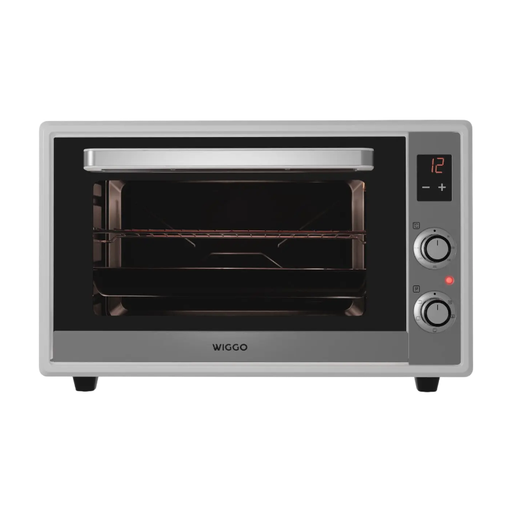 No image available
A freestanding model to consider if you don’t want to use a built-in housing unit; check whether your dishes will fit inside.
65 l; 2000 W. Keep the ventilation openings clear and don’t use the appliance outdoors or in a damp environment.
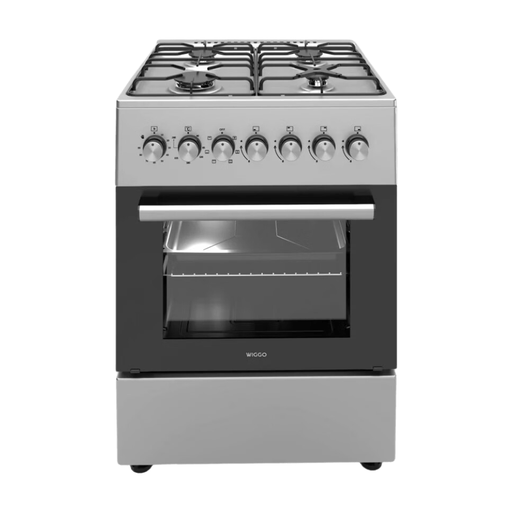 No image available
A freestanding gas oven to consider if you have a suitable space and can arrange for the gas connection to be installed.
60 cm; stainless steel. According to the product information, installation and connection to the gas supply must be carried out by a professional technician.
 No image available
A built-in model to consider if you have a suitable housing unit; check the installation dimensions and whether your dishes will fit.
66 l; black and stainless steel.
 No image available
A built-in model to consider if you want to use several shelf levels and your housing unit and dishes fit.
Bosch lists a 71 l capacity and 3D Hotair on up to three shelf levels. Check the guidance for your recipe and dishes.
 No image available
A more compact freestanding option to consider if a smaller dish or baking in batches suits your plans.
45 litres; electric; 60 cm. Check that the oven cavity is large enough for your dish.
No. Measure your dish and compare it with the internal dimensions and available shelf space; the Consumentenbond distinguishes between stated capacity and usable space.
Don’t assume so. For commercial food preparation, the NVWA advises keeping unpackaged perishable food at 60 °C or above and checking it with a digital probe thermometer. For a private buffet, the Voedingscentrum advises cooling leftovers quickly and not leaving them out of the fridge for more than two hours; this doesn’t replace the rules for commercial food preparation.
The NVWA states that businesses handling food must work in accordance with HACCP or a recognised hygiene code. The word ‘buffet’ alone doesn’t tell you whether the organiser is a business, so first establish whether the food is being prepared or sold commercially.
No, not necessarily. Follow your recipe and the oven manual for the setting you choose. If you want to use several dishes at once, check separately whether the oven and recommended shelf layout allow it.