
Baking large batches
You want to have plenty of biscotti ready before the sale, so you’re looking at how many suitable baking trays you can use at once.


If you need to bake a large batch of biscotti in a short time, having enough usable oven-tray space is important. If you have a suitable built-in housing unit, you can also compare ovens whose specifications say they bake on multiple levels. If you don’t have a built-in space, a freestanding oven is an alternative, but check that its tray is wide enough for your dough logs: a smaller oven may mean extra batches. Rutger Bakt describes cantuccini as biscuits that are baked twice; a convection setting alone doesn’t prove that an oven will bake biscotti evenly.
You want to have plenty of biscotti ready before the sale, so you’re looking at how many suitable baking trays you can use at once.
You’re looking for an oven that can stand in a suitable spot and want to check that its tray has enough room for your portions.
You want to choose a suitable setting and temperature for both baking stages, and check on the biscuits in between.
Start by considering the space available in your kitchen and how much you want to bake in each batch. Then check the tray dimensions and settings that suit your recipe.
| What to consider | What to look for | Who is this important for? |
|---|---|---|
| Capacity per batch | Check the usable internal dimensions, the tray dimensions and how many levels can be used at once. | If I need to bake lots of dough logs and biscuits before the sale, I want to use as many suitable trays as possible per batch; around 36% of consumers say throughput is their top priority. |
| Where it will go in the kitchen | For a built-in oven, check the required housing dimensions; for a freestanding model, measure the available space and follow the positioning instructions. | I want to know in advance whether a built-in oven will fit in the housing or whether a freestanding appliance will work better in the available space; around 29% of consumers choose positioning as their main consideration. |
| Settings for both baking stages | Compare the available oven settings and temperature range with the instructions in your recipe. | If I want to bake the dough logs and then the sliced biscuits, I want to be able to assess the settings for each batch; around 21% of consumers prioritise control over the baking results. |
| Use and service | Compare energy labels only within the relevant category, and check which accessories are included and what warranty terms apply. | I also want to consider ease of use and service after the school sale; around 14% of consumers say these are their main priorities. |
The capacity in litres doesn’t tell you whether the tray is wide enough for your dough logs or how many sliced biscotti will fit on it.
Check the internal dimensions, the size of the supplied baking tray and any additional trays available for the exact model.
A tray that’s too small could mean extra batches or the need to buy an additional compatible tray.
A similar name doesn’t guarantee that capacity, power or baking functions will match.
Before buying, compare the full model code and product specifications, especially for compact ovens.
The appliance dimensions don’t necessarily match the required housing dimensions.
Measure the housing and compare it with the installation details for the exact model before making your choice.
The rules that apply depend in part on who is selling the biscotti and how often they sell them. The NVWA also says that consumers must be able to get information about any allergens present.
Check with the school or organiser, and have the actual ingredients and allergen information available.
A built-in option for larger batches: Bosch lists the HBA514BB3 as having a 71 l capacity and 3D Hotair for up to three shelf levels.
The freestanding OV457B is listed as having a 45 l capacity, several oven settings and a supplied baking tray.
For its OM265RVS built-in oven, ETNA lists a 60 cm housing, a 65 l capacity and multi-level baking.
The manufacturer lists the compact TO 2052 as having a capacity of 9 l and one shelf level.
This selection includes freestanding ovens and built-in models for anyone weighing up kitchen space, baking tray capacity and the oven settings available.
 No image available
For anyone looking for a freestanding oven and planning to bake on multiple levels.
The product description lists a 35 l capacity, a four-tier baking rack, a thermometer and an LED display with time and temperature settings.
 No image available
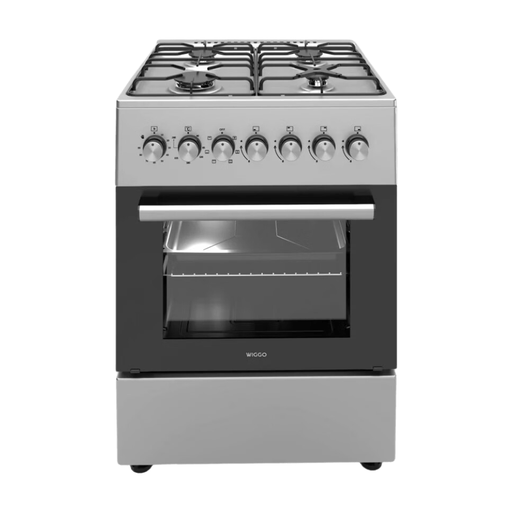
An option if you’re looking for a freestanding appliance with plenty of oven space; check that the tray suits your biscotti portions.
The product description lists an oven capacity of 66 l. It also says that installation and connection to the gas supply must be carried out by a qualified technician.
 No image available
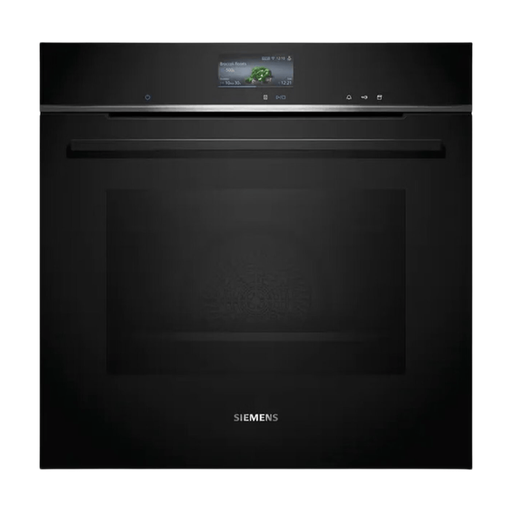
For anyone looking for a built-in oven and comparing models with multiple shelf levels; check that the housing is suitable first.
Bosch lists this model as having a 71 l capacity and 3D Hotair for up to three shelf levels. This model specification isn’t based on an independent test of how it bakes biscotti.
 No image available
A built-in option to compare if you’re looking for a convection oven; check that the housing is suitable.
The product description lists a 60 l capacity, 4D hot-air baking and control via Home Connect.
 No image available
A freestanding oven to compare if you don’t have a built-in space; check the available space and tray dimensions.
The product description lists six functions, including convection, top heat, bottom heat and grill. According to the description, place the appliance on a stable, level, heat-resistant surface.
Not necessarily. First, choose an oven and tray that suit the quantity you want to bake, then check which setting your recipe recommends. Convection baking on multiple levels could be a useful model specification for larger batches, but it doesn’t guarantee the same results for every type of biscotti.
Allow time to bake the dough logs, slice them and bake them a second time. Leave the biscotti to cool as directed by your chosen recipe before putting them in an airtight tin, and have the ingredient information available for the sale.
According to the NVWA, registration isn’t needed if you sell food once a year; for several sales a year, the NVWA says that registration and a food safety plan are required. Check with the school or organiser who the seller is and how often that party sells food.
The NVWA says that consumers must be able to get information about any allergens present. For non-prepacked food, this information can be provided in writing or verbally, before purchase, subject to the conditions set out by the NVWA. Check with the organiser who is selling the food and make a note of the actual ingredients; the cantuccini recipe mentioned contains wheat, egg and almonds, among other ingredients.
Not without first checking which labelling category applies. The European Commission says that small and portable ovens are outside the scope of the relevant labelling rules. For an oven that is covered, the label shows consumption per test cycle, not the energy used for your specific biscotti recipe.