
Baker with a regular cake tin
You want to bake one celebration cake, so the main things to check are whether your tin fits in the usable oven space and which setting you can use.


Choose an oven that your cake tin will actually fit in and that can be installed in the available space according to the installation instructions. Conventional top and bottom heat is a good starting point for baking one cake. A freestanding model may suit you if you don’t have a suitable built-in space, while a built-in oven makes most sense if you can use the housing and extra space or shelf levels. Also compare the connection requirements and energy use per baking session.
You want to bake one celebration cake, so the main things to check are whether your tin fits in the usable oven space and which setting you can use.
You’re looking for a freestanding oven, so you’ll need to consider worktop space, safe positioning and the specified connection requirements.
You may want to bake other things as well as lemon cake, so compare oven space and shelf levels. Having several levels doesn’t automatically mean a better result for one cake.
A good fit if: you don’t have a suitable built-in space and can place the oven somewhere appropriate.
Bear in mind: check the external dimensions, ventilation clearance and usable internal dimensions. The stated capacity in litres doesn’t prove your tin will fit.
A good fit if: you have a suitable housing space and connection, and will also use the oven for larger dishes or more baking.
Bear in mind: measure both the housing space and the usable oven interior. Extra capacity and features aren’t necessarily useful for baking one cake.
A good fit if: you also need a microwave function as well as an oven.
Bear in mind: the category name doesn’t guarantee that the oven settings and usable space are suitable. Consumentenbond describes oven functions as the main feature of a combination oven, and microwave functions as the main feature of a microwave oven.
First measure your cake tin and the space available for the oven. Then compare the oven settings and how else you expect to use it beyond this birthday cake.
| What to consider | What should you check? | Who is this important for? |
|---|---|---|
| Space for the cake tin | Measure the tin and compare it with the usable internal dimensions, allowing for shelves and heating elements. | If I’m using my regular cake tin, I want to be sure it really fits; around 33% of consumers prioritise getting the right fit. |
| Oven setting and timing | Check which settings are available and follow the recipe instructions for the selected oven setting. | If I want to bake the cake in time for the celebration, I’ll consider the recipe setting and the time needed to bake and cool it. Around 25% of consumers prioritise the oven setting and timing. |
| Positioning and connection | Compare the external dimensions and installation instructions with the space available; leave the specified ventilation clearance. | If I don’t have a built-in space or want to use an existing connection, I’ll first check that the oven can be installed there according to the manual. Around 25% of consumers focus mainly on positioning and connection. |
| Energy and maintenance | Where available, compare energy use per baking session on the same basis and check what cleaning the model requires. | If I’ll use the oven regularly after the celebration, I’ll factor in energy use and cleaning as well as the purchase. Around 17% of consumers prioritise running costs and maintenance. |
The usable space may be smaller than the stated oven capacity. So even an oven with enough litres won’t necessarily fit your cake tin.
Measure your cake tin and compare it with the internal dimensions. For a built-in oven, measure the housing space separately too.
If an oven doesn’t fit your tin or housing space, you may need a different tin or an adapted installation.
According to Consumentenbond, these appliance types have different priorities, and oven settings and interior space vary by model.
Compare the specific oven settings and check that your cake tin fits the model you choose.
Milieu Centraal recommends factoring in energy use per use when comparing ovens. A larger appliance isn’t automatically better suited to baking one cake.
For suitable models, compare the stated energy use per baking session on the same basis and weigh it against the space you’ll actually use.
The features listed are product specifications or manufacturer claims for these models, not independent tests of their baking results.
Inventum lists a 45-litre capacity, top and bottom heat, and fan-assisted cooking for the freestanding OV457B.
Princess lists a 45-litre capacity, five heating settings and a timer of up to 60 minutes for the freestanding 112754.
ETNA lists a 77-litre capacity and five shelf positions for the built-in OM316MZ oven.
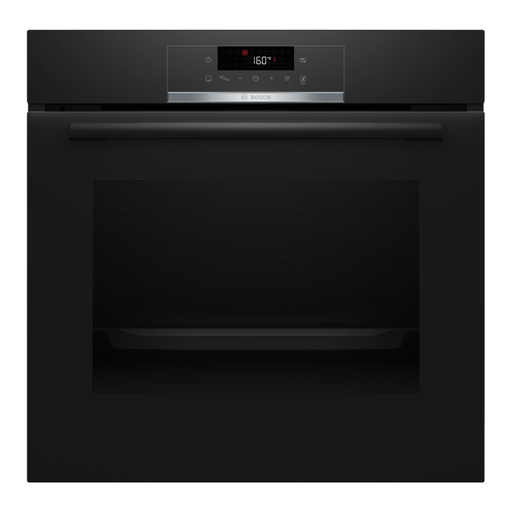
Bosch lists top and bottom heat and 3D Hotair for the built-in HBG536EB4 oven.
AEG lists a 71-litre capacity, top and bottom heat, and pyrolytic cleaning for the built-in BDP72B oven.
This selection includes freestanding ovens and one built-in oven for anyone looking for an oven to bake cakes in. Check the tin dimensions and installation requirements for each model.
 No image available
A freestanding model to consider if you don’t have a built-in space. Check that your cake tin fits in the usable oven space.
Capacity: 65 litres. The description lists six cooking functions, a turbo fan and a 90-minute timer. Don’t cover the ventilation openings during use.
 No image available
A built-in model to compare if you have a suitable housing space. Check the housing space and usable interior dimensions against the installation details.
Capacity: 71 litres. The description lists top and bottom heat, 3D hot air for up to three levels, a temperature range of 30–275 °C and an oven interior measuring 357 × 480 × 415 mm. Steam cooking, Air Fry and pyrolytic self-cleaning are also included in the product name.
 No image available
A freestanding model to compare if you’re looking for a compact oven. Check that your cake tin fits and follow the positioning instructions.
Capacity: 45 litres. The description lists six functions, a fan, and top and bottom heat as well as fan-assisted cooking. Place the oven on a stable, heat-resistant surface and keep the ventilation openings clear.
 No image available
A freestanding model to consider if you want to check the available space and cake tin against the dimensions first.
Capacity: 35 litres; power: 1800 W. The description lists a temperature range up to 250 °C, a 90-minute timer, top and bottom heat, a baking tray and a wire rack. The instructions require at least 10 cm of clearance around the oven and 30 cm above it; don’t place it in an enclosed cupboard.
 No image available
The description says it fits baking tins up to 25 cm in diameter. Check that this suits your tin and the specified positioning requirements.
The oven has five heating settings, a temperature range up to 230 °C, and top and bottom heat. Place it on a flat, heat-resistant surface with enough ventilation.
Follow the recipe you’re using. The Rutger Bakt recipe consulted calls for preheating to 160 °C. General energy-saving advice doesn’t replace that recipe instruction unless you also adjust the baking time and check that the cake is cooked through.
Don’t assume you can use the same setting. Consumentenbond gives around 20 °C lower as a typical setting for fan-assisted cooking. Where possible, follow the instructions for your oven setting and check the cake as it bakes.
For a built-in oven, measure the housing space and check the installation instructions for the connection. Make sure heat can escape as specified, and use and clean the appliance according to the model’s manual.
Compare an extended warranty with the legal rights you already have. The Dutch government explains that there’s no fixed statutory warranty period in the Netherlands; if a product is faulty, contact the retailer. Consumentenbond points out that an offered built-in installation service may come at an extra cost, so check the retailer’s current terms.
For electrical appliances covered by the applicable European rules, the economic operator must meet the product requirements and provide the required CE marking and EU declaration of conformity. General government information doesn’t confirm compliance for any particular model or individual item for sale.