
Birthday cake baker
You mainly want to bake a cake and need a suitable oven setting and guidance on setting it according to your recipe. The Netherlands Nutrition Centre says many recipes are written for a conventional oven with top-and-bottom heat.


Start by choosing an oven with a setting that suits your recipe, then check that your cake tin will actually fit inside. According to the Netherlands Nutrition Centre, many recipes are written for conventional top-and-bottom heat. Next, choose between a freestanding oven, built-in oven or combination oven based on the space and features you need. The Consumers’ Association recommends checking the internal dimensions, while Milieu Centraal points out that a larger oven generally uses more energy.
You mainly want to bake a cake and need a suitable oven setting and guidance on setting it according to your recipe. The Netherlands Nutrition Centre says many recipes are written for a conventional oven with top-and-bottom heat.
You use a large cake tin or want to bake more than one thing. The Consumers’ Association recommends checking the internal dimensions, as the capacity in litres does not tell you whether your tin will fit.
You need to consider the available worktop space or a suitable built-in space, or you’re looking for one appliance with both oven and microwave functions. The Fire Service stresses that heat from appliances needs to be able to escape.
Best for: a kitchen without a suitable built-in space, as long as your cake tin fits in the oven with enough room around it.
Keep in mind: the worktop space and ventilation required. Check the internal dimensions rather than just the capacity in litres.
Best for: a kitchen with a suitable built-in space, and anyone who needs more oven space or a wider choice of cooking functions.
Keep in mind: both the dimensions of the space and the usable interior. According to Milieu Centraal, a larger oven generally uses more energy.
Best for: anyone who also wants a microwave function and would like to make the most of their space with one appliance.
Keep in mind: oven settings, shelf positions and space for your cake tin vary by model. Check the manual for the exact appliance.
| What to consider | What to look for | Who this matters to |
|---|---|---|
| Oven setting | Check whether the model has conventional top-and-bottom heat and/or a fan setting. Follow the instructions in your recipe and oven manual. | When following a recipe, I want to know which setting to use. Around 33% of consumers put the oven setting first. |
| Tin and baking space | Measure your cake tin, including any protruding edges or handles, and compare it with the internal dimensions and shelf positions. | If I’m using a large tin or baking more than one thing, I want to know in advance what will really fit. Around 27% of consumers put tin and baking space first. |
| Fitting the oven | Measure the built-in space or available worktop area, and check the model’s installation and ventilation instructions. | If my kitchen has limited space, the appliance needs to fit there safely. Around 27% of consumers put where the oven will go first. |
| Energy use | For suitable, comparable ovens, compare energy use per cycle. First, check that the oven is big enough for your cake tin. | I want an oven that suits what I bake, and I also keep an eye on electricity use. Around 13% of consumers put energy use first. |
The stated capacity doesn’t tell you whether your cake tin will fit on the oven shelf. The Consumers’ Association therefore recommends checking the internal dimensions.
Measure your tin and compare its dimensions with the usable space inside the exact model.
Oven settings and shelf positions can vary between combination microwaves. Some models may not have bottom heat or offer different shelf positions.
Before buying, check the oven settings, where the tin can go and the manual for the exact model.
Extra features don’t guarantee better baking results. Milieu Centraal points out that a larger oven generally uses more energy.
Give priority to making sure your cake tin fits and choosing the right oven setting, rather than extra capacity or features.
The Inventum OV457B is a freestanding option if you don’t have a suitable built-in space.
The Beko BBIE12100BD is a built-in model with a fan setting and a mechanical timer.
The Bosch HBG7741B1 is a built-in option for anyone who values easy controls and self-cleaning as well.
The AEG BP7200B is a built-in option with a range of heating functions.
The Severin TO 2067 is a compact, freestanding option, provided its size suits your available space and cake tin.
This selection includes combination appliances and a freestanding oven with listed baking or convection functions. For each model, check the oven settings, space for your cake tin and installation instructions.
 No image available
Suitable if you want oven and microwave functions in one appliance. The product description mentions convection cooking and a baking tray.
Do not use metal objects or aluminium foil in the microwave unless the manual expressly says you can.
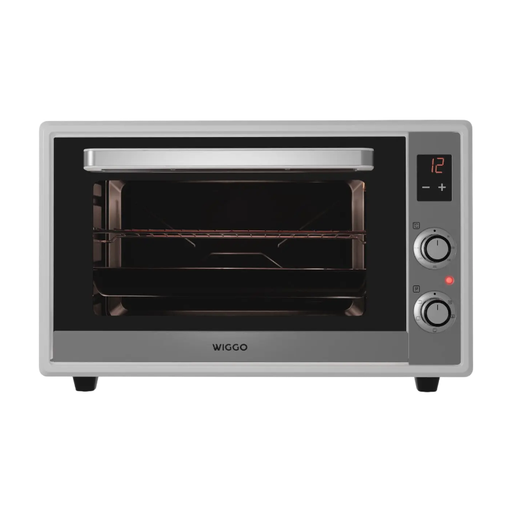 No image available
Suitable if you’re looking for a freestanding oven. The product description mentions baking, grilling and toasting.
The turbo fan is optional. The casing and glass door can get very hot during use.
 No image available
Suitable if you want to combine microwave, grill and convection cooking. Check that the interior is big enough for your cake tin.
If you place it in a cupboard, make sure there is enough ventilation and follow the instructions for using metal objects in the microwave.
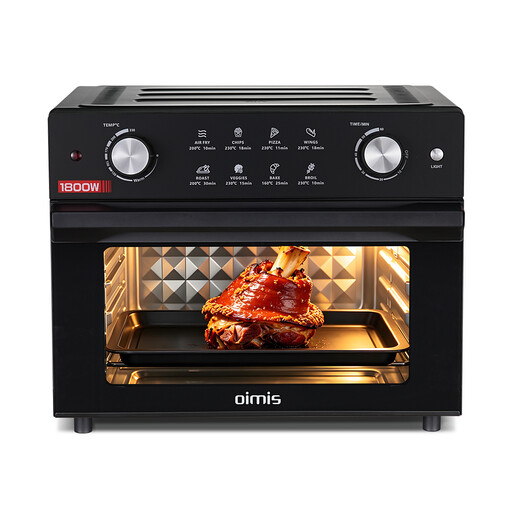 No image available
The product description lists baking alongside other cooking functions. Check that the tin size and controls suit what you’re baking.
Keep the appliance away from flammable materials while it is in use.
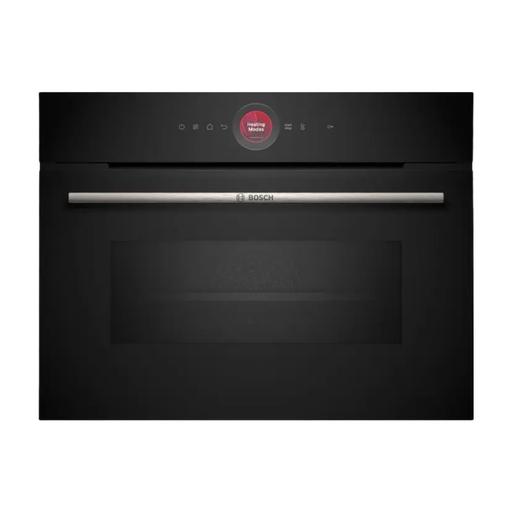 No image available
Suitable if you’re looking for a built-in combination oven with microwave and convection functions. The product information also mentions grilling.
As a built-in model, it requires a suitably sized space. Check this model’s installation dimensions before choosing it.
Start by following the recipe and your oven manual. According to the Netherlands Nutrition Centre, many recipes are written for conventional top-and-bottom heat. If you use a fan setting instead, the Centre’s general rule of thumb is to reduce the temperature by around 10%.
Check the cake towards the end of the recipe’s cooking time. For a cake recipe, the Netherlands Nutrition Centre uses a cocktail stick: if no mixture sticks to it, the cake is baked through. The timings for that particular recipe aren’t automatically right for your coffee cake.
Follow the installation instructions for the exact model and make sure the heat it gives off can escape. The Fire Service highlights ventilation around ovens and microwaves as something to consider. A built-in oven also needs a suitably sized space.
No, don’t assume that. The European Commission includes domestic ovens within the scope of oven energy labelling rules, but lists small and portable ovens as excluded categories. Check the product information for the specific model you’re considering.
Report the problem to the retailer. ACM ConsuWijzer explains that the retailer is responsible for the statutory guarantee and, under the applicable conditions, must offer a free remedy if the product is faulty. A manufacturer’s guarantee does not replace this right.