
Cooking for a picnic group
You want to roast all your beetroot wedges in one batch, so look at the usable baking-tray space and how many trays are included. Allerhande uses a baking tray for its roasted beetroot recipe.


Choose a freestanding fan oven if you don’t have a suitable built-in space and its baking tray is large enough for your portion. A built-in oven may be a good fit if you have a suitable space and want to use multiple shelf levels. Check the fan setting, included baking trays and installation dimensions for each model. Make sure your roasted beetroot has cooled safely before transporting it to your picnic.
You want to roast all your beetroot wedges in one batch, so look at the usable baking-tray space and how many trays are included. Allerhande uses a baking tray for its roasted beetroot recipe.
You want an oven that doesn’t need a built-in space, so compare its external dimensions, baking tray and the worktop space available. Milieu Centraal recommends choosing an oven that is no larger than you need.
You want to prepare your beetroot in good time, then cool, store and transport it safely. Voedingscentrum offers separate advice on this; choosing an oven doesn’t replace safe food storage practices.
Choose this option: if you don’t have a suitable built-in space and one baking tray is enough for your usual amount of wedges. The Inventum OV457B is one example, with a fan setting, an included baking tray and a net capacity of 45 litres.
Bear in mind: the worktop space and power connection it needs. The oven’s capacity in litres alone doesn’t tell you how many wedges you can spread out on the tray.
Choose this option: if you have a suitable built-in space and want an oven with multiple shelf levels. Bosch lists 3D hot air and an included roasting pan for the HBF011BA2; ETNA lists a capacity of 77 litres and five shelf positions for the OM916MZ.
Bear in mind: measure the space and check the power connection and how many trays are included. Multiple shelf positions don’t automatically mean that multiple baking trays come with the oven.
For beetroot wedges for a picnic, the usable baking-tray space is a more practical guide than the oven’s capacity in litres alone. The installation, controls and cleaning method may also influence your choice.
| What to consider | What to look for when buying | Who is this important for? |
|---|---|---|
| Baking-tray space | Compare the usable tray dimensions and the number of trays included; don’t look at the oven’s capacity alone. | When I’m cooking for a group, I want to be able to spread the wedges out on a suitable baking tray; around 33% of consumers say tray space is their main concern when buying. |
| Installation | For a built-in oven, measure the space’s height, width and depth. For a freestanding model, check its external dimensions and installation instructions. | I want an oven that fits my kitchen without needing an unsuitable built-in space or taking up too much worktop room; around 27% of consumers put kitchen space first. |
| Roasting control | Check that the exact model has a fan setting, a suitable baking tray and easy-to-use time and temperature controls. A recipe’s cooking time won’t necessarily suit every oven or size of wedge. | I want to adjust the fan setting and cooking time to suit my wedges; around 20% of consumers say control over roasting is their top priority. |
| Use and maintenance | Where possible, compare energy consumption in kWh per cycle for the same function, and check the oven’s size and cleaning method. | If I use my oven regularly, I want a suitable size and a cleaning method that fits my routine; around 20% of consumers put running costs and maintenance first. |
Severin doesn’t list a fan function for the TO 2052. A general product title may not match the specifications for the exact model.
Before choosing an oven for fan cooking, check the full model code and the function in the official specifications.
ETNA lists five shelf positions and one included baking tray for the OM916MZ. You may need an additional suitable tray to cook on multiple levels.
Check the tray dimensions and how many suitable baking trays are included with the model.
Energielabel.nl explains that ovens are compared within a size category, and that small and portable ovens don’t have an oven energy label.
Where possible, compare energy consumption in kWh per cycle for the same oven function, and choose a size that suits your usual portions.
The freestanding OV457B is an example of an oven that doesn’t need a built-in space. It has a net capacity of 45 litres and comes with a baking tray.
The built-in HBF011BA2 is an example of a model with a 66-litre capacity, 3D hot air and specified installation dimensions.
According to ETNA, the built-in OM916MZ has a 77-litre capacity and five shelf positions.
Here you’ll find freestanding and built-in ovens whose product information lists a fan or convection function. Check the required baking tray, available installation space and any installation requirements for each model.
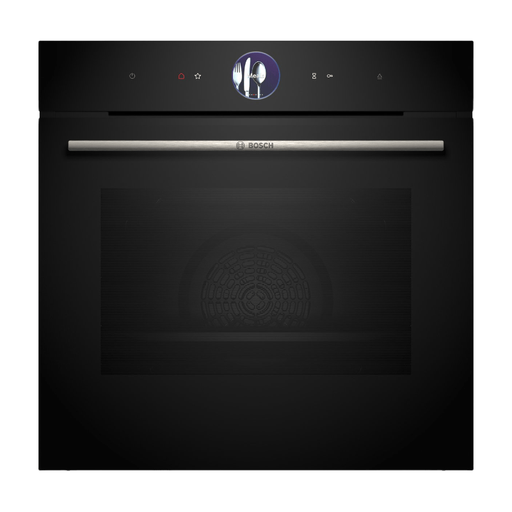 No image available
A good choice if you’re looking for a built-in oven with a fan function and a baking tray; the product information lists an enamelled baking tray.
The product information says installation must be carried out by a qualified electrician.
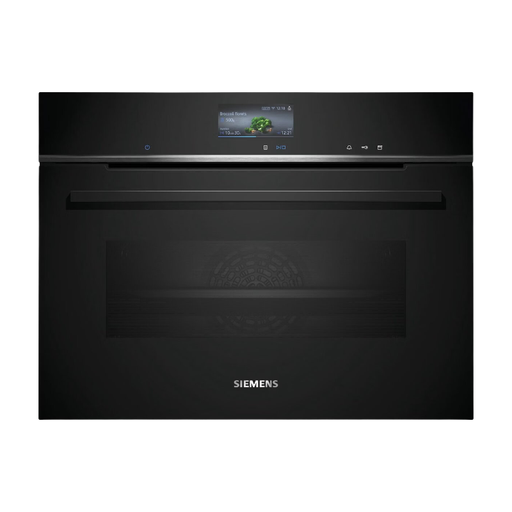 No image available
A good choice if you’re looking for a built-in model with 4D hot air for cooking on a baking tray.
The model name lists a capacity of 47 litres and 4D hot air. The product information says installation must be carried out by a qualified electrician.
 No image available
A good choice if you’re looking for a built-in oven with 3D hot air; the product information says you can bake and roast on up to three levels.
The model name lists a capacity of 71 litres. Check which baking trays are included with the model.
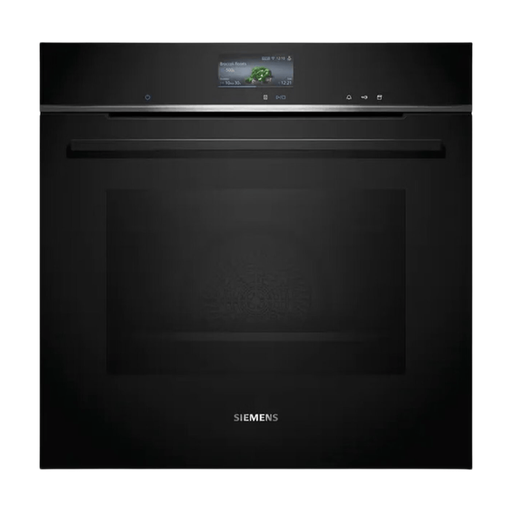 No image available
A good choice if you’re looking for a built-in oven with 4D hot air for baking on a tray.
The model name lists a capacity of 60 litres, pyrolytic self-cleaning and Home Connect.
 No image available
A good choice if you’re looking for a freestanding oven with a convection function and don’t want a built-in model.
The product name lists a capacity of 45 litres and a power rating of 2000 W. According to the product information, place the oven on a stable, flat, heat-resistant surface.
Cut the beetroot into small wedges and place them on a baking tray. An Allerhande recipe uses 200 °C for around 45 minutes, turning the wedges every 15 minutes. This is the method used in that recipe, not a guaranteed cooking time or setting for every fan oven.
Cool hot food quickly and thoroughly, transport it in clean, sealed containers, and use a cool bag for food that needs to stay chilled. Voedingscentrum advises throwing away food that is normally kept chilled if it has been left unrefrigerated for more than two hours.
Yes. Treat it as cooked food: according to Voedingscentrum, cool leftovers within two hours, store them in a sealed container in the fridge at 4 °C and eat chilled leftovers within two days. Plan separately for transporting and chilling any cheese or dressing.
Where possible, compare energy consumption in kWh per cycle for the same oven function, and take your electricity tariff into account. Choose a size that suits your usual portions too; if you’re buying a built-in model, check in advance whether installation is required and what it will cost.