
The batch cook
You want to make one large lentil cottage pie or several dishes in one go. Compare the size of your dishes with the oven’s internal space and shelf positions. Ekomenu’s recipe uses an oven dish.


First, choose an oven that fits your baking dish with enough space around it. Then decide whether you have a suitable built-in housing or need a freestanding model. If you’re cooking several dishes, the internal dimensions and shelf positions matter. Top heat or a grill can help brown the topping, but it doesn’t replace cooling and storing leftovers safely.
You want to make one large lentil cottage pie or several dishes in one go. Compare the size of your dishes with the oven’s internal space and shelf positions. Ekomenu’s recipe uses an oven dish.
You need a freestanding oven and want to balance its capacity against the available worktop space and the size of your oven dish. Check the external dimensions and installation instructions for the model you choose, too.
You want to eat the pie later, so you need to think about cooling it quickly, storing it safely and reheating it thoroughly, as well as baking it. The Netherlands Nutrition Centre provides guidance on storage and reheating.
Best for: a suitable built-in housing and one large dish or several dishes per batch. ETNA lists the OM316MZ as having a capacity of 77 litres and five shelf positions.
Keep in mind: check the housing, the actual internal dimensions and the space between filled dishes. The stated capacity doesn’t prove that your dishes will fit at the same time.
Best for: a kitchen without a suitable built-in housing, if you want to use a larger oven dish. Inventum lists the freestanding OV607B as having a capacity of 60 litres.
Keep in mind: allow enough worktop space and check the installation instructions and dimensions for the exact model.
Best for: smaller dishes or separate batches if you don’t have a built-in housing. Severin lists the TO 2058 as having a capacity of 42 litres.
Keep in mind: the internal space may limit how many dishes you can cook at once. Measure your dish and compare it with the internal dimensions.
| What to consider | What should you check? | Who is this important for? |
|---|---|---|
| Space for your batch | Measure the filled dish and compare its width, depth and height, along with the clearance required, with the manual for the exact model. | If I want to bake one large pie or several dishes at once, I need to know whether they’ll fit with space between them. Around 36% of consumers rank batch capacity as their top purchasing priority. |
| Positioning in the kitchen | For a built-in oven, check the housing dimensions. For a freestanding model, check its external dimensions and installation instructions. | If I don’t have a suitable built-in housing, the oven needs a suitable place and must fit the available worktop space. Around 29% of consumers give the available space the greatest weight in their decision. |
| Baking and browning | Check whether the model has top and bottom heat, a fan setting or a grill. Follow your recipe and keep an eye on the topping as it browns. | If I want to brown the topping of my pie, I look for the oven settings my recipe calls for. Around 21% of consumers prioritise baking and browning functions. |
| Use and cleaning | For ovens covered by the relevant energy labelling rules, compare consumption per cycle using the same oven setting. Check the cleaning instructions, too. | If I regularly make batch dishes, I want to know how to clean the oven and compare consumption figures on a like-for-like basis. Around 14% of consumers prioritise maintenance and running costs. |
The capacity and number of shelf positions don’t tell you whether your filled dishes will fit at the same time with enough space around them.
Measure your dishes and compare their dimensions with the internal measurements and installation instructions for the exact model.
If the dish doesn’t fit, you may need to cook a second batch or use a different oven dish.
The European Commission distinguishes between product types under the energy labelling rules for ovens; small and portable ovens are outside the stated scope.
Compare consumption figures only when they’re based on the same criteria, and check whether the rules apply to the exact appliance.
When batch cooking, you also need to cool portions promptly, store them safely and reheat them thoroughly later.
Divide leftovers between sealed containers and follow the Netherlands Nutrition Centre’s guidance on storage and reheating.
The built-in option here is represented by the OM316MZ, a model with several shelf positions.
The OV607B is an example of a freestanding oven for anyone who isn’t looking for a built-in model.
The TO 2058 is a more compact freestanding option for smaller batches.
The HBG7741B1 is an example of a built-in oven with cleaning functions.
The HB457G0B3F is a built-in example you can use to compare capacity and oven settings.
These freestanding ovens are options to compare if you don’t have a built-in housing. Compare the stated capacity with the size of your dish; capacity alone doesn’t confirm that the dish will fit.
 No image available
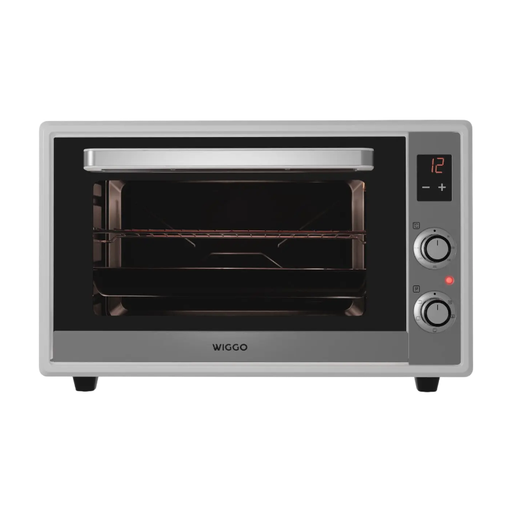
This freestanding model may suit you if you don’t have a built-in housing. Measure your oven dish and compare it with the internal dimensions.
The product name lists a capacity of 65 L, a stainless steel finish and 2000 W. The capacity alone doesn’t prove that your dish will fit.
The exterior can become very hot during use. Don’t touch the casing or glass door with bare hands, and keep flammable materials away.
 No image available
This freestanding mini oven is an option if you don’t have a built-in housing. Check beforehand that your dish fits inside.
The product name lists a capacity of 45 L, a hob, a width of 60 cm and 3534 W. Check the dimensions and installation instructions for the exact model.
Not in the Ekomenu recipe we looked at: the vegetables and lentils are heated in a pan first. The assembled pie then goes into the oven briefly to brown the topping. Follow the instructions for the recipe you’re making.
The Netherlands Nutrition Centre advises cooling leftovers within 2 hours and putting them in a sealed container in the fridge or freezer. Eat refrigerated leftovers within 2 days; according to the Netherlands Nutrition Centre, frozen leftovers keep for 3 months. When you’re ready to eat a portion, reheat it until piping hot all the way through. Don’t reheat leftovers more than once.
For ovens covered by EU energy labelling rules, compare consumption in kWh per cycle using the same oven setting. The European Commission distinguishes between conventional and fan-assisted use, and excludes small and portable ovens from the stated labelling scope. Consumption for your recipe also depends on how you use the oven and your electricity tariff.
According to the Dutch government, you’re entitled to a product that works as it should, but the Netherlands has no fixed statutory warranty period. If there’s a fault, the seller must provide a solution; a manufacturer’s warranty is in addition to this.
EU low-voltage rules apply to electrical equipment within the relevant voltage range; EUR-Lex specifies 50 to 1000 V for alternating current. Household ovens within the energy labelling scope require an energy label, while the European Commission excludes small and portable ovens from that specific scope. Check whether the rules apply to the exact appliance.