
Bakers making large batches for a picnic
If you want to share plenty of shortbread, focus on the interior dimensions, shelf positions and oven function. The Consumers' Association recommends checking the interior dimensions.


A built-in oven is a good choice if you regularly bake larger batches and have a suitable housing unit; a freestanding oven is an option if you don’t want to use a built-in space. Choose a combination microwave mainly if you also want to reheat food, and check that its oven function can be used independently. Whichever type you choose, measure the interior and baking tray before you decide.
If you want to share plenty of shortbread, focus on the interior dimensions, shelf positions and oven function. The Consumers' Association recommends checking the interior dimensions.
If you don’t want to use a built-in space, weigh up the worktop space available against the baking tray size and the ventilation clearance specified in the manual.
If you want to reheat food as well as bake shortbread, a combination microwave may be worth considering. For biscuits, the separate oven function is important; the Consumers' Association distinguishes between the oven and microwave functions.
A good fit if: you have a suitable housing unit and regularly want to use a larger baking tray or bake on several shelf positions.
Bear in mind: the housing unit and appliance dimensions; a model with several shelf positions doesn’t, by itself, prove that every recipe will bake evenly on all trays.
A good fit if: you want to bake without a built-in space and have room on your worktop.
Bear in mind: the external dimensions, compatible baking tray and the clearance required around the model, as specified in the manual.
A good fit if: you want a microwave function for reheating or defrosting as well as an oven for baking.
Bear in mind: the Consumers' Association reports that combination microwaves often have fewer oven functions and shelf positions than built-in combination ovens.
Shortbread needs a suitable oven setting; a microwave function isn’t a substitute. The Consumers' Association recommends checking that a combination microwave’s oven function can be used independently.
| What to consider | What should you check? | Who is this important for? |
|---|---|---|
| Oven setting | For a combination microwave, check whether you can use the oven function on its own. Follow the temperature and baking time in your recipe. | When I bake shortbread, I want to be able to select the right oven setting. Around 40% of consumers prioritise the baking setting. |
| Installation | Measure the housing unit for a built-in model; for a freestanding model, check the ventilation clearance specified in the manual. | If you’re short on space, you’ll want to know whether the oven will fit without making your kitchen layout impractical. Around 30% of consumers prioritise a suitable location. |
| Baking tray and batch size | Compare the oven’s interior dimensions with your baking tray. Capacity in litres alone doesn’t tell you how much dough will fit on the tray; the Consumers' Association recommends checking the dimensions. | When I’m baking for a group, I want to know how much shortbread will fit on a suitable tray. Around 20% of consumers prioritise batch size. |
| Extra reheating function | Check that the appliance has both a microwave function and a separate oven function. | If you’re looking for one appliance for baking and reheating, consider both functions. Around 10% of consumers prioritise the extra reheating option. |
The capacity in litres doesn’t automatically tell you whether your baking tray will fit in the oven. The Consumers' Association recommends checking the interior dimensions.
Measure your baking tray and compare its dimensions with those of the exact model and the accessories supplied.
If the baking tray doesn’t fit, you may have to bake in smaller batches.
A microwave function isn’t the same as an oven setting. According to the Consumers' Association, combination microwaves often have fewer oven functions and shelf positions than built-in combination ovens.
Check the separate oven function, shelf positions and baking tray before choosing.
The space required for installation varies by model. For example, the Tomado TEO4500B manual specifies clearance on all sides; this model-specific instruction doesn’t automatically apply to other ovens.
Check the installation instructions for your chosen model before buying, and keep the ventilation openings clear.
An example of a built-in oven range; the features mentioned apply to specific models.
An example of freestanding baking and toast ovens; check the specifications for each model.
An example of freestanding fan ovens, including the TEO4500B.
An alternative among built-in ovens; the available product information describes specific features of the BPK742380B.
This selection includes built-in ovens, a combination microwave and freestanding ovens, so you can compare baking space, installation and any extra reheating function.
 No image available
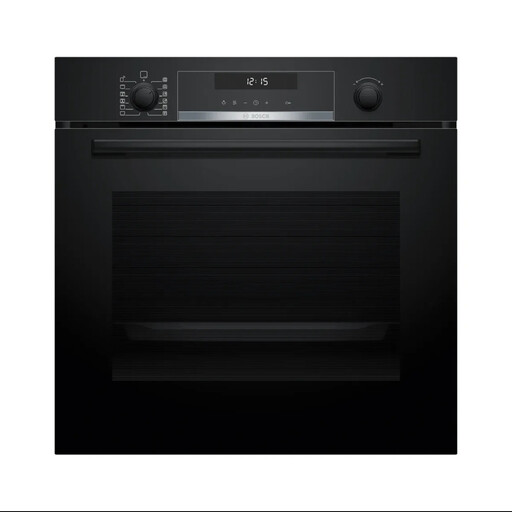
A built-in option if you’re looking for an oven to fit a suitable housing unit.
The product name lists a capacity of 66 litres and five cooking programmes.
 No image available
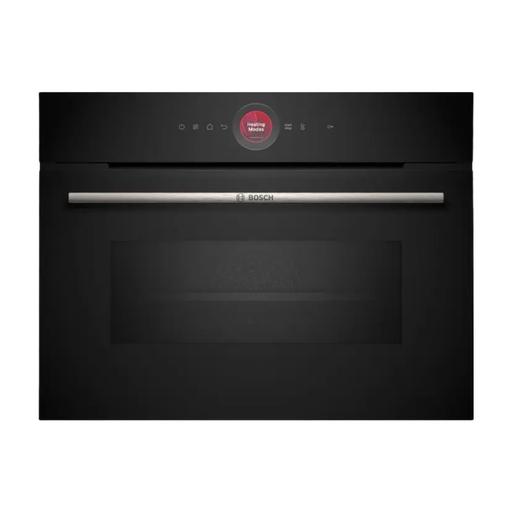
An option if you’re looking for a built-in appliance with both microwave and oven functions.
The product name lists a capacity of 45 litres and a microwave power of 900 W. Check that the stated housing unit dimensions of 45,5 × 56 × 55 cm will fit your kitchen.
 No image available
A built-in option if you’re looking for features such as Air Fry and pyrolytic cleaning.
The product name lists a capacity of 71 litres. Check that the stated housing unit dimensions of 585 × 560 × 550 mm will fit your kitchen.
 No image available
A freestanding option if you don’t want to use a built-in space.
The product name lists a power output of 1200 W and a 4-in-1 toaster oven.
Check the installation instructions and make sure there’s enough ventilation.
 No image available
A freestanding model if you’re looking for an oven that doesn’t need a built-in space.
The product name lists a capacity of 35 litres and a power output of 1800 W.
The stated installation instructions require at least 10 cm of clearance on all sides and 30 cm above.
No, shortbread needs a suitable oven function, but not necessarily a microwave function. If you choose a combination microwave for other uses, check that you can use its oven setting on its own; the Consumers' Association distinguishes between the oven function for baking and the microwave function for reheating.
Follow the manual for the exact model. The Tomado TEO4500B manual specifies 10 cm of clearance on all sides; this measurement doesn’t automatically apply to other models.
Measure your baking tray and compare its dimensions with the interior of the model you’ve chosen. The Consumers' Association recommends checking the interior dimensions; the stated capacity in litres alone won’t tell you whether your tray will fit.
The Netherlands Nutrition Centre recommends storing biscuits in a well-sealed container in a cool, dry, dark place. So, use an airtight container when transporting them.