
Batch baker
You want to make enough bars for a fundraising sale, so your main considerations are suitable baking tins, trays and usable shelf positions.


Start by checking the dimensions of your baking tin and how many bars you want to bake in each batch. The oven’s capacity in litres won’t tell you on its own whether your tin will fit. Choose a freestanding oven if you don’t have a suitable space for a built-in model, or compare built-in ovens by usable baking space and the number of shelf positions specified by the manufacturer. If you’re selling the bars, you’ll also need to follow the relevant hygiene and allergen rules.
You want to make enough bars for a fundraising sale, so your main considerations are suitable baking tins, trays and usable shelf positions.
You’re weighing up a freestanding oven on the worktop against a built-in oven that needs to fit an existing space.
You want to follow your recipe reliably over several batches, so you’re considering the oven settings, temperature control and how easy it is to check your baking.
Choose your recipe and baking tin first, then measure the tin and the space available. Only then can you judge which type of oven and amount of baking space will suit your plans.
| What to consider | What should you look for? | Who is this important for? |
|---|---|---|
| Baking capacity | Compare the dimensions of your tin with the usable oven space and check how many suitable baking trays you’ll need. | If I want to make enough bars per batch for the sale, I look at the tin and the trays available. Around 36% of consumers say baking capacity is their main concern when buying. |
| Fit and placement | Measure your tin and the space in your kitchen. For a built-in oven, also check that the housing meets the specified dimensions. | If space is limited, I want to know whether the oven and my baking tin will both fit without changing my kitchen layout. Around 29% of consumers put fit and placement first. |
| Consistent baking | Check whether the oven has the setting specified in your recipe. The Netherlands Nutrition Centre advises setting the temperature around 10% lower when switching to a fan oven from conventional top and bottom heat. | If I’m baking several batches, I want to follow the recipe setting accurately and check when the bars are cooked through. Around 21% of consumers say consistent baking is their main priority. |
| Using the oven after the sale | Think about the size you’ll also use for smaller dishes, and check which trays are included. | If I want to keep using the oven after the sale, I consider energy use, cleaning and aftercare. Around 14% of consumers prioritise these points. |
The stated capacity doesn’t tell you whether your baking tin will fit through the oven door or sit securely on an oven shelf.
Choose your tin first, then check the oven’s usable interior space and door opening.
If you want to bake on several levels at once, you may need an additional suitable baking tray.
Milieu Centraal states that a larger oven uses more energy. This is worth bearing in mind if you’ll often use it for smaller dishes afterwards.
Balance the amount you want to bake per batch against the size you’d normally use.
A suitable oven doesn’t replace hygienic food handling or the need to provide information about allergens in your bars.
Before selling, check how you’ll present the bars, which allergens they contain and how many times a year you sell food. The NVWA outlines the relevant points to consider when selling at markets and events.
These brands offer models you can compare across different types of oven. The features listed apply to the specific models below, not to the brand as a whole.
The freestanding OV457B is worth comparing if you don’t want a built-in oven.
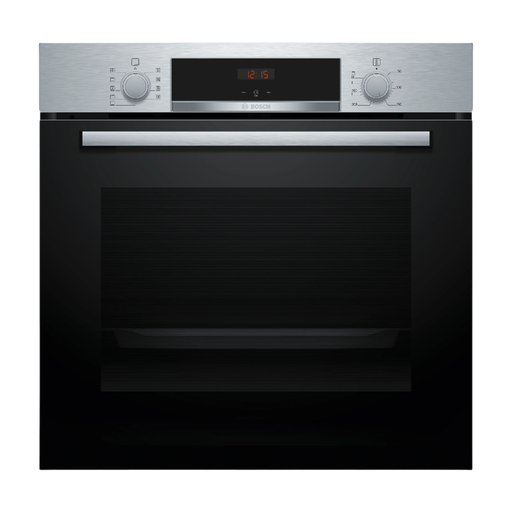
The built-in HBA514BS3 is worth considering if you have a suitable space and want to compare shelf positions.
The built-in KOFGH40BK gives you a model to compare for shelf positions, housing space and accessories.
The freestanding TO 2058 is a useful comparison if you’re looking for a mini oven with fan-assisted cooking and top and bottom heat.
This selection includes built-in and freestanding ovens to compare for baking space, oven settings and how well they’ll suit your kitchen.
 No image available
A built-in model to consider if you have a suitable space and want to use several shelf levels.
The product description lists a capacity of 71 l, 3D Hotair and baking on up to three levels. The housing must be suitable.
 No image available
A built-in oven to consider if you have a suitable space and want to compare options for baking several batches on multiple levels.
The product description lists 3D Hotair for up to three levels, a capacity of 66 l and a temperature range of 50–275 °C. Check the housing dimensions for your kitchen.
 No image available
This built-in model is suited to a kitchen with an appropriately sized space. The product description lists 3D Hotair for baking on several levels.
The stated capacity is 71 l and the maximum temperature is 275 °C. The manufacturer lists baking on up to three levels; this isn’t an independent test of oat bars.
 No image available
A freestanding model to consider if you want to compare top and bottom heat with fan-assisted cooking.
The product description lists a capacity of approx. 30 l, a temperature range of 100–230 °C and 1200 W. Place the oven on a stable, heat-resistant surface with sufficient ventilation, following the product instructions.
 No image available
A freestanding mini oven to consider if you want to choose between top heat, bottom heat and fan-assisted cooking.
The product description lists a capacity of 45 l, 2000 W, a temperature of up to 250 °C and four shelf positions. Use a stable, level surface and leave the required ventilation space clear.
Start with the oven setting specified in the recipe. If you’re switching from conventional top and bottom heat to a fan oven, the Netherlands Nutrition Centre advises reducing the temperature by around 10%. Check that the bars are cooked through towards the end of the baking time.
Not if you need a tray on every level. Inventum lists one baking tray with the OV457B, while Electrolux lists one cake tray with the KOFGH40BK. Check that any extra trays you buy are suitable for the exact model.
The NVWA says that private sellers at markets and events must also prepare, store and sell food safely and hygienically. For unpackaged products, you must tell customers about the allergens they contain. According to the NVWA’s step-by-step guide, registration and a food safety plan are required if you sell food several times a year; the guide says NVWA registration isn’t required if you sell food once a year. The way you offer the bars, including whether they’re prepacked, determines which additional information requirements apply.
Follow the cleaning instructions for your chosen model. Inventum explains how to clean the interior and included accessories of the OV457B. In the Netherlands, there’s no fixed statutory warranty period: if a product is faulty, the seller must provide a solution. A manufacturer’s warranty is in addition to this, according to information from the Dutch Government.