
Baking for a get-together
You want to bake a whole apple pie for several guests. Start by checking the size of your tin and choosing a suitable oven setting; a basic recipe from Albert Heijn Allerhande uses a 24 cm springform tin.


Start with the size of your pie tin and the space available in your kitchen. Check the usable internal dimensions, then choose between a built-in oven and a freestanding model. A basic Dutch recipe from Albert Heijn Allerhande uses 180 °C, but a larger capacity, fan-assisted cooking or a cleaning function won’t guarantee better baking results. Before you buy, also check the installation instructions and whether the required product marking is present on the exact model.
You want to bake a whole apple pie for several guests. Start by checking the size of your tin and choosing a suitable oven setting; a basic recipe from Albert Heijn Allerhande uses a 24 cm springform tin.
You don’t have a suitable space for a built-in oven and want to know whether a freestanding model will fit on your worktop. Also check the placement and connection instructions for the exact model.
You use the oven regularly after the get-together too, so you’re weighing up energy use and cleaning. Milieu Centraal recommends matching the capacity to how you’ll use it: a larger oven uses more energy.
First decide where the oven can go. Then check that your tin and preferred cooking setting are suitable, and weigh up energy use and cleaning features.
| What to consider | What should you check? | Who should pay particular attention? |
|---|---|---|
| Pie tin and oven setting | Measure your tin, including the rim, and check the usable internal dimensions, shelf position and suitable oven setting. Albert Heijn Allerhande gives 180 °C and around 45–60 minutes for a basic recipe; follow your own recipe. | If I’m baking a whole pie for a get-together, I want to know whether my tin will fit and whether I can follow the recipe instructions. Around 36% of consumers prioritise a suitable pie tin and oven setting. |
| Positioning | For a built-in oven, compare the installation details with the housing space. For a freestanding model, check the space available on your worktop and the instructions for positioning and connection. | If I don’t have a suitable built-in space, I want to know in advance whether a freestanding model can be safely placed in the space available. Around 29% of consumers put positioning at the top of their buying concerns. |
| Energy use | Where an oven energy label applies, compare the stated consumption per cycle for the same cooking mode. Milieu Centraal points out that a larger oven uses more energy. | If I bake often after the get-together too, I want to weigh up the oven capacity I need against its energy use. Around 21% of consumers prioritise energy use when baking regularly. |
| Cleaning | Compare the cleaning method for the exact model and check which steps still need to be done by hand. | If I use the oven regularly, less hands-on cleaning may matter more to me than extra baking functions. Around 14% of consumers prioritise ease of maintenance. |
The capacity in litres doesn’t tell you whether your springform tin, including its rim, will fit on the shelf.
Measure your own tin and check the usable internal dimensions and shelf position before you choose.
An oven’s external dimensions don’t confirm that it can be installed in your kitchen.
Compare the full installation details for the exact model with your housing space. Depending on your kitchen, alterations or installation may involve extra costs.
A manufacturer’s warranty is an additional promise and is separate from your statutory rights.
Read the manufacturer’s warranty terms and contact the retailer if you think a product may be faulty.
Bosch offers built-in ovens with a range of cooking settings. The HBA534EB3 is one example.
Inventum offers freestanding ovens; the OV607B is an example for anyone who doesn’t want a built-in model.
Siemens offers built-in ovens with additional cooking and cleaning functions; the HB572ABS3 is one example.
AEG describes 60 cm built-in ovens, including fan-assisted and steam models.
This selection includes built-in ovens and freestanding or compact fan ovens. For each model, check that the usable internal dimensions, positioning and connection instructions suit your kitchen and pie tin.
 No image available
An option if you’re looking for a built-in oven with circulating heat; check the housing dimensions and whether your pie tin will fit in the usable space.
The product name lists 70 l, 3 kW, a pizza function and AquaClean steam cleaning.
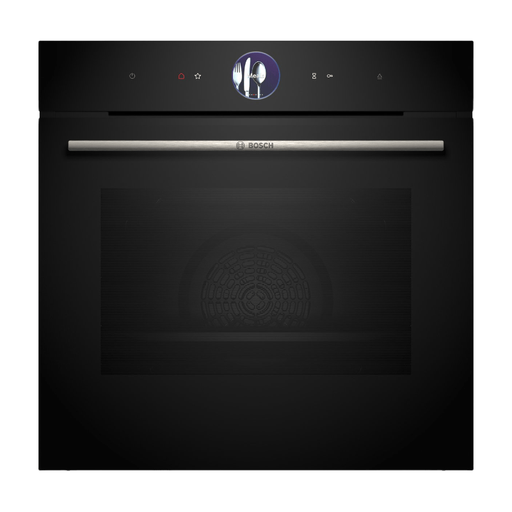 No image available
A built-in steam oven to consider if this type of model appeals to you; compare the installation details with your housing space and measure the room for your pie tin.
The product name lists an Air Fry function.
 No image available
A compact fan oven to consider if you’re not looking for a built-in model; check the internal dimensions against your own tin.
The product name lists a thermometer and a four-level oven rack.
 No image available
A freestanding model for anyone who doesn’t want a built-in oven; check your worktop space, the connection requirements and whether your tin will fit inside.
The product name lists 2000 W. According to the product information, it needs to be cleaned by hand.
 No image available
A built-in option if you’re considering top and bottom heat; check the housing dimensions and usable internal space for your pie tin.
The product name lists five cooking programmes and EcoClean cleaning.
No, follow the temperature and baking time in your own recipe. For a basic recipe, Albert Heijn Allerhande recommends a preheated oven at 180 °C for around 45–60 minutes; this isn’t a fixed performance requirement for every oven or pie.
Not without first checking whether the oven falls under the European rules for domestic ovens. The European Commission gives small ovens and appliances with microwave heating as examples of products outside the scope described. Where the label applies, compare consumption per cycle using the same cooking mode.
Follow the installation or user instructions for the exact model. For a built-in oven, compare the housing space with the installation details; for a freestanding model, check the space available for positioning it. Brandweer Nederland recommends connecting high-power appliances directly to a socket where possible, rather than using a multiway adaptor or cable reel.
Yes. CE marking is required for electrical products covered by the Dutch Commodities Act Decree on Electrical Equipment. Check that the required marking is present on the exact model; the general requirement alone doesn’t establish whether a particular item complies.
Contact the retailer. According to ACM ConsuWijzer, the retailer must offer an appropriate solution if a product doesn’t perform as you could reasonably expect under normal use; this is separate from any manufacturer’s warranty.