
Traditional apple pie baker
You want to follow the oven setting in your recipe and check that your springform tin fits inside the oven.


Choose an oven that fits your springform tin and has the setting specified in your recipe. Koopmans’ basic recipe uses conventional top and bottom heat; for fan-assisted cooking, Koopmans gives a different temperature as a guide. If you don’t have a suitable built-in space or also want to use a microwave, check the available space and oven settings for the exact model.
You want to follow the oven setting in your recipe and check that your springform tin fits inside the oven.
First, you need to find out whether there’s space for a built-in oven or a suitable spot for a freestanding one.
You’re looking for one appliance for baking and microwave use, so you compare the oven settings and shelf positions.
Choose this if: you have a suitable cabinet space and mainly want to bake; check the space dimensions and the setting specified in your recipe.
The trade-off: the external dimensions need to fit the cabinet space, while the usable interior space determines whether your baking tin will fit.
Choose this if: you don’t have a suitable space for a built-in oven, but do have a spot with the required ventilation clearance.
The trade-off: the stated capacity alone won’t tell you whether your springform tin will fit.
Choose this if: you need a microwave function as well as an oven; compare the oven settings and the space for your tin.
The trade-off: according to the Consumentenbond, combination microwaves often don’t have bottom heat and offer fewer shelf positions.
| What to consider | What should you check? | Who is this important for? |
|---|---|---|
| Oven setting | Check the heating settings and temperature controls for the exact model; follow the setting in your recipe. | If I’m following an apple pie recipe, I want to know whether the oven has the required setting. Around 36% of consumers give having the right oven setting top priority. |
| Fit and positioning | Measure your springform tin and compare it with the internal dimensions; for a built-in oven, check the cabinet space dimensions too. | I want to know whether both my tin and the oven will fit in the intended space before I choose. Around 29% of consumers focus mainly on fit and positioning. |
| Energy use and maintenance | Where available, compare energy use per cycle on the same basis; also check which cleaning function the model has. | If I use the oven frequently, I want to take its size and energy use into account and choose a suitable cleaning method. Around 21% of consumers focus mainly on running costs and maintenance. |
| Baking and microwave use | Check the combi model’s individual oven settings, internal dimensions and shelf positions. | I want to combine baking and microwave use in one appliance without overlooking the oven setting I need. Around 14% of consumers give this combination top priority. |
The usable oven space may be smaller than the stated capacity, so your springform tin might not fit after all.
Measure your tin and compare it with the internal dimensions of the exact model.
According to the Consumentenbond, combination microwaves often don’t have bottom heat and offer fewer shelf positions. This can matter if your recipe calls for conventional top and bottom heat.
Check the oven settings and space for your baking tin before choosing a combi model.
The label alone doesn’t tell you how much energy an oven uses during a baking cycle.
Where available, compare the energy use per cycle of ovens that meet your size requirements, using the same measurement basis.
The OV607B and IOC6070GK models are examples of a freestanding oven and a built-in oven respectively.
The OM316MZ is an example of a built-in oven with multiple shelf positions.
The HBG7741B1 is an example of a built-in oven with several heating settings.
The HB378G6S3 is an example of a built-in oven with conventional top and bottom heat and additional heating settings.
These products suit different approaches to baking apple pie: built-in ovens, a freestanding oven and combination models with microwave functions.
 No image available
A built-in oven with fan-assisted convection for anyone looking to compare a fan setting for baking.
The product description lists 10 functions, a timer and AquaClean cleaning. Check that the cabinet space and interior dimensions suit your kitchen and baking tin.
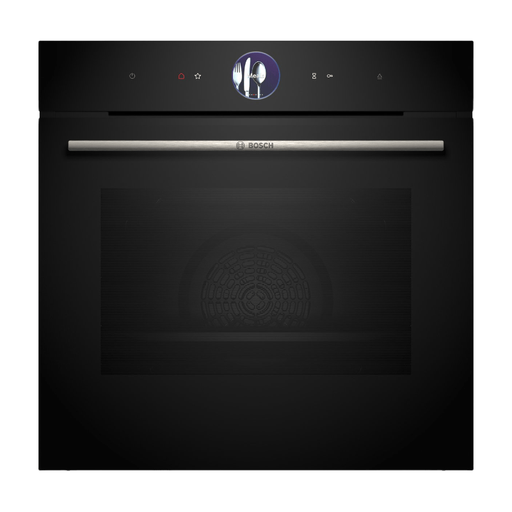 No image available
A built-in steam oven with the listed conventional top and bottom heat and fan-assisted settings, for anyone wanting to compare these options on the same model.
The product description lists 21 heating systems and five shelf positions. For installation, the product information specifies installation by a qualified electrician and a cabinet space measuring at least 59,5 × 56,8 × 55 cm.
 No image available
A freestanding oven with a listed baking function for anyone who isn’t looking for a built-in oven.
The product description lists six cooking functions, a fan, four shelf positions and a timer. Keep the ventilation openings clear and follow the appliance’s positioning instructions.
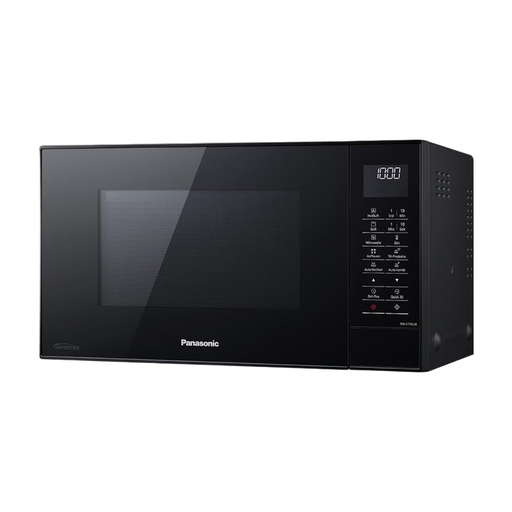 No image available
A combination microwave with a fan-assisted function for anyone wanting to combine baking and microwave use in one appliance.
The product description lists a grill, 23 automatic programmes and a maximum temperature of 220 °C. The safety information recommends leaving at least 10 cm of ventilation space.
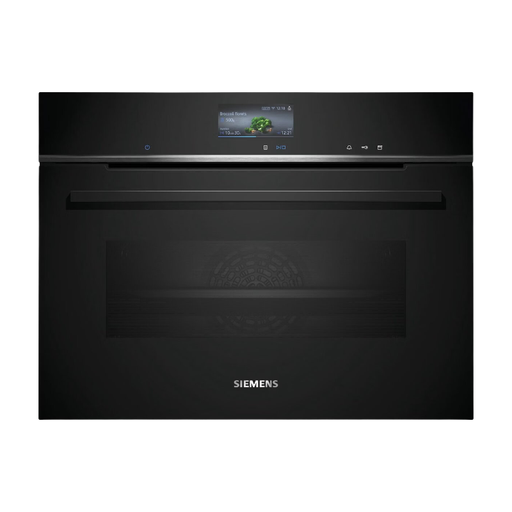 No image available
The product description lists 4D fan-assisted cooking and automatic baking programmes, for anyone looking for these features in a built-in model.
The same description lists telescopic rails, rapid preheating and steam cleaning. Check the features and dimensions of the exact model before you choose.
Follow the setting in your recipe. Koopmans’ basic recipe specifies 180 °C for 60–70 minutes using conventional top and bottom heat; Koopmans’ baking guide gives a different recommendation for fan-assisted cooking. These instructions aren’t necessarily the same for every pie or oven.
No, the range of oven functions can vary. According to the Consumentenbond, combination microwaves often don’t have bottom heat and offer fewer shelf positions than combi ovens. Check the features of the specific model.
Measure your springform tin and compare it with the oven’s internal dimensions, rather than relying only on its capacity in litres. If you’re buying a built-in oven, also check that the cabinet space dimensions suit your kitchen.
Follow the instructions for the exact appliance when it comes to installation and ventilation. Compare the cleaning functions available; pyrolytic cleaning is a model-specific option, not a requirement for baking apple pie.
According to ACM ConsuWijzer, the retailer is responsible for the statutory guarantee. If a product doesn’t provide what you could reasonably expect, the retailer must put things right free of charge in line with the applicable terms; a manufacturer’s guarantee doesn’t replace this right.
Don’t assume this applies to every type of appliance. The European Commission describes household ovens covered by the energy labelling rules and also lists exceptions, including small ovens and appliances with microwave heating. Check whether the rules apply to the exact appliance.