Who is this oven guide for?

Baker making several pies

This baker wants to make enough portions for the school bake sale, so first checks whether the tin and the required quantity will fit in the oven. The Koopmans recipe recommends loose-bottomed cake tins measuring 24, 26 or 28 cm.

Recipe-led home baker

This home baker wants to follow the temperature and oven setting in their chosen recipe. Heel Holland Bakt explains that the right oven setting depends on the recipe.

Baker without space for a built-in oven

This baker is looking for a freestanding oven and needs to check both that there’s a suitable spot on the worktop and that there’s enough room for the cake tin. The Consumentenbond highlights space and ventilation as considerations for built-in ovens.

What should you look for when choosing?

Large built-in oven

A good fit if: you have a suitable housing and regularly bake with larger tins or in larger quantities.

Bear in mind: the housing and usable interior space must be suitable; capacity and oven settings don’t prove baking performance.

Freestanding oven

A good fit if: you don’t want a built-in oven and have a suitable spot on the worktop.

Bear in mind: check the external dimensions and whether your tin will fit inside the oven.

Combination oven or microwave oven

A good fit if: you also want to use a microwave function as well as bake.

Bear in mind: check whether the oven and microwave functions can be used separately, and whether the baking space suits your recipe. For built-in models, the Consumentenbond also highlights the need for ventilation space.

What to consider What should you check? Who is this important for?
Tin and quantity Measure the loose-bottomed cake tin and compare it with the usable internal dimensions. Check separately whether the amount you want to bake in one go will fit. I want to bake enough pie without relying on the litre capacity alone; around 36% of consumers give space for the tin and quantity their top priority.
Oven setting and temperature Check which settings the model has and follow the instructions in the recipe you’re using. I want to follow the baking instructions in my recipe; around 29% of consumers prioritise the right oven setting and temperature.
Positioning and oven type For a built-in model, compare the housing dimensions; for a freestanding model, check the external dimensions and positioning instructions. I need to fit the oven in my kitchen and want to know which type will work; around 21% of consumers put positioning and size first.
Energy use and cleaning Compare energy consumption on the same basis, for example per baking session, and check the cleaning instructions. I want to know how cleaning and energy use fit with my choice after baking; around 14% of consumers start with these considerations.

Common buying mistakes

  • Comparing only oven capacity in litres

    The litre capacity doesn’t tell you whether a loose-bottomed cake tin with a diameter of 24, 26 or 28 cm will fit inside the oven. If the tin doesn’t fit, you may need a different one or have to bake in more batches.

    Choose your tin first, then compare its dimensions with the usable interior space of the specific model.

  • Using the same temperature for every oven setting

    The Koopmans apple pie recipe with extra pastry specifies 180 °C for conventional baking and 165 °C for fan-assisted baking. These settings aren’t automatically right for another recipe or oven.

    Check which setting your recipe specifies and use the corresponding temperature as your starting point.

  • Not measuring the housing or worktop space first

    Built-in and external dimensions vary between models. A built-in combination oven also requires consideration of ventilation. If the dimensions aren’t right, you may need a different place for the oven or have to bake in more batches.

    Before buying, check the dimensions and the installation or positioning instructions for your chosen model.

  • Assuming a school bake sale has no rules or food safety requirements

    The Netherlands Food and Consumer Product Safety Authority (NVWA) requires food to be handled safely and hygienically when it’s sold at events, including by individuals. The school may also have its own rules.

    Agree the sale with the school and make sure you know how to handle the pie and provide allergen information safely.

Oven brands to consider

Bosch

Built-in ovens; the HBA534BB3 is one example, with a 71 l capacity, conventional heat and 3D Hotair.

  • The listed settings offer different options to compare with your recipes.
  • Check the housing dimensions and whether your tin will fit; the manufacturer’s specifications don’t prove better baking results.

Inventum

Freestanding ovens; according to Inventum, the OV457B has a capacity of 45 l and six oven programmes.

  • A freestanding model doesn’t need a built-in housing.
  • Check the interior space, the available worktop area and the programmes before assuming your tin and recipe will be suitable.

Severin

Freestanding mini ovens for baking and toasting; according to Severin, the TO 2058 has a capacity of 42 l.

  • Severin says that conventional heat and fan-assisted heat can be used separately or together.
  • The stated external dimensions are 36,5 × 51,5 × 42 cm; also check whether your tin will fit and whether there’s enough space for the oven.

AEG

Built-in ovens; according to AEG, the NBS6C521AB has a capacity of 71 l and several heating settings.

  • The listed settings include bottom heat, conventional heat and multi-fan cooking.
  • The stated built-in dimensions are 590 × 560 × 550 mm; check the installation requirements and don’t treat the number of functions as a baking test.

Siemens

Built-in ovens; according to Siemens, the HB457G0B3F has a capacity of 71 l and includes conventional heat and 3D Hotair.

  • The manufacturer lists telescopic rails for this model.
  • Check that the housing, tin and any accessories you need are suitable for your use; these model specifications don’t indicate how the brand’s entire range performs.

Joybuy products

These Joybuy products are ovens and baking appliances to consider if you want to check which baking setting, tin space and position in your kitchen will suit you.
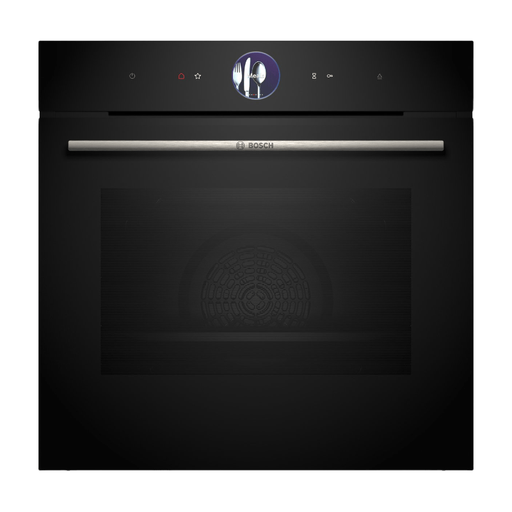
Bosch HSG7364B1 Series 8 built-in steam oven

Bosch HSG7364B1 Series 8 built-in steam oven, 60 × 60 cm

This built-in model may suit you if you’re looking for an oven for a fitted kitchen; check the housing, usable interior space and the baking settings required by your recipe.

The product name specifies a steam oven and a size of 60 × 60 cm.

View at Joybuy

HAUSWIRT C40 convection oven with thermometer, 35 l and four-level baking rack

HAUSWIRT C40 Smart Convection Oven, 35 l

A freestanding baking appliance to consider if you’re not looking for a built-in oven; check the space available and whether your cake tin will fit on the baking rack.

The product name specifies convection, a capacity of 35 l, a thermometer and a four-level baking rack.

View at Joybuy
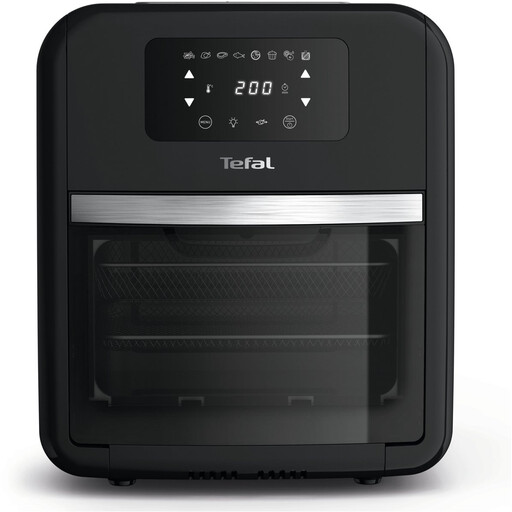
Tefal Easy Fry FW5018 air fryer oven and grill, 11 l

Tefal Easy Fry FW5018 9-in-1 air fryer oven and grill, 11 l

Consider this appliance if you’re looking at an air fryer oven; before buying, check whether the cooking space and baking function suit your cake tin and recipe.

The product name specifies a capacity of 11 l and a 9-in-1 air fryer oven and grill design.

View at Joybuy

Wiggo WMO-E657(B) freestanding oven, 65 l, black

Wiggo WMO-E657(B) freestanding oven, 65 l, black

A freestanding oven to consider if you’re not looking for a built-in model; measure the available space and check that your chosen loose-bottomed cake tin will fit inside.

The product name specifies a capacity of 65 l and a power rating of 2000 W. Manual cleaning is required.

View at Joybuy
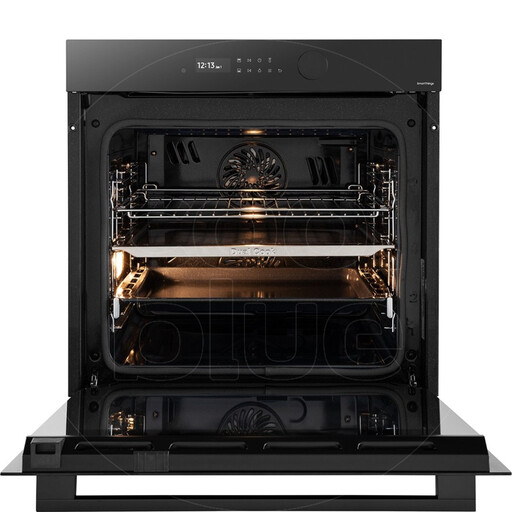
Samsung NV7B5655SCK/U1 built-in oven, 76 l, with Dual Cook

Samsung NV7B5655SCK/U1 built-in oven, 76 l, Dual Cook

This built-in model is worth considering if your kitchen has a suitable housing; check the dimensions, usable baking space and whether your chosen tin will fit.

The product name specifies 76 l, Dual Cook, pyrolytic cleaning and an AirFry function.

View at Joybuy

Frequently asked questions

What temperature should I set for my apple pie?

Follow the recipe you’re actually using. The Koopmans apple pie recipe with extra pastry specifies 180 °C for conventional baking or 165 °C for fan-assisted baking, with a baking time of 65–75 minutes. These settings aren’t universal for every pie.

How can I tell whether my loose-bottomed cake tin will fit in a freestanding oven?

Compare the dimensions of your cake tin with the usable interior space and follow the positioning instructions for the specific model. The capacity in litres and external dimensions alone won’t tell you whether the tin will fit.

Do I need to register with the NVWA for a one-off school bake sale?

According to the guidance from the Netherlands Food and Consumer Product Safety Authority (NVWA), anyone who sells food once a year doesn’t need to register with the NVWA. For sales several times a year, the NVWA requires registration and a food safety plan. Individuals selling food at events must also prepare, store and sell it safely and hygienically. Check the school’s own policy too.

What allergen information do I need to provide for unpackaged apple pie?

The NVWA explains that information about 14 allergens must be provided when selling or offering unpackaged food, either in writing or verbally. Check the ingredients in your own pie and make sure you can provide the relevant information; don’t rely on the name ‘apple pie’ alone.

What should I consider when it comes to energy use and cleaning?

Compare the energy consumption of suitable ovens on the same basis, for example per baking session, and follow the cleaning instructions for the model. Milieu Centraal points out that larger ovens can use more energy; an energy label alone isn’t enough to decide which is best.
