
Baker with limited worktop space
You’re looking for a freestanding oven for a small dish, and need to make room for both the appliance and its ventilation clearance.


Start by choosing your portion size and baking dish, then measure both the usable interior space and the room the appliance will need, including ventilation clearance. A mini oven works well with a small dish, while an air fryer can suit small portions in a compatible ovenproof dish. Choose a combination microwave if you also want to reheat food, or a compact built-in oven if you have a suitable housing unit. Capacity in litres alone won’t tell you whether your dish will fit.
You’re looking for a freestanding oven for a small dish, and need to make room for both the appliance and its ventilation clearance.
You make apple crumble in small ramekins and want to know whether an ovenproof dish will fit in an air fryer basket.
You want to make use of an existing built-in space without adding another appliance to your worktop.
A good choice if: you don’t have a built-in housing unit and your chosen dish fits inside.
The trade-off: a compact exterior can mean limited space inside. For example, the Tomado TEO2101B manual calls for 10 cm of clearance on all sides.
A good choice if: you make small portions in an ovenproof dish that fits in the basket.
The trade-off: Philips recommends leaving space around the dish in its Airfryers so air can circulate. A large rectangular dish may not fit.
A good choice if: you want one appliance for both baking and reheating, and the model has a useful oven function.
The trade-off: a standard microwave isn’t the same as an oven function. Check the baking settings too, as well as the space available for your dish.
A good choice if: you already have a suitable housing unit, or are adapting your kitchen to include one, and want to keep your worktop clear.
The trade-off: compact doesn’t necessarily mean narrow. Bosch lists dimensions of 455 × 594 × 548 mm for one compact model. Measure the housing unit, appliance and interior space.
| What to consider | What to look for | Who should pay particular attention? |
|---|---|---|
| Safe positioning | Compare the appliance’s external dimensions, plus the ventilation clearance specified in the manual, with the space available. Make sure the ventilation openings remain unobstructed. | If you have limited worktop space, you’ll also need to leave room around the oven. Safe positioning is the top priority for around 38% of consumers making this choice. |
| Dish and portion size | Measure your dish, including its handles, and compare it with the usable interior space, shelf space and door opening. | You’ll want a dish that suits the amount of crumble you’re making. For around 31% of consumers, dish and portion size are the main consideration. |
| Multiple functions in one appliance | Check whether the appliance has an oven function and whether its settings and interior dimensions are suitable for your dish. | If you also want to reheat food, an appliance with an oven function may be a better fit for your needs. This combination is the top priority for around 23% of consumers. |
| Energy use and aftercare | Where information is available, compare energy use per cooking session, cleaning options, spare parts and warranty terms. Don’t use wattage as a measure of energy use per cooking session. | You’ll want to consider how the appliance performs and what repair options are available, as well as how it bakes. Around 8% of consumers prioritise energy use and aftercare. |
Capacity doesn’t tell you whether a rectangular baking dish, including its handles, will fit through the door or sit inside the oven.
Measure your dish first and compare it with the interior dimensions and door opening. Then decide what capacity will work for your needs.
You may need to use a smaller baking dish or choose a different appliance.
With a freestanding model, you’ll need to allow extra space for ventilation as well as the appliance’s dimensions. Heat needs room to escape; the fire service advises leaving enough space around appliances.
Read the positioning instructions for the exact model before checking whether it will fit in the space available. For example, Tomado specifies 10 cm of clearance on all sides for the TEO2101B.
You may need to find another spot if there isn’t enough room around the appliance.
Milieu Centraal recommends using an oven or combination microwave for baking; a microwave function alone isn’t an oven function.
Check that your chosen model has an oven setting and that your dish will fit inside.
Without a usable oven function, you may still need access to an oven to bake apple crumble.
The TEO2101B is a 21-litre freestanding oven for anyone looking for a simple oven with room for a small dish.
The TO 2042 is a smaller freestanding oven for baking and toasting.
The OV-3627 is a larger freestanding fan oven for anyone who may find a smaller oven too restrictive.
Compact built-in ovens are an option if you have a suitable housing unit and don’t want an oven on your worktop.
An air fryer with a suitably sized ovenproof dish could be a good option for small portions of crumble.
This selection includes combination microwaves for baking and reheating, a built-in combination oven and freestanding mini ovens. For any electrical appliance, check that the specific product listing has a CE mark too: the Netherlands Food and Consumer Product Safety Authority says this is required for electrical equipment covered by the Dutch Commodities Act (Electrical Equipment) Decree.
 No image available
Could be a good fit if you want one appliance for baking and other types of cooking; check that your dish fits inside the oven compartment.
The description lists convection, a temperature setting of 110–210 °C and a baking tray. Don’t use metal or aluminium foil in microwave mode unless the manual allows it.
 No image available
Could be a good fit if you want one freestanding appliance for baking and reheating, provided the oven compartment is large enough for your dish.
The product description lists a glass turntable and seven automatic programmes. Allow for ventilation when placing it in a cupboard, and don’t use metal objects in the microwave.
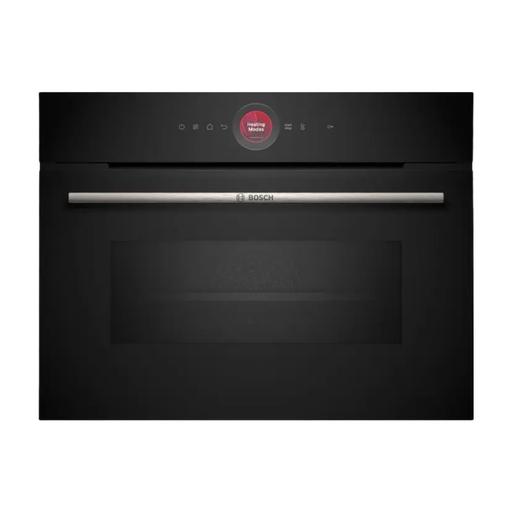 No image available
Could be a good fit if you have a suitable built-in housing unit and want to combine oven and microwave functions.
The description lists a capacity of 45 litres, convection and a maximum temperature of 230 °C. The stated housing unit dimensions are 45,5 × 56 × 55 cm; check the space available and the model’s installation instructions.
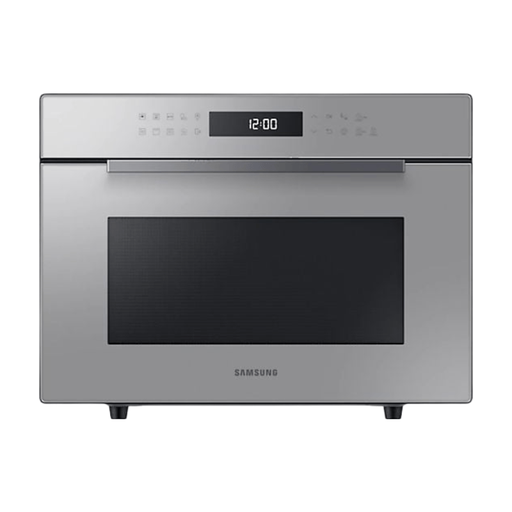 No image available
Could be a good fit if you’re looking for a combination microwave and its oven compartment is suitable for the dish you have in mind.
The description lists convection and the option to switch off the turntable to make room for large square baking dishes. Check the dimensions of both your dish and the appliance.
 No image available
Could be a good fit if you’re looking for a freestanding oven and your dish fits inside.
The product description lists top and bottom heat, convection and six functions. Place the oven on a stable, heat-resistant surface and keep the ventilation openings clear.
You can’t tell from the capacity alone. The AH Allerhande recipe for eight people calls for a 20 × 30 cm dish, while the Tomado TEO2101B manual gives interior dimensions of 305 × 290 × 233 mm. Before choosing this model for the recipe, compare your dish, including its rims and handles, with the interior space and door opening.
Yes, with a suitable ovenproof dish, as long as it fits in the basket and there’s space around it for air to circulate. Philips lists this as an option for its Airfryers. Check the maximum dish size for your model, and don’t assume that the cooking time for a full-sized oven will apply.
Follow the manual for the model you choose. Tomado specifies 10 cm of clearance on all sides for the TEO2101B and says the ventilation openings must not be covered. Don’t apply this clearance to other ovens unless their instructions say to.
According to the Dutch government, there’s no fixed time limit for statutory consumer guarantees in the Netherlands. If a product is faulty, the seller must provide a solution; normal wear and tear and damage caused by incorrect use aren’t automatically covered.
The Netherlands Food and Consumer Product Safety Authority says a CE mark is required for electrical equipment covered by the Dutch Commodities Act (Electrical Equipment) Decree. The low-voltage rules it refers to cover, among other things, equipment with a rated AC voltage of 50–1000 V. This doesn’t confirm that a particular product listing has the required mark or conformity documentation.