
Baker making one tray
Want to bake a recipe for almond biscuits at the weekend without choosing an oven with capacity you won’t use? First compare the oven settings and check that your baking tray will fit.


If you usually bake one tray of almond biscuits, choose an oven that fits your baking tray and offers the setting specified in your recipe; you don’t necessarily need a large built-in oven. For larger batches, extra usable space and manufacturer-approved multi-level baking can be useful, provided you have suitable baking trays. For a freestanding oven, measure the required ventilation clearance too; for a built-in model, check the housing recess and electrical connection.
Want to bake a recipe for almond biscuits at the weekend without choosing an oven with capacity you won’t use? First compare the oven settings and check that your baking tray will fit.
If you want to avoid baking several separate batches, look at the usable baking space and whether multi-level baking is explicitly supported. Having more shelf positions alone doesn’t prove that you can bake on all of them at the same time.
Does your choice depend on worktop space, ventilation clearance or an existing built-in recess? Compare the space required and the model’s installation requirements.
A good fit if: you usually bake a modest batch and don’t want to use a built-in recess.
Bear in mind: a smaller interior may mean more batches; check the tray size and ventilation clearance too.
A good fit if: you have more worktop space and want to use fan-assisted cooking as well as top and bottom heat.
Bear in mind: a larger capacity doesn’t automatically mean your baking tray will fit or that biscuits will bake evenly on several trays at once.
A good fit if: you have a suitable built-in recess and regularly bake larger quantities.
Bear in mind: the recess and electrical connection must be suitable; check how many compatible baking trays are included.
| What to consider | What should you check? | Who is this important for? |
|---|---|---|
| Oven setting and recipe | Check which oven setting and temperature your recipe specifies, and whether the oven offers those settings. | If I want to follow the settings in my recipe, I make sure I don’t treat conventional heat and fan-assisted cooking as interchangeable. Around 31% of consumers focus mainly on the oven setting and how well it matches the recipe. |
| Biscuits per batch | Compare the usable internal dimensions with your baking tray and check whether multi-level baking is explicitly supported. | If I want to make a larger quantity, I look at how many biscuits will fit on suitable trays and whether the oven supports baking on multiple levels. Around 25% of consumers focus mainly on the quantity they can bake per batch. |
| Space and installation | Measure the available space; for a freestanding model, follow the ventilation requirements, and for a built-in model, check the recess and electrical connection. | If I have limited space in my kitchen, I want to know in advance whether the model can be positioned safely or will fit in the existing recess. Around 25% of consumers focus mainly on installation and connection options. |
| Total cost | Check what’s included, whether you need additional compatible baking trays, and which installation and service terms apply. | If I only plan to use the oven for the occasional batch, I take into account any extra parts or installation I might need. Around 19% of consumers focus mainly on purchase and service costs. |
The usable space may be smaller than the stated capacity. A baking tray that doesn’t fit won’t help you bake the quantity of biscuits you have planned.
Compare the internal dimensions and baking tray with the quantity you want to make per batch.
If the tray doesn’t fit, you may need to bake more batches or find another suitable baking tray.
Having several shelf positions doesn’t automatically mean the oven supports baking on all of them at the same time. AEG states that the OU5PB40WPK comes with one baking tray.
Check the recommended oven setting, the levels supported for baking and the number of trays included separately.
You may need additional compatible baking trays for multi-level baking.
An oven needs to release heat, and the required clearance varies by model. The Tomado TEO2101B manual specifies 10 cm of clearance all around and says that ventilation openings must not be covered.
Measure the space, allowing for the clearance specified in the manual for the exact model, and keep ventilation openings unobstructed. Brandweer Nederland also highlights the importance of ventilation for ovens.
A manufacturer’s warranty is in addition to your statutory rights. According to the Dutch government, there is no fixed statutory warranty period in the Netherlands; if there’s a problem, contact the seller.
Read the terms of any additional warranty and keep your proof of purchase.
An extended warranty may come at an extra cost; compare the additional cover it actually provides.
The TEO2101B is a compact freestanding oven for anyone mainly looking for one suitable baking tray and straightforward controls.
The freestanding OV307B is worth considering if you want fan-assisted cooking as well as top and bottom heat.
According to Severin, the freestanding TO 2058 has a 42-litre capacity and offers top and bottom heat and fan-assisted cooking, which can be used separately or together.
The HBA534BS3 built-in oven is worth considering if you have a suitable recess and want to make use of several baking levels.
According to AEG, the OU5PB40WPK built-in oven combines multi-level baking with pyrolytic cleaning.
This selection includes freestanding mini ovens and built-in ovens for anyone looking for a suitable baking tray, oven setting or kitchen layout. Before buying, check the model’s dimensions and installation requirements.
 No image available
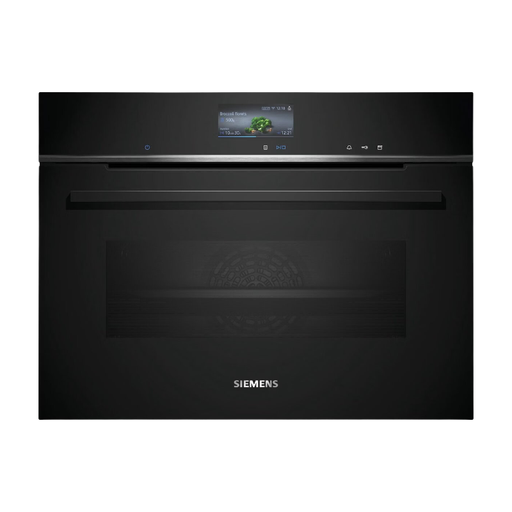
A built-in option to consider if you have a suitable recess and are looking for an oven with fan-assisted cooking; check the positioning and installation requirements.
The product name lists 47 l, 4D hot air, pyrolytic cleaning and Home Connect. Installation by a qualified electrician is specified for this built-in model.
 No image available
A built-in option to consider if your kitchen has a suitable recess and you want to use fan-assisted cooking.
The product name lists 71 l and 3D hot air. Check that the recess is suitable; installation by a qualified professional is specified for this model.
 No image available
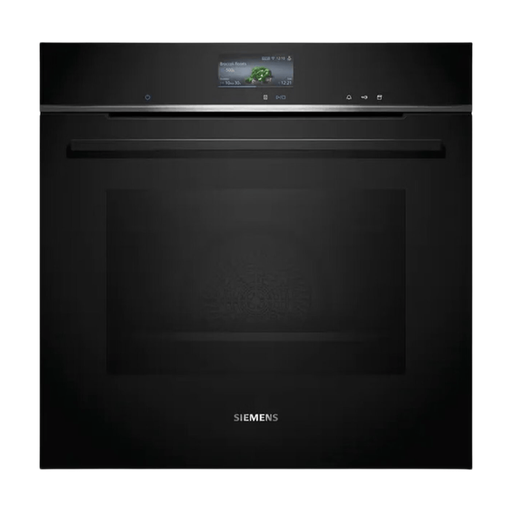
This built-in option could suit you if you have a suitable recess and are looking for an oven with fan-assisted cooking; check the installation requirements.
The product name lists 60 l, 4D hot air, pyrolytic cleaning and Home Connect. Installation by a qualified electrician is specified for this model.
 No image available
A freestanding model to consider if you don’t want to use a built-in recess; measure the available space and check the ventilation clearance.
The product name lists 2000 W, 45 l and white.
 No image available
A freestanding mini oven to consider if you have a small kitchen. Check that its dimensions and included baking tray suit the batch you want to bake.
Follow the oven setting and temperature in your own recipe. Dr. Oetker’s almond biscuit recipe specifies 180 °C with top and bottom heat or 160 °C with fan-assisted cooking, for 10–12 minutes; these settings won’t necessarily suit every recipe.
That depends on the oven setting and whether the model explicitly supports it; having several shelf positions alone isn’t proof. Also check that you have enough compatible baking trays, and bear in mind that the manufacturer’s specifications mentioned here aren’t test results for almond biscuits.
Follow the positioning instructions for the exact model and don’t put an oven anywhere that will block its ventilation openings. The Tomado TEO2101B manual specifies 10 cm of clearance all around; Brandweer Nederland also highlights the need for ventilation around ovens.
Let the oven cool and follow the model’s manual. The Tomado TEO2101B manual says to unplug the oven before cleaning; Inventum’s instructions for the OV307B say to wipe the inside clean.
No. According to the Dutch government, there is no fixed statutory warranty period in the Netherlands: you’re entitled to a product that works properly, and if there’s a problem, contact the seller. A manufacturer’s warranty is additional.