
Vandaag of morgen in huis

Kwaliteit gegarandeerd

Welkomstaanbiedingen ontgrendelen: GRATIS bezorging | Tot 80% korting | Gratis 30 dagen JoyPlus-proefperiode
Download de app
An outdoor wall light may seem easy to choose, but small differences determine whether you enjoy practical lighting for years or have to reinstall it after just a few months. With a solar outdoor wall light in particular, positioning and battery capacity are important. For a fixed outdoor wall light, you need to pay closer attention to the bulb fitting, wiring and protection against rain.
Three common pitfalls are:
The IP code indicates how well a fitting is protected against solid particles and water. With an IP44 outdoor light, the second digit 4 means protection against splashing water from various directions. This is generally suitable for an entrance, balcony, covered area or sheltered façade.
An IP65 outdoor light offers greater protection against dust and water jets. This is practical for a more exposed driveway, garage wall or garden wall. However, always check the complete product information and installation instructions. No IP rating makes a light suitable for immersion.
Also pay attention to the cable entry and seal during installation. A weather-resistant outdoor light can still develop moisture problems if it is fitted incorrectly.
An outdoor solar light does not require a fixed electrical connection. This makes it an attractive option for a balcony, garden shed or façade without existing wiring. Performance does depend on direct sunlight. A light beneath a deep canopy or on a north-facing wall may store less energy, particularly on dark and overcast days.
A fixed 230-volt outdoor wall light offers predictable performance, but it must be installed in accordance with local regulations. Have electrical connections carried out by a qualified electrician.
A rechargeable, cordless light is flexible, but requires regular charging. Check whether the light can be removed easily and what type of connection it uses.
Lumens indicate how much light a lamp produces. A modest light output may be sufficient for finding your way by a front door. For a driveway or garage, more light is often more practical. A lamp with 3000 K generally produces a more neutral warm white light; 2700 K looks softer and creates a cosier atmosphere.
With an integrated LED outdoor wall light, you do not need to buy a separate light source. The downside is that the LED module usually cannot be replaced by the user. A GU10 outdoor wall light or E27 outdoor wall light gives you more choice when it comes to brightness, colour and, where applicable, dimmability. Always check the maximum wattage and whether the fitting is suitable for your chosen LED bulb.

Why it suits this profile: This black outdoor light runs on solar power and does not require a mains connection. With two lighting modes, a daylight sensor and a motion sensor, it is suitable for an entrance, balcony or sheltered garden wall.
The product information clearly states IP44, 400 lumens per light point and two modes. This means you know what you are buying in advance, rather than relying solely on general claims about solar lighting.
No wiring required; integrated LED; warm white 2700 K light; motion sensor and automatic operation.
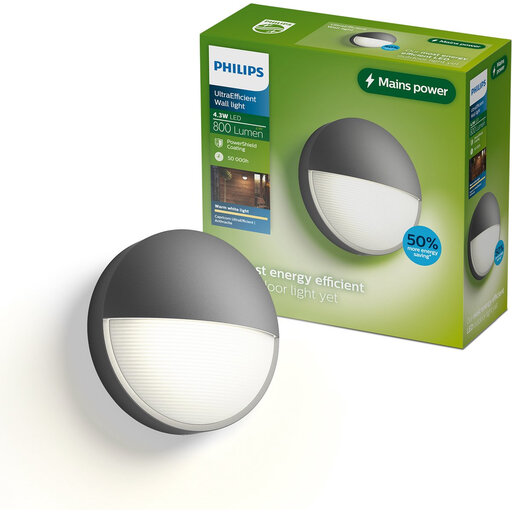
Why it suits this profile: This fixed outdoor wall light is designed for anyone looking for a streamlined fitting with fixed light specifications. The aluminium and plastic housing, 800 lumens and 2700 K colour temperature suit a façade, patio or balcony.
The light colour and output are specified in advance. Bear in mind that, according to the product information, the integrated LED cannot be replaced by the user.
800 lumens; 2700 K warm white; aluminium and plastic; IP44 rating; fixed mains connection.

Why it suits this profile: For a driveway, garage, large garden or rear path, a wide spread of light can be useful. This model has three adjustable light heads and a stated detection angle of 180 degrees.
The product description specifies 3000 lumens, IP65 and a detection range of 60 feet. Before installation, check that this strong light output is suitable for your surroundings and neighbours.
IP65; 302 LEDs; three lighting modes; three light heads; installation without electrical wiring.
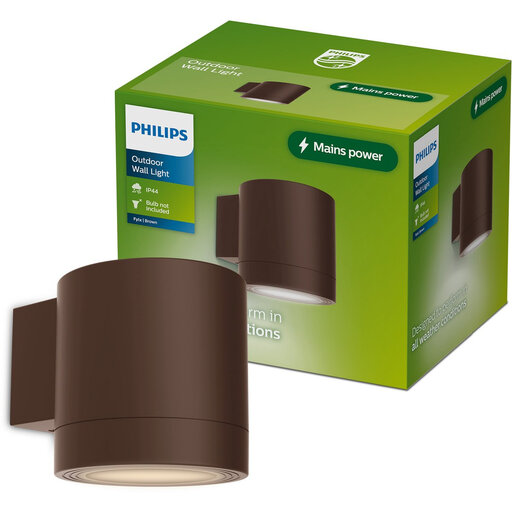
Why it suits this profile: With a GU10 fitting, you choose the light source yourself. This is useful if you later want to use a different colour temperature, brightness level or smart GU10 bulb.
The fitting is clearly specified, and the light is supplied without a GU10 bulb. This allows you to calculate the total purchase cost accurately in advance.
GU10 fitting; replaceable light source; aluminium; IP44; downward light distribution.
We have put together a complete, up-to-date list of products that fully meet these strict selection criteria and the applicable European safety regulations.
It can be, but performance depends on daylight, shade and the position of the panel. During darker periods, the operating time may be shorter. Do not position the light beneath a roof edge or behind tall plants, and keep the panel free from dirt.
For a front door or balcony, around 180 to 500 lumens may be sufficient for orientation and ambience. For a driveway, garage or large patio, a higher light output may be more practical. As well as lumens, consider the light distribution and installation height.
An LED light generally uses less power than older light sources, but consumption depends on the wattage and how long it is switched on. A motion sensor or timer can prevent the light from staying on unnecessarily. A solar outdoor light does not need a mains connection, but its battery still needs to charge sufficiently.
