
Vandaag of morgen in huis

Kwaliteit gegarandeerd

Welkomstaanbiedingen ontgrendelen: GRATIS bezorging | Tot 80% korting | Gratis 30 dagen JoyPlus-proefperiode
Download de app
The right outdoor lighting makes an entrance easier to see, creates a more inviting atmosphere on the patio and helps you move safely through the garden. However, choosing the right product is not always straightforward. Product pages often mention terms such as waterproof, durable and energy-efficient, while the practical differences between lights can be significant.
As a Joybuy Product Recommendation Officer, I therefore focus mainly on verifiable details: IP rating, light output, colour temperature, power supply and installation. This helps you avoid buying a light that no longer suits its location or intended use after just a few months.
An IP44 outdoor light is protected against splashing water and solid particles of a certain size. This does not mean that the light is suitable for immersion, direct jets of water or a completely exposed location where it is subjected to prolonged rainfall. Both the Philips Swyn and various Brilliant lights have an IP44 rating. According to the product information, they are splash-resistant but must not be immersed.
IP44 can be suitable for a façade beneath a canopy. For a location exposed to heavy rain and wind, it may be worth considering a higher protection rating, such as IP65.
Solar outdoor lighting only works well when the panel receives enough direct sunlight during the day. Shade from a fence, tree or overhang can extend charging times and shorten the operating time. The stated performance also depends on the weather and the season.
So, do not position a solar panel based on appearance alone. Also check its direction, unobstructed view of the sky and accessibility for maintenance.
More lumens mean more light, but not automatically a better choice. For path lighting, an even, moderate light output is often more pleasant than a bright beam. An entrance or driveway may benefit from a light with a sensor and higher light output.
Colour temperature is also important:
The first two digits after “IP” indicate what a product is protected against. The second digit relates to moisture. IP44 is suitable for splashing water, but not powerful jets of water. IP65 offers a higher level of protection against water and dust, but always check the product’s specific installation instructions.
Also pay attention to the difference between a light designed for outdoor use and waterproof outdoor lighting. Marketing copy sometimes uses these terms rather broadly. Where possible, check the official IP rating in the specifications.
Solar lighting, such as solar-powered garden lighting, does not require a fixed electrical connection. This makes installation easy, but its performance depends on sunlight and battery capacity. According to the product details, the Aigostar Solar Lawn Light has a 100 mAh NiMH battery, a charging time of 4 to 6 hours and a stated operating time of 8 to 12 hours.
A USB-rechargeable light is more flexible for a balcony, dark side wall or covered patio. Mains power provides a constant supply, but fixed outdoor lights connected to 230 volts must be installed by a qualified electrician.
A solar wall light with motion sensor can be useful by a back door, garage or driveway. Check the detection angle, range and whether the light offers different modes. A sensor prevents the light from staying on continuously, but it can also respond to pets, traffic or moving branches.
Also consider the direction of the light. An uplight/downlight creates a decorative effect on the façade. Path lighting with a tall stake directs the light towards the ground and helps with orientation.

Why it suits this profile: This spike light is easy to place in the ground and works without wiring. It is therefore suitable for a garden path, flower border or balcony planter with sufficient sunlight.
The specifications state IP44, a polycrystalline solar panel and a NiMH battery. This allows you to assess in advance whether the intended sheltered location is suitable.
Stainless steel housing, 550 mm height, 6500K colour temperature and a stated operating time of 8 to 12 hours.
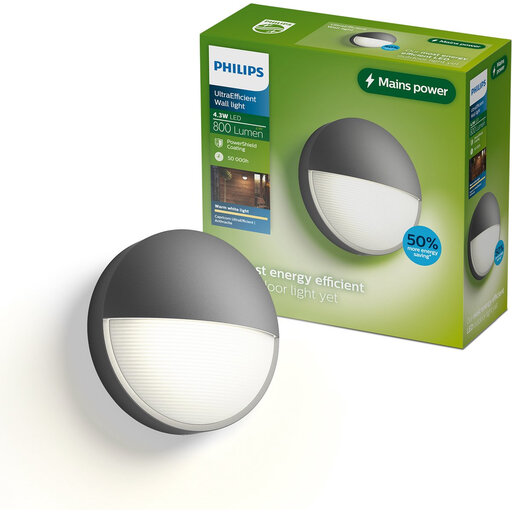
Why it suits this profile: This fixed outdoor wall light is suitable for a façade, entrance or covered patio where a constant light source is preferred.
The product information clearly states IP44 and professional mains installation. This makes it clear in advance that it is not a wireless solar solution.
Aluminium and plastic construction, integrated LED, 800 lumens and warm white light at 2700K.

Why it suits this profile: The three adjustable light heads and motion sensor are designed for driveways, garages, back gardens and larger areas where orientation or sensor-activated security lighting is required.
Instead of simply stating “waterproof”, the protection rating is specified as IP65. The light must still be installed correctly, and the panel must receive direct sunlight.
302 LEDs, a stated light output of 3000 lumens, three modes, three light heads and a detection angle of 180 degrees.
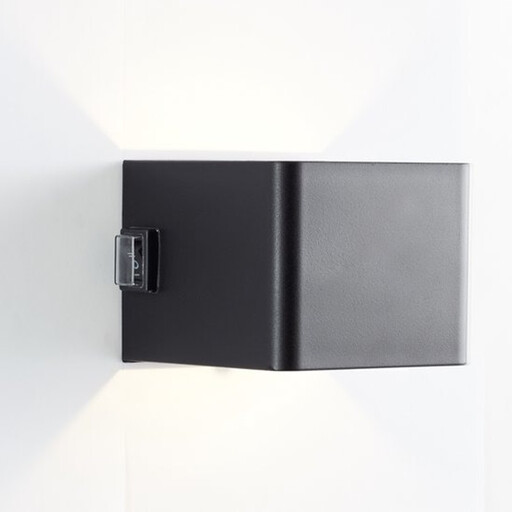
Why it suits this profile: This wireless light with USB-C charging and magnetic mounting is practical when you do not want to drill into an exterior wall or may want to move the lighting later.
The product information states IP44 and warns that the light is not waterproof. The magnetic mounting plate must also be secured firmly to a flat, suitable surface.
Integrated 4W LED, 300 lumens, 3000K, motion sensor and rechargeable 18650 batteries.
We have put together a complete, up-to-date list of products that fully meet these strict selection criteria and the applicable European safety regulations.
For a garden path or decorative lighting, a lower light output is often sufficient. More light is useful for a front door, driveway or sensor light. As well as lumens, consider the beam angle, mounting height and distance from the surface you want to illuminate.
It can be, but operating time may decrease during shorter days, cloudy weather and periods with little direct sunlight. Position the panel as unobstructed as possible and keep it clean. For lighting that needs to work consistently every evening, mains power generally provides a more predictable supply.
LED lights generally use very little electricity. With solar lighting, the energy comes from the integrated panel; USB models require the battery to be charged. The actual cost depends on the power rating, number of operating hours and local electricity price. Before comparing products, check the stated wattage and consumption per 1000 hours.
