
Vandaag of morgen in huis

Kwaliteit gegarandeerd

Welkomstaanbiedingen ontgrendelen: GRATIS bezorging | Tot 80% korting | Gratis 30 dagen JoyPlus-proefperiode
Download de app
Good outdoor lighting should suit the location, purpose and outdoor conditions. A light for atmospheric patio lighting has different requirements from a bright outdoor lamp for the driveway. Yet many models look similar in online shops. As a result, buyers sometimes focus mainly on lumens, design or a low price, while important details receive less attention.
A high lumen count sounds appealing, but it does not tell you how the light is distributed. A narrow beam can brightly illuminate a façade while leaving a path in darkness. So also check the beam angle, the number of light points and the installation height.
For ambience on a balcony or patio, 140 to 300 lumens is often more practical than a powerful floodlight. For driveway lighting or a larger garden, a higher light output may be more suitable.
The IP rating indicates what types of exposure a light is protected against. IP44 means protection against splashing water, but not against immersion or powerful water jets. This type of outdoor light is generally suitable beneath a canopy or on a sheltered façade.
A model with IP65 offers greater protection against dust and water jets, according to the product specification. Even then, install the solar panel and housing in accordance with the installation instructions. A high IP rating does not automatically make a light suitable for every extreme weather condition.
A solar outdoor light needs sufficient daylight during the day to charge its battery. A position beneath a balcony, tree or close to a tall fence can reduce operating time. Also consider the battery capacity, the angle of the solar panel and the selected lighting mode.
According to Philips’ own product information, the Swyn and Fyns models run on solar power and do not need to be connected to the mains. This makes installation easier, but operating time still depends on sunlight and charging conditions.
Colour temperature is measured in kelvin (K):
Lumens indicate the amount of light produced. Ideally, compare products intended for the same type of use. A decorative table lamp producing 170 lumens is not designed to fully illuminate a driveway. A model with 1000 lumens or more may be more suitable, provided the light distribution is right.
Solar-powered outdoor lighting eliminates cables and is useful for rented homes, balconies and areas without a power socket. Check whether the light works exclusively on solar power or can also be charged via USB. A combination of solar and USB offers greater flexibility when there is little sunshine.
A wired wall light is suitable for permanent façade lighting, but installation on 230 volts must be carried out by a qualified electrician in accordance with the product specification. Also check whether a light bulb is included. With GU10 and E27 lights, the fitting is sometimes supplied without a bulb.
An outdoor light with a motion sensor can switch on automatically when movement is detected. Check the detection angle and range. The UME light states a detection distance of 60 feet, equivalent to approximately 18 metres, and a detection angle of 180 degrees. Its precise performance depends on the installation height, temperature and surrounding area.
Also consider how the light is mounted. A magnetic light can be removed quickly for charging, while a wired wall light requires permanent mounting and an electrical connection. With solar products, positioning the panel is at least as important as positioning the light itself.
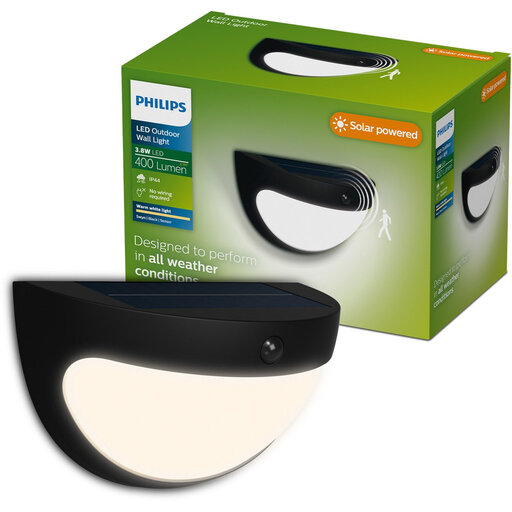
Why it suits this profile: This solar wall light works without wiring and has two lighting modes, a daylight sensor and a motion sensor. That makes it a straightforward choice for a first installation by an entrance, balcony or patio.
The product information states IP44 and specifies that the light must not be immersed. This makes it clear that it is mainly suitable for sheltered outdoor locations.
Solar power, 400 lumens per light point, warm white light at 2700 K and a minimum two-year statutory guarantee in the EU.

Why it suits this profile: The Fyns combines an integrated LED, 1000 lumens, 3000 K and a motion sensor. It is ideal for anyone looking for a permanent solar outdoor light for an entrance, garden or façade.
The specifications state both the light output and the IP44 rating. This makes it easier to assess the light against the intended location and local weather conditions.
1000 lumens, 3000 K, two lighting modes and installation without a mains connection.

Why it suits this profile: This solar floodlight is designed for larger gardens, garages, driveways and other areas where broad light coverage is needed.
The description mentions three adjustable heads, a 270-degree angle and three modes. However, check that the installation location receives sufficient direct sunlight.
302 LEDs, a stated light output of 3000 lumens, an 1800 mAh battery and IP65 according to the product description.
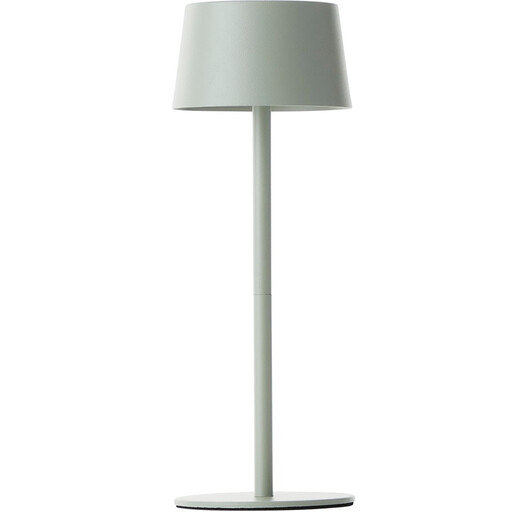
Why it suits this profile: This freestanding light is designed for a stable table or another flat surface. Solar and USB charging make it practical on a balcony, patio or during an evening outdoors.
This light is not intended for broad security lighting. The description clearly presents it as a table lamp with IP44 splash protection.
170 lumens, 3000 K, three dimming levels and charging via solar power or USB.
We have put together a complete, up-to-date list of products that fully meet these strict selection criteria and the applicable European safety regulations.
For a sheltered location, IP44 may be suitable, as this rating indicates protection against splashing water. For a more exposed location, a higher rating such as IP65 may be more practical. Always check the installation instructions and avoid immersion unless this is explicitly permitted.
Operating time per night depends on sunlight, the battery, light intensity and the selected mode. Clean the solar panel regularly and position it so that it receives direct daylight during the day. A cloudy day or shady position can reduce the available operating time.
Solar outdoor lighting does not use electricity from the mains. With USB or mains-powered models, energy consumption depends on the wattage and operating time. LED outdoor lights are generally economical to run; compare the wattage, light output and any EU energy information in the product details.
