
Vandaag of morgen in huis

Kwaliteit gegarandeerd

Welkomstaanbiedingen ontgrendelen: GRATIS bezorging | Tot 80% korting | Gratis 30 dagen JoyPlus-proefperiode
Download de app
Good outdoor lighting needs to do more than look attractive in a product photo. A light for your driveway needs different features from an atmospheric table lamp for your balcony. Yet many buyers focus mainly on lumens, colour and design. This can lead to problems such as a lamp that barely stays on after a few cloudy days, a motion sensor that reacts too slowly or a wall light that turns out not to be suitable for an exposed exterior wall.
With this buying guide, you can compare the main types of garden lighting: from a solar outdoor light and LED outdoor light to an outdoor wall light, smart garden lighting and an outdoor LED string light.
Lumens indicate how much light a lamp emits according to its product specifications. The light distribution is just as important. A lamp with a wide beam angle can illuminate a driveway or patio more evenly than a bright lamp that directs its light at a single point.
Also pay attention to the colour temperature. Around 2700–3000 K usually creates a warmer look for a patio or entrance. A higher colour temperature looks whiter and may be more practical for functional lighting, for example near a garage.
An IP rating consists of two digits. The first indicates protection against solid particles, while the second refers to water. IP44 includes protection against splashing water. This makes a lamp suitable for many sheltered outdoor locations, but not for immersion or direct jets of water.
A product with IP65 offers a higher level of protection against dust and water jets. Always check where the lamp will be installed. An IP44 outdoor wall light beneath a canopy is a different choice from lighting that is fully exposed to rain and wind.
A solar-powered garden light needs sufficient daylight to charge its battery. Beneath dense foliage, on the north-facing side of a property or on a balcony with lots of shade, the operating time may be disappointing. So check the position of the solar panel, the battery capacity and whether the lamp can be recharged.
With solar garden lighting featuring a motion sensor, it is also important to check which lighting modes are available. An energy-saving mode may only activate when movement is detected, while another mode may remain dimly lit.
Use lumens as a point of comparison, but match the value to the intended purpose:
A dimmable outdoor light gives you greater flexibility. You may want soft lighting for dinner, while brighter light is more useful when tidying up.
A solar outdoor light works without a fixed mains connection, but depends on sunlight. A lamp with USB charging offers a practical alternative during periods with little sunshine. A mains-powered model provides a constant power supply, but requires the cable and socket to be positioned safely.
Smart outdoor lighting can be controlled via Bluetooth, an app or a voice assistant. Check whether an account, Wi-Fi connection or specific app is required. For an outdoor LED string light, timer functions and replaceable bulbs are useful, but pay attention to the maximum connection length and the protection provided for plugs and connectors.
When choosing an outdoor light with a motion sensor, check the detection distance and viewing angle. A wide angle is useful near a driveway or back door, while an overly sensitive sensor may also detect movement from passers-by or branches.
Also check whether the light needs to be wall-mounted, placed on the ground or hung up. Fixed 230V wall lights must be installed by a qualified electrician. Solar and battery-powered models are easier to position, but still need to be securely mounted or placed.
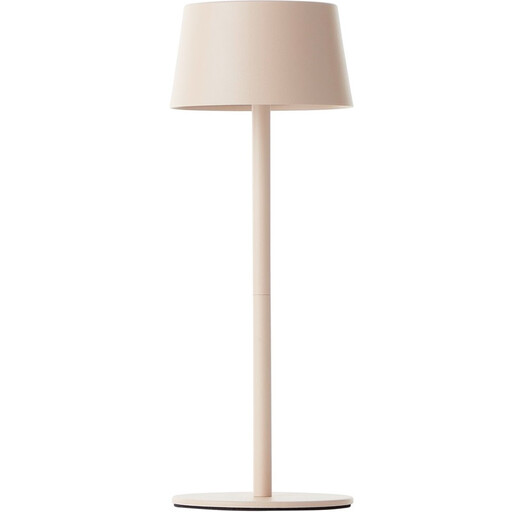
Why it suits this profile: This freestanding lamp is easy to place on a balcony, table or patio. Solar and USB charging provide two options without requiring permanent installation.
The IP44 rating is not presented as fully waterproof. When there is little sunshine, you can charge the integrated battery via USB.
170 lumens, warm white light at 3000 K, three dimming levels and two possible mounting heights.

Why it suits this profile: The three adjustable heads and wide light coverage are ideal for a large garden, garage, driveway or back garden where functional lighting is needed.
The product specifications state IP65, a detection distance of 60 feet and a detection angle of 180°. However, check that the installation location receives enough direct sunlight.
302 LEDs, a stated light output of 3000 lumens, three lighting modes and adjustable coverage of up to 270°.
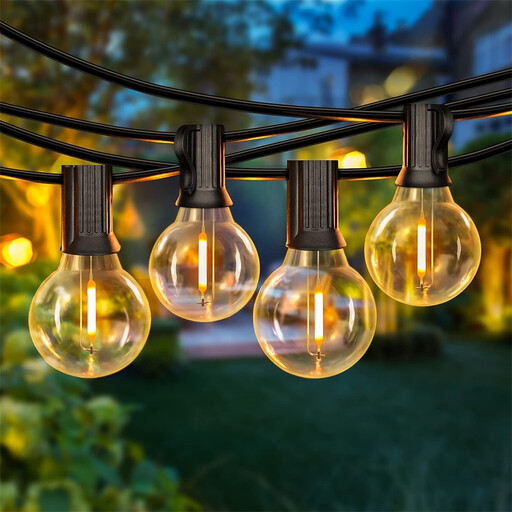
Why it suits this profile: For a long pergola, balcony edge, garden party or patio, this plug-in string light provides a constant power supply without relying on a solar panel.
The bulbs are replaceable and the maximum connection capacity is specified. Keep plug connections away from standing water and do not exceed the limit.
30-metre length, 50+2 LEDs, dimming function, multiple lighting modes, timer and replaceable G40 bulbs.

Why it suits this profile: It is designed for anyone who wants to adjust lighting for borders, plants or a garden path using app or voice control, depending on the occasion.
The IP44 rating makes the installation limitations clear. Keep cables away from walkways to reduce the risk of tripping.
Set of three, 660 lumens, dimmable, RGB and CCT settings, Bluetooth and compatibility with Tuya Smart.
We have put together a complete, up-to-date list of products that fully meet these strict selection criteria and the applicable European safety regulations.
For a sheltered location, IP44 may be suitable, as this rating indicates protection against splashing water. For a location with greater exposure to rain and dust, a higher rating such as IP65 is often more practical. Always check the installation instructions and do not use an IP rating as a substitute for correct electrical installation.
The operating time depends on the amount of sunlight, battery capacity, temperature and the selected lighting mode. Clean the solar panel regularly with a soft cloth and position it in as much direct daylight as possible. With a solar outdoor light featuring multiple settings, the lowest setting may provide light for longer than continuous bright illumination.
For a fixed LED outdoor light, energy consumption depends on the wattage and the number of hours it is switched on. A low wattage and a timer or motion sensor can limit the number of hours it operates. Solar lighting does not use mains electricity while in operation, but the purchase price and any battery replacement still form part of the overall cost. For smart outdoor lighting, also check whether app control or additional equipment is required.
