
Vandaag of morgen in huis

Kwaliteit gegarandeerd

Welkomstaanbiedingen ontgrendelen: GRATIS bezorging | Tot 80% korting | Gratis 30 dagen JoyPlus-proefperiode
Download de app
An outdoor light needs to do more than look attractive in a product photo. In the Netherlands, outdoor lighting has to cope with rain, wind, moisture and changing temperatures. Yet many buyers focus mainly on design and price. This can lead to the same problems: the light is not bright enough, the battery runs out quickly or the housing turns out to be less suitable for the chosen location.
As a Joybuy Product Recommendation Officer, I therefore start by looking at verifiable specifications. Below, you’ll find what to consider and which popular options suit different uses.
Wattage mainly indicates energy consumption, not the amount of light produced. Look at lumens (lm) instead. A small outdoor table lamp with 170 lm is designed to create ambience on a table, while path or wall lighting with 550 to 800 lm can illuminate a larger area.
Also consider the colour temperature:
An IP44 outdoor light is protected against solid objects larger than 1 millimetre and water splashes from various directions. This makes IP44 suitable for many sheltered patios, walls and balconies, but not for immersion or direct jets of water.
An IP54 outdoor light also provides a higher level of protection against dust. IP54 is not designed to stand underwater either. Do not place an IP44 or IP54 light where water remains for long periods.
A solar outdoor light needs enough daylight during the day to charge its battery. In a shady garden, beneath a covered area or during dark winter days, the operating time may be shorter than expected. A model with USB charging offers greater flexibility.
Also check whether the light source and battery are integrated. On many LED models, the LED cannot be replaced by the user. This means less maintenance, but it also means you may need to replace the entire light if the light source develops a fault.
Choose the protection rating based on the location. IP44 may be suitable for a covered balcony or sheltered wall. For a freestanding garden light or lighting along a path, sturdy installation and a stable surface are at least as important as the IP rating.
For 230-volt electrical wall lighting, installation must comply with local regulations. Have a permanently connected outdoor wall light installed by a qualified professional. Switch off the power before installation or maintenance.
A path light mainly illuminates the route you walk along. A wall light can highlight an entrance or façade. An outdoor table lamp usually creates a limited, local pool of light. In addition to lumens, consider the direction of the light. Downward-facing light can help illuminate a path or planted border clearly without causing unnecessary glare in the surrounding area.
A fixed connection is practical for everyday use and consistent lighting. A solar outdoor light works wirelessly, but depends on sunlight. A rechargeable USB lamp is easy to move and recharge.
A dimmable outdoor light is useful when you want to switch between functional and atmospheric lighting. An outdoor light with a sensor switches on automatically when it detects movement. With a sensor light, check what the sensor responds to and whether the light is stable enough not to shift position.
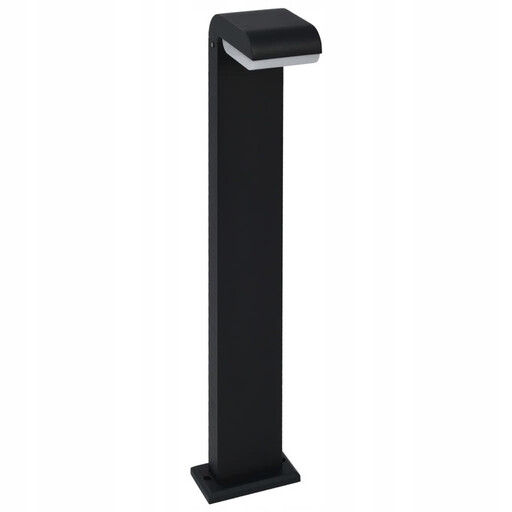
Why it suits this profile: This freestanding outdoor light has a straightforward design for anyone looking for a fixed LED solution for a garden path, border or entrance.
The product information states 550 lm and IP54. This makes the light output and protection rating easier to assess than with a light described only as “weather-resistant”.
9 W integrated LED, 550 lm, cast aluminium and 800 mm height.

Why it suits this profile: This Philips outdoor light is suitable for a garden path, driveway or border where higher light output and a fixed post are preferred.
The specifications state 800 lm, 4.3 W and IP44. According to Philips, the light has a PowerShield coating; this is brand information and not a general guarantee for every installation situation.
Warm white 2700K, aluminium housing and a stated service life of 50,000 operating hours according to the product information.
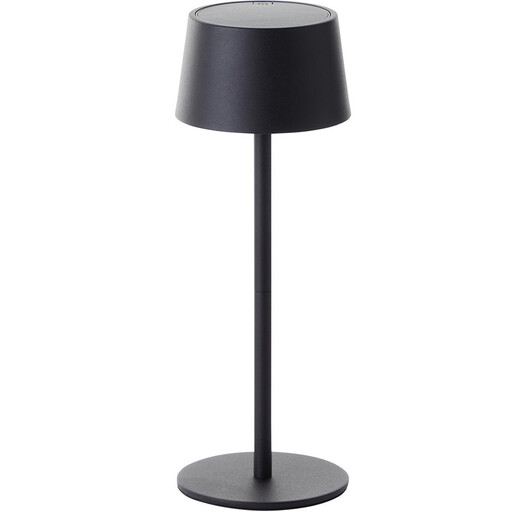
Why it suits this profile: Ideal for a balcony, patio or outdoor table where you want to combine wireless lighting, dimming and USB charging.
As well as solar charging, USB A is available. This makes you less dependent on sunlight. IP44 does provide protection against splashes, but it does not mean the light is completely waterproof.
170 lm, warm white 3000K, integrated battery, solar function and three dimming settings.
We’ve put together a complete, up-to-date list of products that fully meet these strict selection criteria and the applicable European safety regulations.
IP44 may be suitable for a sheltered outdoor location. If the light is more exposed to dust and moisture, IP54 offers a higher level of dust protection. Neither rating means that the light may be submerged or can withstand high-pressure water.
For a small table lamp, 170 lm is mainly suitable for ambient lighting. For a path light or freestanding outdoor light, around 300 to 600 lm may be more practical. For an entrance or larger area, a model of around 800 lm can provide better visibility. The right choice also depends on the height, beam angle and distance to the area being lit.
An LED outdoor light generally uses little power in relation to its light output. Consumption depends on the wattage and the number of operating hours. Solar and USB models can work without a fixed mains connection, while a permanently connected light is most suitable when you need regular, predictable lighting.
