
Vandaag of morgen in huis

Kwaliteit gegarandeerd

Welkomstaanbiedingen ontgrendelen: GRATIS bezorging | Tot 80% korting | Gratis 30 dagen JoyPlus-proefperiode
Download de app
Peace of mind about the security of your home or business is important. You want to keep an eye on your driveway, garden, or entrance without complex installations or high costs. The market for outdoor Wi-Fi security cameras is vast, and it can be challenging to navigate the specifications and marketing jargon.
This guide is designed to help you. As a Joybuy Product Recommendation Officer, I filter the available information and provide you with practical guidance to choose a camera that fits your situation. We'll look at the features that truly matter and highlight some popular models.
Before we look at specific products, here are a few key points to consider. These will help you determine which features are essential for you.
Resolution determines how sharp the image is. Full HD (1080p) is often the standard, but 2K (1440p) offers significantly more detail, which can be useful for identifying people or license plates.
Another important feature is night vision. Standard infrared provides black-and-white images in the dark. A security camera with colour night vision uses ambient light or built-in lighting to provide a clear, coloured image even at night. This yields significantly more usable footage if an incident occurs.
A static camera records a fixed area. For more flexibility, an outdoor PTZ camera is a great option. PTZ stands for Pan (horizontal rotation), Tilt (vertical movement), and Zoom. This allows you to remotely adjust the camera's viewing angle and zoom in on specific details.
Modern cameras almost always include a camera with motion detection and an app. As soon as motion is detected, you receive a notification on your smartphone. Some models offer smart detection that distinguishes between people, animals, and vehicles, which reduces the number of unnecessary alerts.
Footage needs to be stored somewhere. The two most common options are:
A wireless security camera connects to your network via Wi-Fi, which simplifies installation. Note: 'wireless' usually refers only to the data connection. Most models still require a power cable. There are also models that run on a rechargeable battery for complete wireless freedom.
Based on the criteria above, we have selected a few models that are popular with homeowners and small business owners.
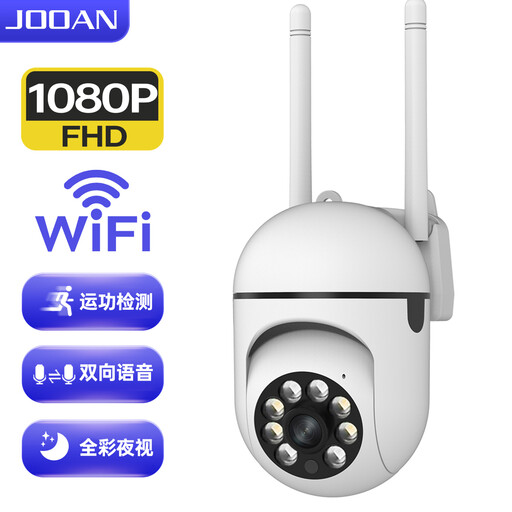
Why this model stands out: This camera offers full PTZ functionality, meaning you can survey a very large area. With a 355-degree rotation and 90-degree tilt, you'll miss almost nothing. The camera also supports auto-tracking, following a moving object.
Advantages:
Who is this for?: For users who want to monitor a large garden, a corner of a building, or a wide driveway and want the flexibility to control the camera remotely.
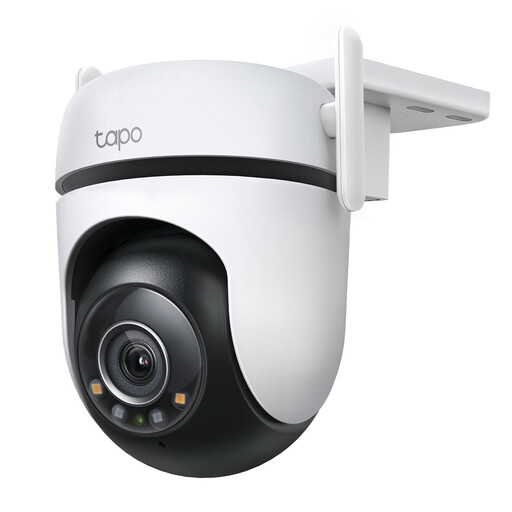
Why this model stands out: The TP-Link Tapo camera is known for its user-friendliness and reliable performance. This model combines a sharp 2K QHD resolution with advanced night vision. According to TP-Link, its 'Starlight' sensor provides brighter colours in the dark than many other cameras. The free AI detection for people, pets, and vehicles is a significant plus.
Advantages:
Who is this for?: For those who prioritise image quality and smart, accurate notifications. A solid choice for securing the most important areas around your home.
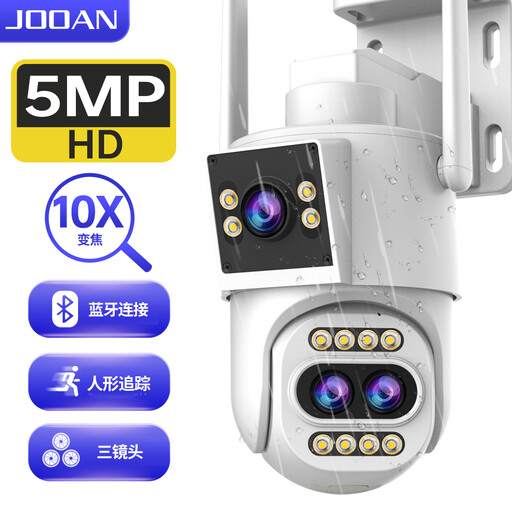
Why this model stands out: This is a unique outdoor IP camera with three lenses and a dual-screen view in the app. The combination of a fixed lens for an overview and a PTZ lens with 10x optical zoom is rare in this price range. Optical zoom preserves image quality, unlike digital zoom.
Advantages:
Who is this for?: Ideal for users with a large property, a long driveway, or the need to capture distant details sharply without loss of quality.
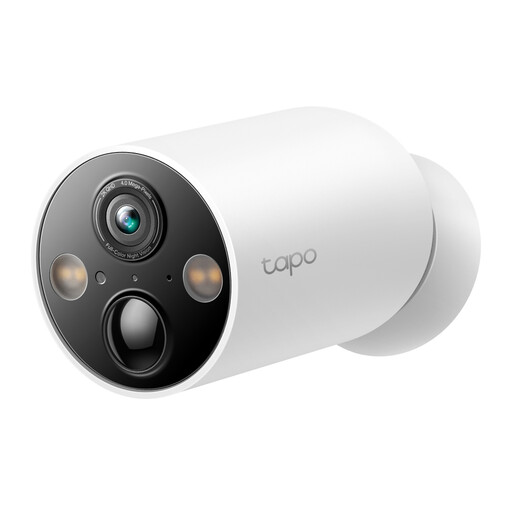
Why this model stands out: This camera offers ultimate installation freedom. It is 100% wireless thanks to its built-in rechargeable battery and can be easily placed on metal surfaces with its magnetic base. No fuss with power cables.
Advantages:
Who is this for?: Perfect for renters, or for locations where there is no power outlet nearby, such as a fence, tree, or the side of a shed.
The cameras mentioned above are excellent standalone solutions. However, if you are looking for a more integrated solution, such as a set of multiple cameras specifically designed for monitoring a driveway, check out our selection of driveway security camera systems for more options.
A Wi-Fi camera connects to the wireless network in your home. Through an accompanying app on your smartphone or tablet, you can watch live footage, review recordings, and adjust settings from anywhere, as long as you have an internet connection.
Not always. Most cameras offer the option to store footage locally on a microSD card. This is a one-time purchase with no monthly fees. Cloud storage, where footage is saved online, usually requires a paid subscription. Many brands offer a free trial period.
This is a common point of confusion. The term 'wireless' typically refers to the Wi-Fi connection for data. Most of these cameras still need a power cable that runs to an outlet. Models like the TP-Link Tapo C425 run on a rechargeable battery and are therefore truly wireless. Always check this in the product specifications.
