
Vandaag of morgen in huis

Kwaliteit gegarandeerd

Welkomstaanbiedingen ontgrendelen: GRATIS bezorging | Tot 80% korting | Gratis 30 dagen JoyPlus-proefperiode
Download de app
An outdoor wall light can make an entrance feel safer, create a more inviting patio or illuminate a dark exterior wall. However, the difference between a suitable outdoor wall light and a poor purchase often only becomes apparent after a few weeks. A light may be advertised as “weatherproof”, for example, without being suitable for a location exposed to direct rain. Light output, bulb fitting and installation costs are also regularly overlooked.
This buying guide helps homeowners, tenants and gardening enthusiasts compare offers based on verifiable specifications.
An IP44 outdoor light is protected against solid objects larger than 1 mm and water splashes from various directions. This does not mean that the light is waterproof or suitable for a location where rainwater remains in direct contact with it. IP44 may be suitable for a sheltered wall, balcony or covered patio. On a completely exposed wall, a higher protection rating, such as IP65, may be more practical.
Also check whether the seal only applies when the light has been installed correctly. With some models, the IP rating is only maintained if the cover, glass and connections are properly sealed.
A modern outdoor light should not only complement the exterior wall. Pay attention to the light distribution as well. A light that shines in two directions creates a decorative effect on the wall, while a solar outdoor light with a motion sensor is particularly useful near a shed, gate or driveway.
A light with an integrated LED is ready to use straight away, but the light source often cannot be replaced. With a fitting featuring an E27 or GU10 socket, you can choose the colour temperature, brightness and, if required, a smart bulb yourself. The trade-off is that you still need to purchase the light source separately.
A wireless solar outdoor light does not require a permanent power connection, but the solar panel must receive enough direct daylight. A wired 230 V light requires a suitable wall box and a safe connection. If you are unsure about electrical installation, it is advisable to engage a qualified installer.
Installation with magnets or double-sided tape also deserves attention. Check that the surface is flat, clean and sufficiently sturdy. A light that comes loose can cause damage.
The first two digits of the IP code indicate protection against solid substances and water. For many sheltered applications, IP44 is a common choice. For a wall exposed to heavy rain, it is worth considering a model with a higher rating.
Pay attention to placement:
Colour temperature is expressed in kelvin:
Lumens indicate the amount of light produced. A 300-lumen light is not automatically suitable for illuminating an entire wall. Also consider the beam angle and whether the light shines upwards, downwards or in all directions.
An LED outdoor light with an integrated light source is generally easy to install. However, check the stated wattage, lumen value and whether the LED can be replaced. With an E27 or GU10 fitting, you can choose a different bulb later, such as a dimmable or smart LED bulb.
Solar lighting does not use mains electricity, but its operating time depends on sunlight, battery capacity and how often the motion sensor is used. Clean the solar panel regularly with a soft cloth.
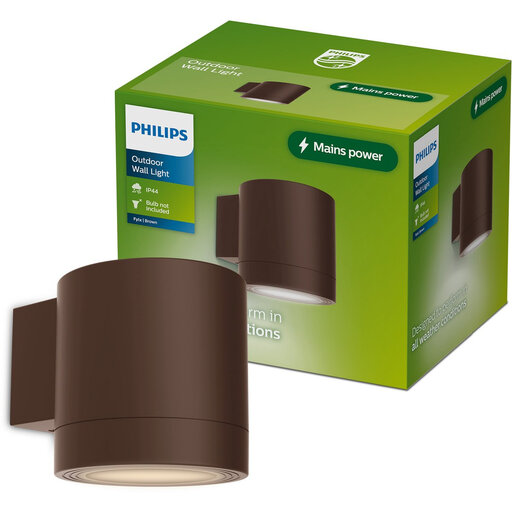
Why it suits this profile: This compact fitting has a GU10 socket, giving you control over the light source. You can choose a suitable GU10 LED bulb in your preferred colour temperature and replace it later when necessary.
The product information clearly states that it has a GU10 socket and an IP44 rating. Bear in mind that the GU10 bulb is not included and that IP44 does not mean completely waterproof.
Aluminium housing, one GU10 light point and dimensions of approximately 8.9 × 11.6 × 9 cm. Available in a minimalist design.
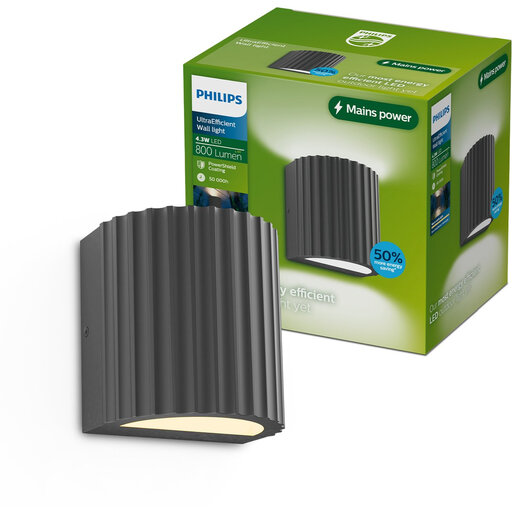
Why it suits this profile: This integrated LED wall light is designed for permanent exterior wall lighting without a separate fitting. Its two light beams create a distinct upward and downward effect.
The specifications state 800 lumens, 2700 K and IP44. This allows you to compare the colour temperature and protection level with your requirements in advance, rather than relying solely on the product photograph.
Integrated LED, 4.3 W, warm white light and a stated lifespan of up to 50,000 operating hours. The lifespan claim comes from Philips product information.

Why it suits this profile: For a driveway, shed or large garden path, a powerful solar outdoor light with a motion sensor may be more practical than a small atmospheric light.
The light is solar-powered and, according to the product information, has an IP65 rating. However, position the solar panel where it receives direct sunlight; without sufficient charge, the operating time will be reduced.
Stated light output of 4000 lumens, 5000 K, integrated LED and motion detection up to 8 metres when approached directly, according to Philips.
We have put together a complete, up-to-date list of products that fully meet these strict selection criteria and the applicable European safety regulations.
That depends on the installation location. IP44 protects against water splashes and is often suitable for a sheltered wall, balcony or covered patio. For a completely exposed location with direct rain or water jets, a higher IP rating may be more suitable. Always follow the installation instructions for the model you choose.
A solar outdoor light normally does not use electricity from the mains. The solar panel charges the internal battery. Its operation depends on sunlight, the season, positioning and how often the motion sensor is activated. In a shady garden, the light may operate for less time or shine less brightly.
Lifespan varies depending on the model and operating conditions. Some manufacturers state an estimated lifespan, such as up to 50,000 operating hours. According to Philips’ own product information, this figure applies to certain models. Treat it as a manufacturer’s estimate, not a guarantee of a fixed number of years. Correct installation, ventilation and regular cleaning can help maintain reliable operation.
