
Vandaag of morgen in huis

Kwaliteit gegarandeerd

Welkomstaanbiedingen ontgrendelen: GRATIS bezorging | Tot 80% korting | Gratis 30 dagen JoyPlus-proefperiode
Download de app
An outdoor wall light can provide practical illumination for an entrance, balcony, patio or garden path. However, not every model is suitable for the same location. A light that works perfectly well under a canopy may be exposed to rain and splashing water more quickly when fitted to an unprotected wall. A solar outdoor light may also provide different illumination times depending on the wall it is installed on.
The most common wrong purchases result from three pitfalls:
An outdoor solar light does not require a permanent power cable. This makes installation on a shed, summerhouse or balcony easier. However, the solar panel must receive enough direct light during the day. In winter, in cloudy conditions or on a north-facing wall, the battery may not charge as fully.
A 230-volt light generally offers predictable availability, but requires wiring. Models with an E27 or GU10 fitting also give you the freedom to choose your own LED bulb. For a permanent connection, always check the installation instructions and switch off the power. If you are unsure about the electrical connection, ask a qualified installer to assess it.
Light output is measured in lumens (lm). For a small entrance or balcony, 180 to 400 lumens may be sufficient. For functional façade lighting or a larger driveway, a higher value may be more practical.
Colour temperature is measured in kelvin (K):
A motion sensor switches the light on only when movement is detected. Outdoor lighting with a motion sensor is therefore useful by a back door, garage or dark passageway. Also check the detection range and installation height; a sensor facing a busy pavement may activate more often than desired.
The IP protection rating consists of two digits. The first digit refers to protection against solid particles and dust; the second relates to water.
A higher IP rating does not replace correct installation. Make sure water cannot collect around the connections and follow the manufacturer’s instructions.

Why it suits this profile: This black solar wall light works without permanent wiring and, according to the product specification, offers 1000 lumens, 3000K, a motion sensor and two lighting modes.
The IP44 rating is clearly stated: suitable for splashing water, but not immersion. Installation without wiring avoids unexpected installation costs.
Solar power, 1000 lumens, 3000K, motion sensor and two lighting modes.

Why it suits this profile: For a driveway, garage or wide façade, this solar security spotlight offers, according to Philips, 4000 lumens, an IP65 rating and an adjustable light head.
The IP65 specification makes a difference in a more exposed location. However, check that the light output is suitable for your surroundings and neighbours.
4000 lumens, IP65, motion sensor and adjustable light head.
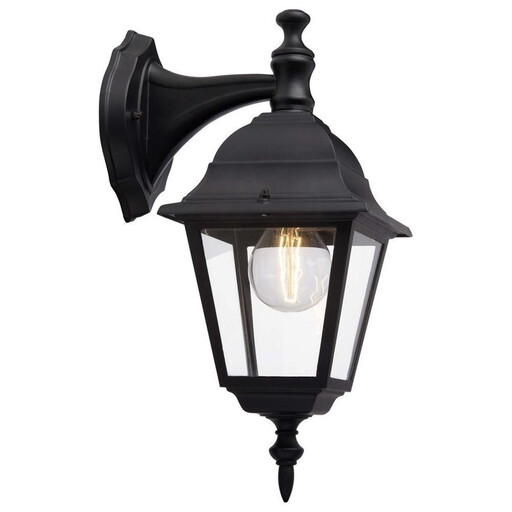
Why it suits this profile: This classic black façade light uses an E27 fitting up to 60W. You can therefore choose your own LED bulb and colour temperature for your garden, patio or entrance.
The fitting and maximum wattage are specified. Take permanent wiring, professional installation and the IP44 limitation into account when installing it in an unprotected location.
E27 fitting, black metal and glass, 34 cm high and externally dimmable with a suitable bulb and dimmer.
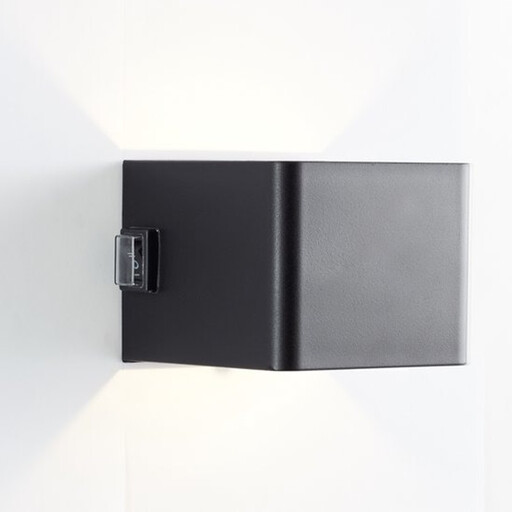
Why it suits this profile: This compact light runs on a rechargeable battery, has magnetic mounting and, according to the product specification, offers 300 lumens, 3000K and a motion sensor.
No permanent wiring means less installation work. With magnetic mounting, however, check that the surface is flat, clean and strong enough to support the light.
USB-C charging, magnetic mounting, 300 lumens and IP44 splash protection.
First measure the available wall space and check where drill holes or cables will be positioned. When installing a solar wall light, position the panel as far as possible from shade. Clean the panel regularly with a soft cloth. For a permanently wired LED outdoor wall light, check that the connections and fixings are suitable for the surface.
For all weather-resistant outdoor lighting, pay attention to the limits of the IP rating. An IP44 model should not be left standing in a puddle and must not be cleaned with a pressure washer. An integrated LED is generally not designed to be replaced yourself; with a separate fitting, you can replace the light source independently.
We have put together a complete, up-to-date list of products that fully meet these strict selection criteria and the applicable European safety regulations.
It can be, depending on the location. IP44 protects against splashing water and is suitable for many façades, balconies and sheltered entrances. For a wall that receives a lot of direct rain or water jets, an IP65 outdoor light is a more sensible choice.
Yes, but charging performance may decrease because of shorter days, cloudy weather and shade. Position the solar panel where it will receive as much direct daylight as possible and keep it clean. The actual illumination time depends on the model, the battery and the amount of stored energy.
A solar model does not use mains electricity while operating, but its battery may lose capacity over time. A mains-powered LED light generally uses very little electricity, especially when the motion sensor limits how long it stays on. Look at the wattage, illumination time and number of activations per day rather than just the purchase price.
