
Vandaag of morgen in huis

Kwaliteit gegarandeerd

Welkomstaanbiedingen ontgrendelen: GRATIS bezorging | Tot 80% korting | Gratis 30 dagen JoyPlus-proefperiode
Download de app
An outdoor wall light with a motion sensor can automatically illuminate an entrance, patio, balcony, garage or driveway. However, not every light is suitable for every façade. For example, a high lumen output on the packaging says little about battery life, positioning or how the sensor behaves.
The following pitfalls are common:
Light output is measured in lumens (lm). For a keyhole or pathway, a compact LED outdoor light producing around 180 to 500 lumens may be sufficient. For a driveway, garage or large garden, a more powerful model is the logical choice.
Also pay attention to the colour temperature:
A light with an integrated LED does not require a separate light source. However, check whether the LED can be replaced. In several models in this selection, the light source is integrated and cannot be replaced by the user.
The IP code consists of two digits. The first digit refers to protection against solid particles, while the second refers to water.
As well as checking the IP rating, read the installation instructions. Incorrect fitting, a damaged seal or an open cable entry can reduce the level of protection.
A solar wall light and other wireless outdoor lighting are appealing if you do not want to run a cable. Installation is usually easier and the light does not use electricity from the mains. However, performance depends on sunlight, temperature and the condition of the battery.
A mains-powered model generally provides more consistent operation, but requires a 230-volt connection. For a fixed wall light, such as a model with an E27 fitting, installation must be carried out by a qualified electrician in accordance with the product information.
When choosing a motion sensor, consider:
A sensor aimed directly at an approaching person may respond differently from one that detects movement across the detection field.

Why it suits this profile: This solar wall light works without wiring and provides a warm 2700K light. That makes it practical for a front door, balcony or small patio where the main requirement is guidance lighting.
The product specification lists two lighting modes, a motion sensor and IP44 protection. Positioning in direct sunlight is still necessary; IP44 protects against splashing water and does not mean the housing can be submerged.
400 lumens per light, integrated LED, two modes and installation without a mains connection.
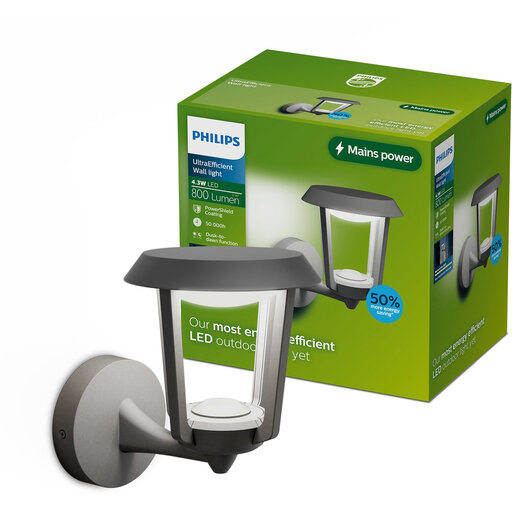
Why it suits this profile: For anyone looking for a fixed outdoor wall light with a refined fitting, warm white light and an aluminium housing with PowerShield coating.
The 230-volt connection removes the need to rely on daily sunlight. However, the IP44 rating should be understood as protection against splashing water, not protection against direct water jets.
800 lumens, 2700K, integrated LED and a stated power rating of 4.3 watts per light.
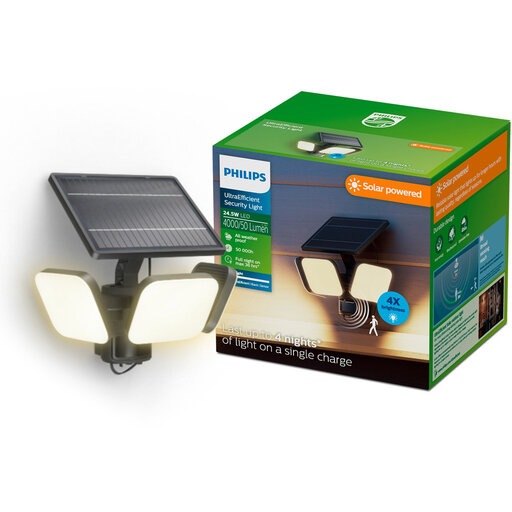
Why it suits this profile: This solar security light is designed for a spacious driveway, garage or large garden where a broad, powerful beam is needed.
The product specification lists IP65, an adjustable light head and a sensor range of 8 metres when approached directly and 16 metres when approached from the side. Direct sunlight is still essential for charging.
4000 lumens, 3000K, IP65 and a stated motion detection range of up to 16 metres for movement from the side.
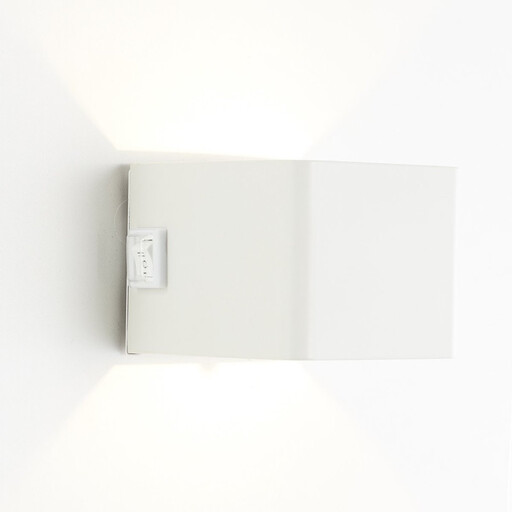
Why it suits this profile: This wireless light with magnetic mounting is suitable for a rented home, storage room, balcony or temporary lighting location where no fixed connection is available.
No wiring is required and the light can be charged via USB. However, check that the magnetic surface is flat, clean and strong enough; IP44 protects against splashing water.
300 lumens, 3000K, integrated LED, motion sensor and flexible magnetic mounting.
We have put together a complete, up-to-date list of products that fully meet these strict selection criteria and the applicable European safety regulations.
Install a solar outdoor light so that the panel has an unobstructed view of the sky for a large part of the day. Take trees, balcony edges and fences into account. Clean the panel and sensor window regularly with a soft, slightly damp cloth. Do not use harsh cleaning products, and keep openings and connections dry.
For a fixed outdoor wall light, the mounting surface must be able to support its weight. Switch off the electricity before carrying out maintenance. According to the product information, a 230V model should be connected by a qualified electrician.
That depends on the type. A mains-powered model continues to work independently of sunlight. With solar lighting, shorter days, cloudy weather and the low winter sun often result in less charging capacity. Therefore, choose a location with as much direct sunlight as possible and keep the panel clean.
The operating time per night varies depending on the battery, lighting mode, temperature and number of detections. Manufacturers may make additional operating-time claims; according to Philips’ own information, the Zyren can provide lighting for up to four nights when the battery is fully charged. Treat this as a brand statement under the conditions mentioned, rather than a fixed guarantee for every garden.
A solar wall light does not use mains electricity. With a mains-powered model, consumption depends on the wattage and operating time. A motion sensor can limit the time the light is on, particularly when it only switches on after detecting movement. Therefore, check both the power rating in watts and the selected lighting mode.
