
Vandaag of morgen in huis

Kwaliteit gegarandeerd

Welkomstaanbiedingen ontgrendelen: GRATIS bezorging | Tot 80% korting | Gratis 30 dagen JoyPlus-proefperiode
Download de app
An outdoor wall light with a motion sensor can provide practical lighting for your entrance, balcony, patio, exterior wall or driveway. However, not every light is suitable for every location. A solar-powered model, for example, may work less effectively on a north-facing wall or beneath a covered area. And a high light output may not be much use if the motion sensor is positioned incorrectly.
So don’t focus only on appearance or claims such as ‘weather-resistant’. Pay particular attention to the light source, IP rating, power supply and installation. Read on to find out which pitfalls to look out for and which models suit different needs.
An IP44 water-resistant outdoor light is protected against solid objects larger than 1 millimetre and splashing water from different directions. This doesn’t mean it can withstand a direct jet of water, immersion or prolonged exposure to driving rain.
It’s best to install an IP44 light under a sheltered entrance, on an exterior wall or somewhere water can drain away easily. A higher IP rating may be more practical for a completely exposed wall. Always check the product specifications rather than relying on the phrase ‘for outdoor use’.
A solar-powered outdoor light with a motion sensor doesn’t need an electricity cable, but its solar panel does need to receive enough direct sunlight during the day. Beneath a balcony, next to a tall fence or on a shady north-facing wall, the battery may not charge as effectively.
Philips and Brilliant’s product descriptions state that their solar wall lights are designed to be installed where the panel can receive direct sunlight. In practice, how long they work for depends on the season, cloud cover, installation angle and how often the sensor is activated.
Lumens indicate the total light output, but they don’t tell you everything about how useful a light will be. A 1,000-lumen light may suit a driveway, while 180 to 400 lumens may be enough for a keyhole or garden path. Also consider the colour temperature:
A motion sensor switches the light on when it detects movement. A dusk or daylight sensor also determines when the automatic lighting can come on. Check that both sensors are included and whether there are adjustable modes, such as automatic, continuously on or a dimmed standby setting.
Also consider the installation height and direction the sensor faces. A sensor aimed at a busy footpath may switch on more often than you’d like. By a front door, a short detection range is often more practical than a long one.
An integrated LED outdoor wall light usually doesn’t need a separate bulb. Check the stated light output, colour temperature, wattage and any quoted lifespan. A model with an E27 fitting offers more flexibility: you can choose a suitable LED bulb and replace it later.
For a mains-powered model, a qualified electrician should carry out the 230-volt connection if required by the installation. A solar-powered or rechargeable light avoids fixed wiring, but you’ll need to consider sunlight or regular charging.
Check that the light will fit on the available wall and that the fixings supplied are suitable for your surface. Aluminium, metal and plastic are common materials for exterior wall lights. Also check the dimensions: a compact light measuring around 10 to 15 centimetres is less noticeable, while a model around 20 to 30 centimetres may spread more light across an entrance.
Clean the solar panel and sensor regularly with a soft cloth. If the light has a battery, check the product manual to see whether it needs to be charged.
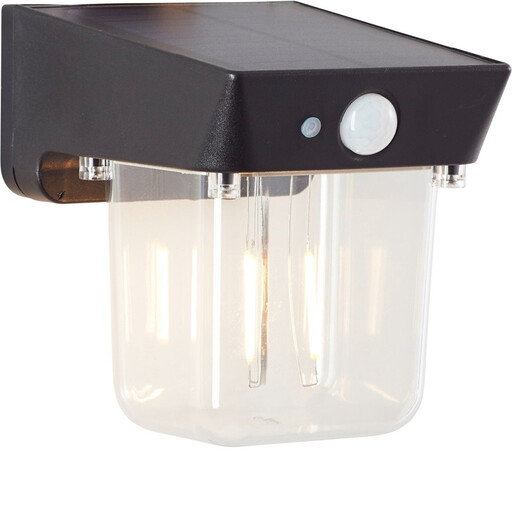
Why it suits this type of shopper: This compact model is designed for an entrance, patio or garden wall without a mains connection. Solar power and an integrated LED make it easy to install.
The product description lists an integrated solar panel and motion sensor, so no fixed wiring is needed. Just make sure you install the panel in a sunny spot.
180 lumens, warm white 2,700 K light, IP44 rating and a compact size of 11.5 × 10 × 11 centimetres.
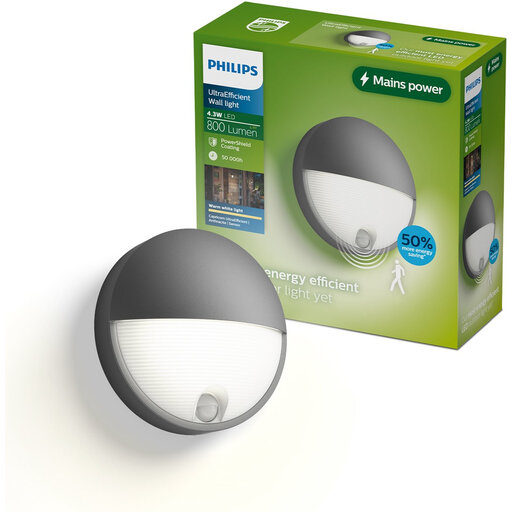
Why it suits this type of shopper: A smartly finished model for a permanent entrance or exterior wall, with an integrated LED and automatic activation according to the stated product specifications.
The stated IP44 rating makes it clear that the light is protected against splashing water, not immersion. This helps you choose the installation location with care.
800 lumens, warm white 2,700 K light, an integrated LED and an aluminium housing, according to the product details.

Why it suits this type of shopper: This model is designed for anyone who needs more light by a driveway, garage, patio or larger garden area without a mains connection.
The description lists two modes, as well as dusk and motion sensors. You can choose between automatic operation and keeping the light on continuously.
1,000 lumens, 3,000 K colour temperature, integrated LED, solar power and IP44 rating according to the stated specifications.
We’ve put together a complete, up-to-date list of products that meet these strict selection criteria and the applicable European safety regulations.
They can, but their performance depends on daylight, cloud cover, shade and the angle of the solar panel. Days are shorter in winter and the sun is lower in the sky. Choose a spot that gets as much direct sunlight as possible, and keep the panel free from dirt and leaves.
Lifespan varies depending on the light source, battery and how frequently the light is used. For some integrated LED models, manufacturers state an expected lifespan, but this is a product specification, not a guarantee for every situation. With an E27 model, you can replace the bulb. With an integrated LED, you’ll usually need to replace the whole light if the light source fails.
A solar-powered light doesn’t use electricity from the mains, but its battery needs to be charged by the solar panel. A 230-volt model uses energy mainly when it’s switched on. The motion sensor limits how long the light stays on, especially if you set a short activation time. Check the wattage and expected operating time in the product information.
