
Vandaag of morgen in huis

Kwaliteit gegarandeerd

Welkomstaanbiedingen ontgrendelen: GRATIS bezorging | Tot 80% korting | Gratis 30 dagen JoyPlus-proefperiode
Download de app
An outdoor wall light can make an entrance feel safer, light up a patio or give your home’s exterior more character. However, it’s not wise to choose one based solely on its design or a high lumen rating. A light that looks suitable for any outdoor wall in a product photo may get too little sunlight in practice, be connected incorrectly or lack sufficient protection from rain.
The main pitfalls to watch out for when buying outdoor lighting are:
The IP rating indicates how well a light fitting is protected against solid particles and moisture. An IP44 outdoor light is suitable for splashes and many sheltered outdoor locations, such as under an overhang, by a veranda or on a wall that isn’t directly exposed to heavy rain.
For an open wall, driveway or spot where the light is exposed to a lot of rain, a higher level of protection, such as IP65, may be more practical. Always check the product description and installation instructions. An IP rating doesn’t automatically make a light suitable for every weather condition.
An integrated LED outdoor wall light is ready to use straight away and doesn’t need a separate bulb. Check whether the LED module can be replaced, though. On a number of compact models, the light source is integrated and cannot be replaced by the user.
A GU10 outdoor light or one with an E27 bulb holder gives you more choice. You can choose the colour temperature, brightness and, where available, dimmability. Check the following:
A solar light doesn’t need a mains connection. A wired wall light must be connected to the mains by a qualified installer.
An outdoor light with a motion sensor switches on when it detects movement. This is handy by a front door, garage or driveway, but don’t place the sensor right next to a busy pavement if you want to avoid it switching on unnecessarily.
The stated light output in lumens helps you compare models:
The overall effect also depends on how the light is directed. A downlight mainly illuminates the wall or ground below it, while a model with several light heads can cover a larger area.
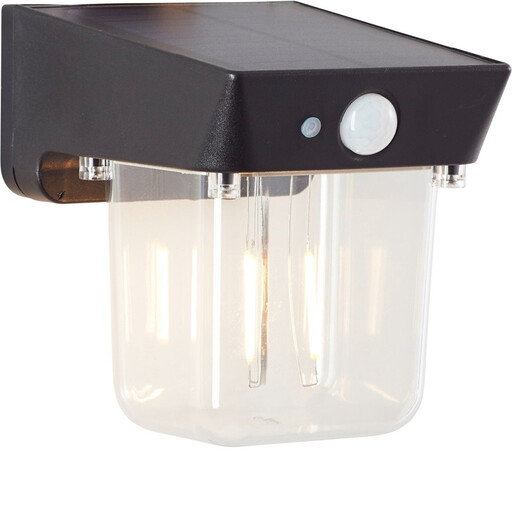
Why it suits this type of user: A compact solar outdoor light for anyone who doesn’t want to run a cable to an entrance, balcony or small garden wall. Check that the installation spot gets enough sun first.
The product specifications list solar power, a motion sensor and IP44 protection. This means it doesn’t need a mains connection, but it’s designed for splashes rather than direct jets of water.
180 lumens, warm 2700 K light, an integrated battery and a black plastic design, 11.5 cm high.
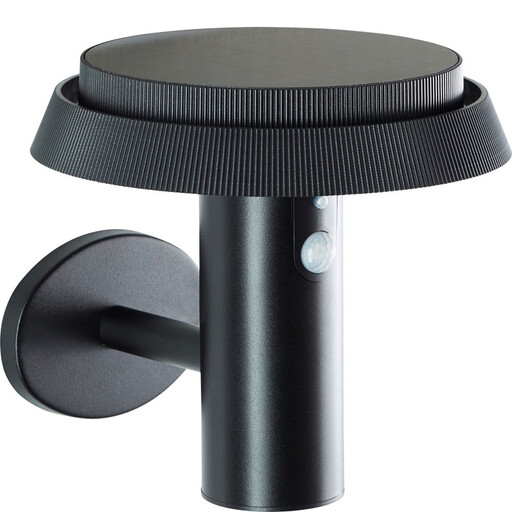
Why it suits this type of user: A practical choice for an exterior wall, patio or entrance where you need more light without fixed wiring.
The stated 500 lumens and 3000 K make it easy to check the brightness and colour temperature. Its IP44 rating means you’ll need to install it somewhere away from direct jets of water.
Integrated LED, solar power, motion sensor, dimming function and a black metal-and-plastic housing.

Why it suits this type of user: Designed for a driveway, garage, large garden or other area where you want a broad beam and greater protection against splashes and dust.
The product details list IP65, three light heads and a 180-degree motion detection angle. Before buying, check that this high light output is right for how you plan to use it.
302 LEDs, a stated light output of 3000 lumens, three lighting modes and solar power with an 1800 mAh lithium-ion battery.
We’ve put together a complete, up-to-date list of products that meet these strict selection criteria and the applicable European safety regulations.
IP44 is suitable for splashes and sheltered outdoor locations. Ideally, install this type of light under an overhang or on a wall where it won’t be hit by a direct jet of water. A higher IP rating may be more suitable for a completely open, exposed spot.
Fix the light securely to a wall and point the solar panel towards a spot that gets as much direct daylight as possible. Make sure the sensor isn’t obstructed. A solar light generally doesn’t need mains power, but check the installation guide supplied and charge the battery according to the product instructions.
An integrated LED or separate LED bulb generally uses little electricity compared with traditional light sources. The cost depends on its wattage, how many hours it’s on and the current electricity price. A solar outdoor light has no regular mains electricity costs, but its performance still depends on sunlight and battery capacity.
