
Vandaag of morgen in huis

Kwaliteit gegarandeerd

Welkomstaanbiedingen ontgrendelen: GRATIS bezorging | Tot 80% korting | Gratis 30 dagen JoyPlus-proefperiode
Download de app
An outdoor wall light might seem simple to choose, but small differences can determine whether it’s right for your exterior wall, entrance, balcony or patio. For example, a high light output doesn’t automatically mean a light will be comfortable by your front door. And a product with “waterproof” in the title may still only be suitable for sheltered spots.
The most common purchasing pitfalls:
The IP code consists of two digits. The first indicates protection against solid particles, and the second indicates protection against water.
A water-resistant outdoor light must also be installed correctly. If you’re not familiar with electrical connections, it’s best to have a mains-powered light installed by a qualified electrician.
Colour temperature is measured in kelvin:
Lumens indicate how much light a lamp produces. A compact light for a balcony has different requirements from exterior lighting for a wide driveway. Also consider the direction of the beam: an adjustable head can direct light towards a path and reduce unwanted glare into your home.
A solar outdoor light uses a solar panel and built-in battery. This means there’s no need for a mains connection, but performance depends on the amount of sunlight, the season and where it’s installed. Clean the panel regularly with a soft, damp cloth.
A wall light with a motion sensor switches on when it detects movement. When comparing models, check:
With lights that have an E27 or GU10 fitting, you can choose your own bulb. Bear in mind that a bulb may not be included, and check the maximum wattage.

Why it’s a good fit: This solar outdoor light works without wiring and has a built-in motion sensor. That makes it a practical choice for an entrance, balcony or small garden where you want to add lighting quickly.
The specifications clearly list solar power, two lighting modes and IP44. Make sure you position the light so the panel receives direct daylight.
1000 lumens, warm white light at 3000 K, a motion sensor and an integrated LED. The product information states that it comes with a minimum two-year EU legal guarantee.
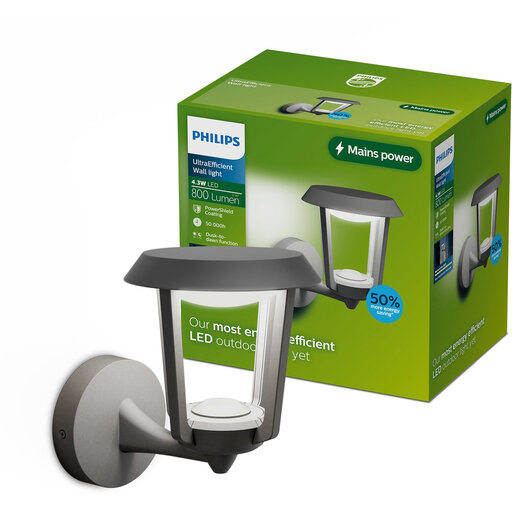
Why it’s a good fit: This mains-powered LED outdoor light combines a classic lantern shape with warm light. It’s well suited to an exterior wall, garden path or entrance where ambience and a permanent power connection are important.
The specifications state 230 V, 800 lumens and IP44. This makes it clear that it isn’t solar-powered and must be installed with a suitable mains connection.
Integrated LED, warm white light at 2700 K, 800 lumens and an aluminium housing. The product description also mentions a dusk sensor.

Why it’s a good fit: This powerful outdoor wall light is designed for driveways, wide exterior walls and areas where a broad detection range is useful. Its solar panel means there’s no need for a permanent mains connection.
The IP65 rating, motion sensor and dusk sensor are listed separately. The adjustable light head helps you direct the powerful beam where it’s needed.
According to the product description, it produces 4000 lumens, and the sensor detects movement up to 8 metres when approached head-on and 16 metres from the side. The light has a warm white colour temperature of 3000 K.

Why it’s a good fit: If you’re looking for decorative lighting for an exterior wall, balcony or celebration, this string light offers a wide display measuring 10 × 0,5 metres.
The product information states IP44 and recommends using the supplied adapter. Keep the adapter and plug protected from direct rain, and check the cable before use.
720 LEDs with warm white light at 3000 K, 15 hanging points, a 5-metre cable and a memory function for your chosen lighting setting.
First, measure the wall, the distance from the ground and the area you want to light. Then check that the surface is sturdy and that the fixings are suitable for brick, concrete or wood. For solar lighting, the panel needs an unobstructed view of the sky. When installing mains-powered exterior lighting, make sure the power is switched off.
Don’t place a motion sensor where branches, traffic or a busy pavement will constantly trigger it. Clean the light and solar panel regularly, and replace a damaged cable or housing straight away.
We’ve put together a complete, up-to-date list of products that meet these strict selection criteria and comply with current European safety regulations.
For a sheltered spot, IP44 is often suitable. If the light will be fully exposed to rain and dust, look for a model with a higher protection rating, such as IP65. Also check the seals around the cables and connections.
A solar outdoor light doesn’t use mains electricity during normal operation. Its solar panel charges the built-in battery during the day. However, performance can vary due to shade, dirt, short winter days and prolonged cloudy weather.
Lifespan varies depending on the model, how long it’s used, the battery and the conditions. With integrated LED lighting, the light source usually isn’t designed to be replaced by the user. So check the guarantee, care instructions and product details before buying.
