
Vandaag of morgen in huis

Kwaliteit gegarandeerd

Welkomstaanbiedingen ontgrendelen: GRATIS bezorging | Tot 80% korting | Gratis 30 dagen JoyPlus-proefperiode
Download de app
An outdoor wall light can provide practical illumination for an entrance, balcony, façade or patio. However, the difference between a suitable light and a poor purchase often only becomes apparent after installation. An attractive design says little about light output, the required connection or protection against rain.
Pay particular attention to these three common pitfalls:
The right choice depends on the location, how you intend to use it and the available power connection.
A solar outdoor light uses a solar panel and integrated battery. This avoids drilling and chasing work and is useful for a shed, garden path or façade without a power point. However, operating time depends on sunlight, battery capacity and the selected lighting mode.
A wired LED outdoor wall light runs from the mains and generally provides more consistent light output. Philips Capricorn and Philips Nuvy, for example, have integrated LED, a specified colour temperature of 2700 K and a luminous flux of 800 lumens. According to the product information, professional installation by a qualified electrician is required for connection to 230 volts.
A wireless outdoor light with a rechargeable battery can be positioned flexibly. The Brilliant Iseo has a magnetic mounting system and is charged via USB-C. When installing it, check that the surface is flat, clean and suitable for supporting the light securely.
For many sheltered façades, balconies and entrances, IP44 is a practical starting point. The light is protected against splashing water, but not against a high-pressure jet or prolonged exposure to standing water.
Ideally, position an IP44 outdoor light:
For a very exposed location, a higher protection rating such as IP65 may be more suitable. According to the product information, the Philips UltraEfficient Zyren features IP65 protection. Always check that the chosen installation location matches the manufacturer's instructions.
Integrated LED is compact and ready to use straight away, but the light source usually cannot be replaced separately. With a light featuring a GU10 lampholder or E27 lampholder, you choose the light source yourself. This gives you greater freedom over brightness, colour temperature and, where applicable, dimming.
Also pay attention to lumens rather than wattage alone. Lumens indicate the amount of light produced. A 180-lumen light is mainly suitable for orientation lighting, while 800 or 1000 lumens provide more light for an entrance or larger section of façade.
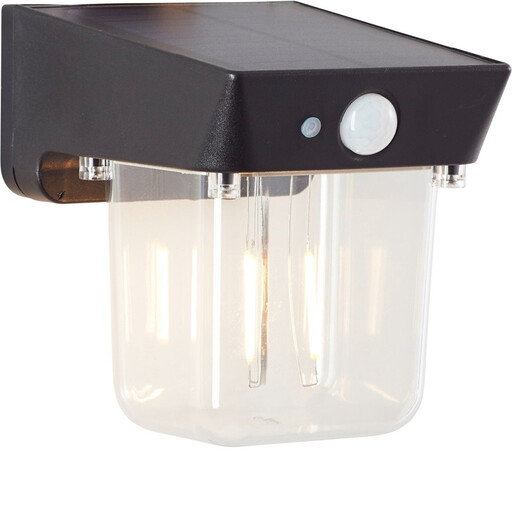
Why it suits this profile: This compact black solar outdoor light is suitable for an entrance, balcony or small garden wall without a power connection. The motion sensor switches the light on when needed.
The product information clearly states that it has an integrated battery, solar function, motion sensor and IP44 rating. However, bear the available amount of sunlight in mind.
180 lumens, warm white light at 2700 K, integrated LED and dimensions of approximately 11,5 × 10 × 11 cm.
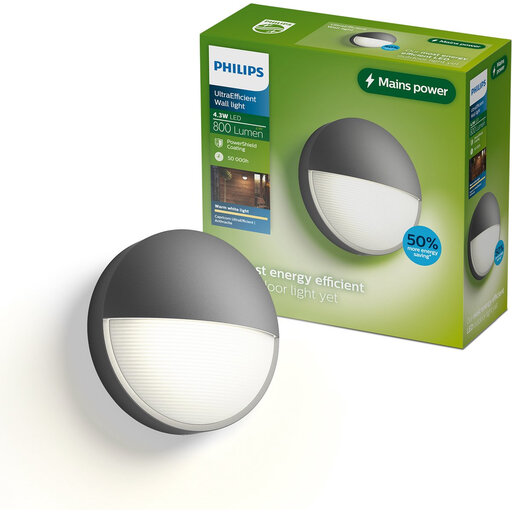
Why it suits this profile: If you are looking for a permanent outdoor wall light for a façade, balcony or patio, this wired model has an aluminium housing and integrated LED.
The specifications state 800 lumens and IP44, allowing you to assess light output and splash protection rather than judging the light by its design alone.
2700 K, 4,3 W per light point and an aluminium housing with PowerShield coating, according to the product description.

Why it suits this profile: This model is designed to provide functional lighting for a driveway, back garden or larger section of façade where no permanent wiring is available.
It does not depend on a socket, but it does require a location with direct sunlight. The product information states that it has two lighting modes and dusk and motion sensors.
1000 lumens, 3000 K, integrated LED and IP44 protection. The solar panel and battery are integrated.
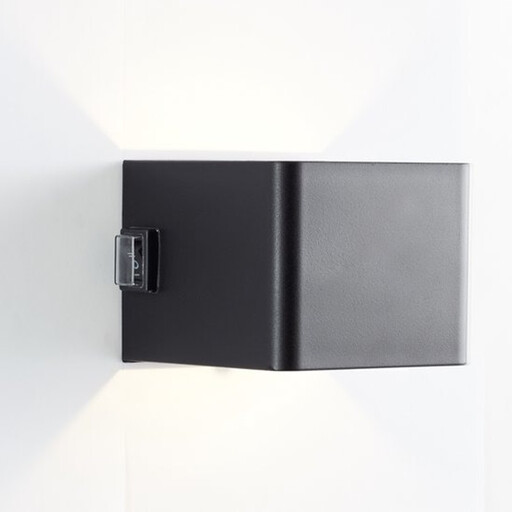
Why it suits this profile: This wireless outdoor light is useful for tenants, balconies and temporary situations where you do not want to drill into the wall to install wiring.
The light runs on a rechargeable battery and does not require a permanent power connection. Check that the surface is suitable for magnetic mounting and recharge the light in good time.
300 lumens, 3000 K, motion sensor, USB-C charging and IP44 splash protection.
We have compiled a complete, up-to-date list of products that fully meet these strict selection criteria and the applicable European safety regulations.
For a wired outdoor wall light, the electrical circuit and installation must comply with local regulations. Switch off the power before carrying out maintenance. If in doubt, consult a qualified electrician.
Check the following before ordering:
A black outdoor wall light often works well with anthracite-coloured window frames and modern façades. For a traditional home, a hanging E27 model such as the lantern-style Philips Juli or Brilliant Newport may be a better match. However, style only matters once the fitting, IP rating and connection are right.
Yes, an IP44 outdoor light is designed for use in many outdoor environments where splashing water may occur. IP44 does not mean that the light is waterproof. Do not position the fitting beneath a direct water jet, and prevent water from collecting around the connection.
An LED outdoor light generally uses fewer watts than traditional light sources while providing a comparable amount of light. Check the stated wattage, lumens and number of operating hours. A motion sensor or dusk sensor can reduce the time the light stays on. With solar lighting, the energy comes from the battery, which is charged by the panel during the day.
The lifespan varies depending on the light source, battery, housing and operating conditions. According to Philips' own product information, some integrated LED models are stated to have a lifespan of up to 50,000 operating hours; this is a brand claim and not a guarantee for every installation. With a GU10 or E27 model, you can replace the light source separately, whereas integrated LED models are generally replaced as a complete fitting when the light source reaches the end of its service life.
