
Vandaag of morgen in huis

Kwaliteit gegarandeerd

Welkomstaanbiedingen ontgrendelen: GRATIS bezorging | Tot 80% korting | Gratis 30 dagen JoyPlus-proefperiode
Download de app
An outdoor wall light can provide practical lighting for your entrance, balcony, patio, shed or façade. However, not every outdoor wall light is suitable for the location you have in mind. A low price tag means little if you still need to buy a lamp holder, light source or hire an electrician. A high IP rating does not automatically solve every installation issue either.
In this buying guide, you’ll learn what to look for in an outdoor wall light, which features make a difference in practice and which models suit different situations.
An IP44 outdoor light is protected against solid objects and splashing water from different directions. This makes IP44 suitable for many sheltered façades, balconies and covered areas. However, the light is not designed to be submerged or exposed to powerful water jets for long periods.
If you’re installing a light on an exposed façade, beside an open shed or near the coast, also consider a higher level of protection, such as IP65. Check whether the IP rating is only valid when the light is installed correctly and the light source compartment is properly sealed.
A wall light with an E27 or GU10 fitting gives you the freedom to choose your own LED bulb. This is useful if you want to decide on the colour temperature, dimmability or smart controls yourself. However, the bulb is not always included.
An outdoor wall light with integrated LED is quicker to install and use, but the light source is usually not replaceable. Before buying, check the following:
More light does not always mean more pleasant light. For a front door or balcony, 2700 to 3000 K can create a warm atmosphere. A higher colour temperature, such as 5000 K, produces a cooler and brighter effect that is better suited to functional façade lighting or a driveway.
Also consider the direction of the light. Up-and-down lighting creates a decorative effect on the façade, while a focused beam works better for a path, door or workspace. An outdoor light with a motion sensor can also use less energy, but check the detection range and whether the sensor can be adjusted.
For a sheltered outdoor wall, IP44 is often a practical choice. However, the light must be installed correctly and should not be placed where water can collect. For a more exposed location, IP65 may be more suitable. Also check the cable entry, seals and mounting materials supplied.
An LED outdoor wall light with an integrated light source is compact and easy to use. A model with an E27 or GU10 fitting offers greater flexibility. When replacing the bulb, you can choose a different colour temperature or brightness.
Check the colour temperature:
The lumen rating indicates the amount of light produced. A 300-lumen model is suitable for accent or pathway lighting; 800 lumens or more may be a better choice for a façade, driveway or larger outdoor area.
A wired outdoor wall light must be connected in accordance with local electrical regulations. Some models require installation by a qualified electrician. Beforehand, check that your wall is suitable for mounting the light and that the required wall plugs and screws are included.
A solar outdoor light does not require a fixed power connection, but the solar panel must receive enough direct daylight. A wireless battery-powered model can be positioned flexibly, but it needs to be recharged regularly. With a magnetic light, a flat, clean and sturdy surface is important to prevent it from falling.

Why it suits this profile: This wireless black outdoor light runs on a rechargeable battery and has a magnetic mount. That makes it practical for tenants or anyone who does not want to install wiring.
The product description does not mention a fixed connection and clearly states that it has IP44 protection, an integrated LED and a motion sensor. This means you know in advance what is and is not included.
300 lumens, 3000 K, USB charging, an integrated sensor and compact dimensions of approximately 10.3 × 10.1 × 8 cm.
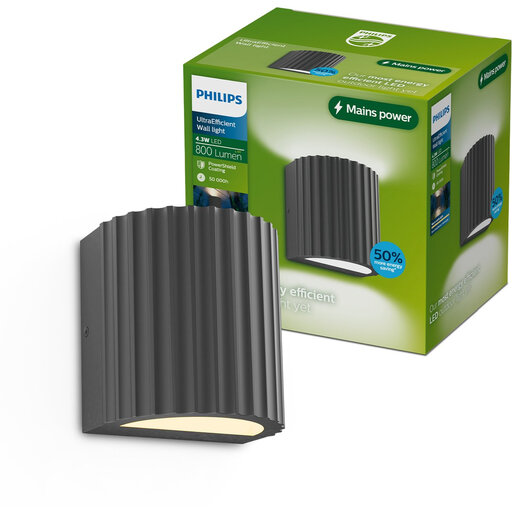
Why it suits this profile: For fixed, modern outdoor wall lighting beside the front door, on a façade or in the garden, this anthracite fitting complements a clean, contemporary home style.
The specifications list IP44, 230 volts and an integrated LED. However, bear in mind that it requires a fixed connection and installation in line with the applicable regulations.
800 lumens, warm white light at 2700 K, light directed in two directions, and aluminium with plastic components according to the product information.
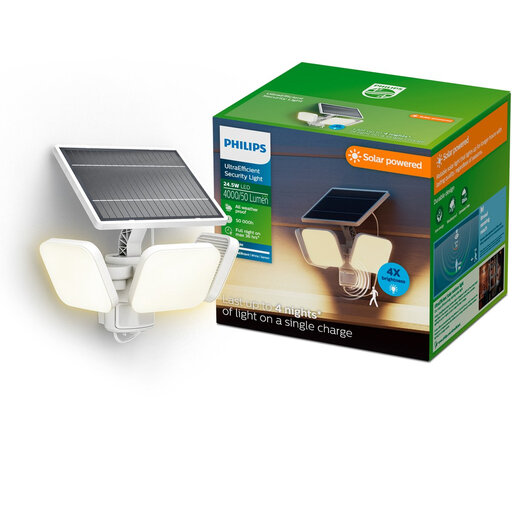
Why it suits this profile: This solar outdoor light is intended for a driveway, shed or dark façade where plenty of light and automatic activation are desirable.
The product information states IP65 protection and a solar panel, with no fixed wiring required. However, place the panel somewhere with direct sunlight; charging performance may be lower in shaded conditions.
According to the product description: 4000 lumens, 3000 K, a motion sensor, dusk sensor and a stated detection range of 8 metres when approached directly.
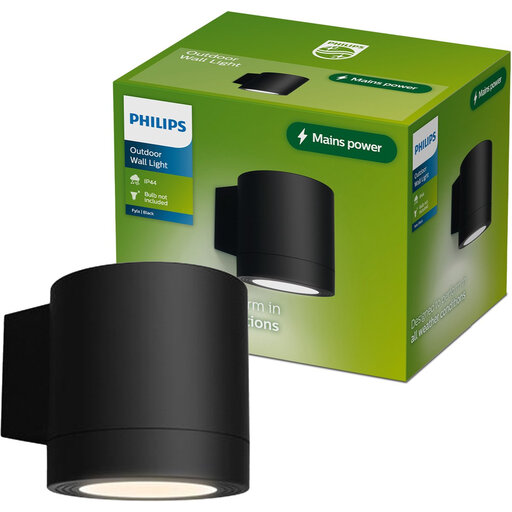
Why it suits this profile: This fitting is suitable for anyone who wants to choose their own GU10 light source for a balcony, garden wall or modern façade.
The product description clearly states that the GU10 spotlight is not included. You can therefore calculate the total cost in advance and choose your preferred colour temperature.
GU10 fitting, aluminium housing, IP44 protection and compact dimensions of approximately 8.9 × 11.6 × 9 cm.
We’ve put together a complete, up-to-date list of products that fully meet these strict selection criteria and the applicable European safety regulations.
For a wired light, first switch off the power at the consumer unit. Use fixings suitable for brick, concrete, wood or another surface. If in doubt, have a fixed connection installed by a qualified electrician.
Clean the housing regularly with a soft, dry cloth. Do not use harsh cleaning products or direct a powerful water jet at an IP44 light. With a solar outdoor light, it is important to keep the panel free from dirt and leaves. For a battery-powered or sensor light, also check that charging, detection and mounting are still working properly.
For a sheltered location, IP44 is often sufficient, provided the light is installed correctly. For a façade directly exposed to rain, IP65 may be a more suitable choice. No IP rating means that you can place the light underwater.
It can be, as the light only switches on when movement is detected. Energy consumption depends on the wattage, activation time and number of movements. Check whether the sensor has an adjustable detection range or on-time.
Lifespan varies according to the model, usage and conditions. Some product descriptions state a lifespan of up to 50,000 operating hours for models with integrated LEDs. This is a claim made by the brand and is not a guarantee for every usage situation. With an integrated LED, the entire fitting will generally need to be replaced when the light source reaches the end of its lifespan.
