
Vandaag of morgen in huis

Kwaliteit gegarandeerd

Welkomstaanbiedingen ontgrendelen: GRATIS bezorging | Tot 80% korting | Gratis 30 dagen JoyPlus-proefperiode
Download de app
An outdoor wall light can make an entrance, balcony, patio, shed or exterior wall more practical. However, not every light is suitable for every location. A solar wall light, for example, needs sunlight, while a mains-powered exterior light must be connected by an electrician. Terms such as ‘weather-resistant’ only tell you so much unless you also check the IP rating, light source and installation method.
As Joybuy Product Recommendation Officer, I filter product information for practical details. This helps you quickly find outdoor lighting that suits your home and avoid buying something that disappoints after a few weeks.
An IP44 wall light is protected against solid objects larger than 1 mm and splashing water from different directions. This does not mean the light can withstand direct jets of water, immersion or prolonged exposure to heavy rain.
IP44 is generally suitable for a sheltered exterior wall, covered area, balcony or entrance. If you’re installing the light in a completely exposed spot where rain falls directly on the housing, check whether a higher IP rating would be more suitable. A weather-resistant wall light must also be installed correctly; the seal may not work as well if the housing or fitting does not close properly.
More lumens mean more light, but not necessarily a better choice. For atmospheric garden wall lighting, warm white light between 2700K and 3000K can work well. A higher light output may be more practical for an entrance or path.
Pay attention to how the light is distributed, too. A wall light with a downlight directs most of its light downwards. A fitting with a diffuse cover spreads the light more widely. So, as well as lumens, check:
A solar wall light works without a mains connection, but its solar panel needs enough direct sunlight during the day. A north-facing wall, a spot under a balcony or shade from a tree can limit charging performance. The time the light stays on can also vary in winter and on dark, cloudy days.
Wireless outdoor lighting is especially useful when running cables is difficult. Before you buy, check where the panel will go and whether you’ll still be able to reach the light for cleaning and inspection after installation.
With an outdoor LED light with an integrated LED, you usually don’t need to buy a separate light source. The light source is built into the fitting and, according to the product information, may not be replaceable by the user. So, check the stated light output and colour temperature.
An E27 outdoor wall light gives you more choice. You can select an LED bulb with warm, neutral or cool light, and some models let you use a dimmable light source. Check the maximum wattage and make sure the fitting is compatible with the bulb you choose.
A GU10 outdoor wall light uses a compact spotlight. For example, Philips Fylx models have a GU10 fitting and are supplied without a spotlight bulb. This gives you flexibility, but it also means you’ll need to buy a suitable GU10 LED bulb separately.
An outdoor wall light with a motion sensor switches on when it detects movement. Don’t just check whether it has a sensor; look at its detection area and adjustment options, too. A sensor aimed at a busy pavement may be triggered more often than you’d like.
Solar models often combine a dusk sensor with a motion sensor. According to Philips Fyns product information, the light switches on automatically using these sensors and has a light output of 1000 lumens. When installing it, make sure the sensor isn’t pointing directly at a streetlight or window.
Solar and rechargeable wall lights can usually be installed without fixed wiring. A model with a mains connection, such as some E27 lights, needs to be connected to a 230-volt supply. Have fixed electrical installation carried out by a qualified electrician and follow local regulations.
Check the mounting surface, too. Use fixings suited to brick, concrete, wood or exterior cladding. A magnetic light, such as the Brilliant Iseo, needs particular attention to a secure mounting plate and a flat surface.
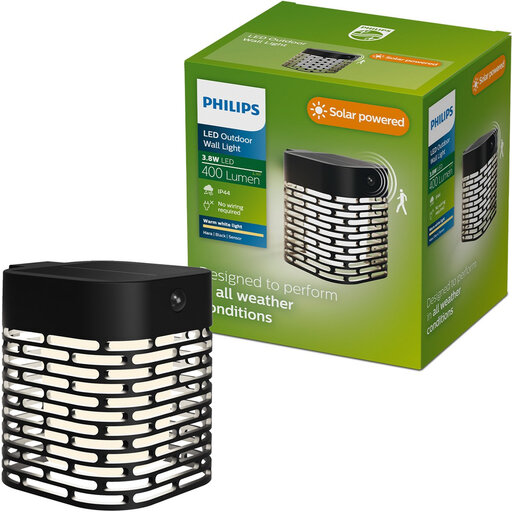
Why it suits this profile: This solar wall light works without fixed wiring and provides warm white light at 2700K. That makes it a practical choice for a balcony, shed or sheltered entrance.
The IP44 rating indicates protection against splashing water, not waterproofing. So, install the light in a suitable spot that isn’t completely exposed.
Integrated LED, 400 lumens per light source, two lighting modes, and dusk and motion sensors.
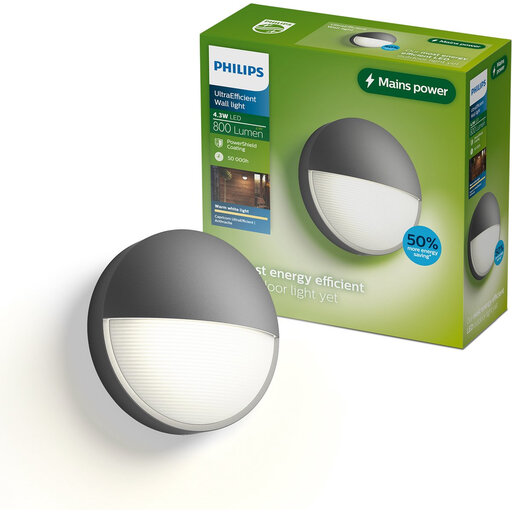
Why it suits this profile: For anyone looking for a mains-powered LED outdoor light for an exterior wall, entrance or balcony, without relying on sunlight.
The specifications state both 800 lumens and 2700K, so you can assess the brightness and colour of the light in advance. The light does need to be permanently installed.
Aluminium and plastic construction, integrated LED, 800 lumens and an IP44 rating.
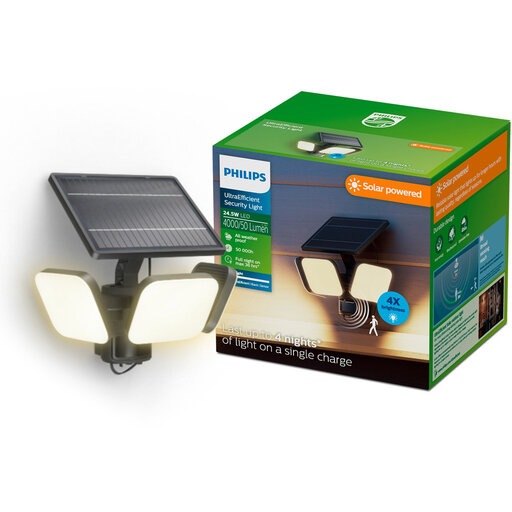
Why it suits this profile: This solar security light is designed for areas where a wide detection and lighting range is useful, such as a driveway, rear path or large garden.
The product information states an IP65 rating, an adjustable lamp head and a motion sensor with a range of 8 metres when approached directly and 16 metres from the side.
4000 lumens, 3000K, solar power and a higher IP rating than IP44 models.
We’ve put together a full, up-to-date list of products that meet these strict selection criteria and the applicable European safety regulations.
IP44 is suitable for splashing water and many sheltered outdoor settings, such as a covered entrance, balcony or exterior wall. The rating does not mean the light is waterproof. Don’t install the fitting where it will be exposed to direct jets of water or prolonged water exposure.
A solar wall light doesn’t use mains electricity during normal operation. Its solar panel charges a built-in battery. How long the light stays on depends on the amount of sunlight, the battery’s charge, the lighting programme you choose and how often the motion sensor is triggered.
Lifespan varies by model and conditions of use. Product information for different models gives figures such as 20,000, 25,000 or 50,000 hours of use. These are stated product specifications; actual lifespan can be affected by temperature, moisture, installation and use. With an integrated LED, you’ll generally need to replace the whole fitting rather than just the light source when it reaches the end of its useful life.
