
Vandaag of morgen in huis

Kwaliteit gegarandeerd

Welkomstaanbiedingen ontgrendelen: GRATIS bezorging | Tot 80% korting | Gratis 30 dagen JoyPlus-proefperiode
Download de app
An outdoor wall light can make an entrance, balcony, garage or patio more practical. However, it’s not wise to choose a light based only on its appearance or a high lumen count. A light that looks great in the product photo might not provide enough light in practice, could be installed in the wrong place or may not be suitable for an exposed exterior wall.
These three pitfalls are common:
The IP rating indicates how well a light fitting is protected against solid particles and water. For many covered entrances, balconies and patios, IP44 outdoor lighting is a practical choice: the light is protected against splashing water from different directions.
If you’re installing the light on an exterior wall directly exposed to rain, consider an IP65 outdoor light too. This rating provides greater protection against dust and water jets than IP44. Always check the full product description and installation instructions. A higher IP rating doesn’t automatically make a light suitable for every situation.
An integrated LED outdoor light is ready to use straight away and doesn’t need a separate bulb. Check the luminous flux, measured in lumens:
With an outdoor light with a GU10 fitting or an outdoor light with an E27 fitting, you can choose a suitable light source yourself. This makes it easier to replace the bulb or change the colour of the light. Always check the maximum wattage. A GU10 fitting is often supplied without a bulb, while an E27 model may be suitable for a range of decorative LED bulbs.
A colour temperature of 2700 to 3000 K gives a warm white light. This usually works well by a front door, patio or in a garden. Cooler light can improve visibility on a driveway, but looks less soft.
A solar outdoor light or solar wall light works without a fixed power connection. This is handy for a garden shed, fence, balcony or exterior wall without a cable. The solar panel needs enough direct sunlight during the day. Shade from trees, an overhang or a north-facing wall can reduce how long the light stays on.
An outdoor light with a sensor switches on when it detects movement. Be aware of the difference between a motion sensor and a dusk sensor:
When installing the light, check the sensor’s direction, height and range. A sensor aimed at a busy footpath may switch on more often than you’d like.

Why it suits this profile: This solar wall light works without fixed wiring and combines a motion sensor with integrated LED lighting. That makes it practical for an entrance, balcony or garden shed.
Its IP44 rating is clearly stated, so you won’t mistakenly treat it as completely waterproof. Ideally, install it on a suitable exterior wall and keep the solar panel unobstructed.
Solar-powered, integrated LED, motion sensor, 180 lumens and a stated colour temperature of 2700 K.

Why it suits this profile: This model is designed for buyers looking for solar lighting, straightforward controls and brighter output for an entrance or exterior wall.
The product specifications state the light output, IP rating and light colour. This lets you compare the light using measurable details rather than relying on the term ‘security lighting’ alone.
1000 lumens, 3000 K, two lighting modes, dusk and motion sensors, and IP44 protection.

Why it suits this profile: The three adjustable light heads and wide coverage make it a good fit for larger areas such as a driveway, garage, back garden or patio.
The stated IP65 rating and advice to position the panel out of the shade make it clear that installation location and maintenance still matter.
302 LEDs, stated light output of 3000 lumens, three lighting modes, motion detection and three adjustable heads.
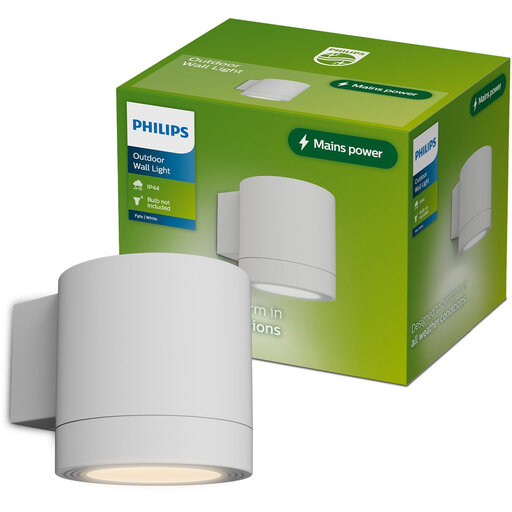
Why it suits this profile: This wired black outdoor light with a GU10 fitting is a good choice if you want to choose the light source and colour yourself.
As the GU10 bulb isn’t included, you’ll know in advance that the final light output depends on the light source you choose. This helps avoid unrealistic expectations about brightness.
GU10 fitting, aluminium housing, downward light distribution and IP44 for use in suitable outdoor locations.
We’ve put together a complete, up-to-date list of products that meet these strict selection criteria and current European safety regulations.
Always switch off the power before installing a wired wall light, and follow the installation instructions. A qualified electrician should connect it to the mains. For a solar outdoor light, check that the wall is sturdy enough and that the panel won’t be left in the shade for long periods.
Clean the solar panel and sensor occasionally with a soft, slightly damp cloth. Don’t use a pressure washer on IP44 lighting or aim a direct jet of water at the light. Also check the fixing screws, cables and housing for damage.
IP44 outdoor lighting is suitable for splashing water and many sheltered outdoor locations. For a fully exposed spot with heavy rain or dirt, a higher protection rating, such as IP65, may be more practical. Always check the installation instructions for the specific model.
How long it stays on each night depends on the sunlight, battery capacity, lighting mode and how often the motion sensor is activated. In winter or during extended periods of cloudy weather, the light may stay on for less time. Clean the panel regularly and position it where it will receive as little shade as possible.
A solar outdoor light doesn’t use mains electricity. With a wired LED outdoor light, a motion sensor limits how long it stays on by switching the light off when it’s not needed. Actual energy use depends on the wattage, the set lighting duration and how often it switches on.
