
Vandaag of morgen in huis

Kwaliteit gegarandeerd

Welkomstaanbiedingen ontgrendelen: GRATIS bezorging | Tot 80% korting | Gratis 30 dagen JoyPlus-proefperiode
Download de app
An outdoor wall light can make an entrance, exterior wall, balcony or patio more practical. But an attractive product photo doesn’t automatically mean the light is right for you. A few details can make all the difference to everyday use, especially with a solar outdoor light, an outdoor light with a motion sensor or an IP44 outdoor light.
Three common pitfalls to avoid:
An IP44 outdoor light is a practical choice for many covered entrances, balconies and patios. However, check that it’s installed in a sheltered spot and won’t be directly exposed to a pressure washer, sprinkler or prolonged water exposure.
For an exposed exterior wall or a driveway where the light will catch plenty of rain, a higher IP rating may be a better choice. For example, the UME solar light in our round-up has an IP65 rating according to the product information. Always check that the stated protection rating is suitable for the specific installation location.
An LED outdoor wall light with an integrated LED is ready to use straight away and doesn’t need a separate bulb. Check:
A high lumen rating isn’t always desirable. Bright light can be intrusive on a small balcony, while a driveway may need more focused illumination.
An outdoor light with no wiring is generally easy to install. However, a solar light’s panel needs to receive enough daylight. A motion sensor can limit how long the light stays on, but check the detection range and selected lighting mode.
A wired outdoor wall light needs an existing power connection. For example, the Brilliant Jelani and Keola use a GU10 fitting and, according to the product information, are supplied without a bulb. Switch off the power before connecting a light to 230 volts. If in doubt, contact a qualified electrician.
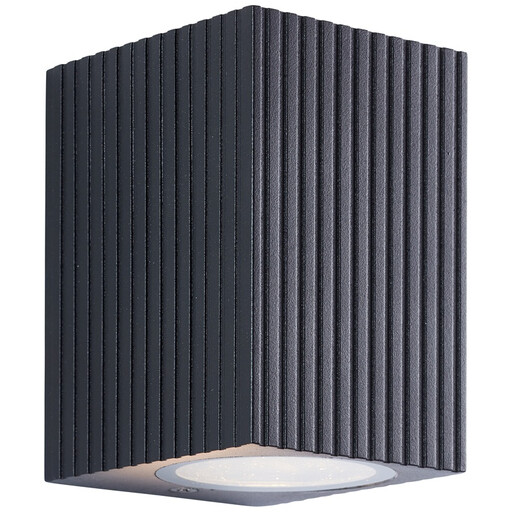
Why it suits this type of buyer: This compact black light has a GU10 fitting, so you can choose a suitable LED spotlight yourself. That gives you control over the colour temperature and brightness.
The product information clearly states an IP44 rating and a maximum load of 10 W. The light is supplied without a bulb, so you won’t accidentally pay for a bulb that isn’t right for you.
Aluminium, glass and plastic; compact dimensions of approximately 10 × 6,9 × 7,8 cm; suitable for downward lighting.
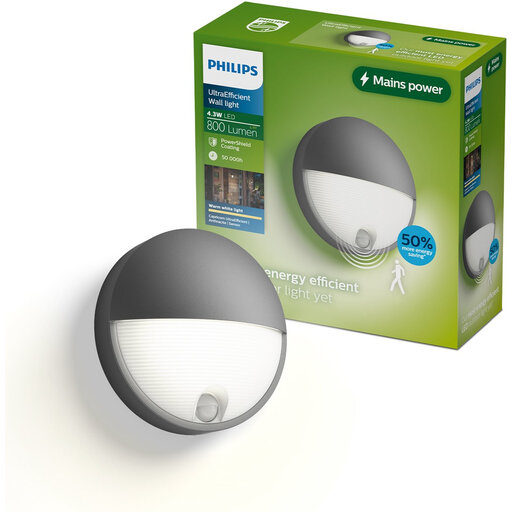
Why it suits this type of buyer: For a permanent entrance or exterior wall, this integrated LED outdoor wall light combines sensor control with warm white light.
The specifications list both a motion sensor and a dusk sensor. This means you don’t have to rely solely on manual operation. However, IP44 is a splash-water rating, not a claim that the light is waterproof.
800 lumens, 2.700 K, integrated LED and a stated power consumption of 4,3 W per light point.

Why it suits this type of buyer: This solar outdoor light is designed for larger areas such as a driveway, garden or garage, and works without a mains connection.
The product listing specifies IP65, three lighting modes and a motion detection angle of 180 degrees. For the best chance of charging well, make sure the panel is positioned out of the shade.
302 LEDs, a stated brightness of 3.000 lumens, three adjustable light heads and installation without mains wiring.
Install the light on a sturdy, suitable surface and use wall plugs designed for brick, concrete or your type of exterior wall. For wired models, make sure the power is switched off during installation. Have a permanent connection installed in accordance with local regulations.
For solar lights, clean the panel and sensor regularly with a soft cloth. Also check that the screws are still tight and that the housing is undamaged. If you have an IP44 light, bear in mind that its protection against jets of water is limited.
We’ve put together a complete, up-to-date list of products that meet these strict selection criteria and the applicable European safety regulations.
Not always. The solar panel needs enough direct light during the day. A north-facing wall, covered area or spot beneath dense foliage can reduce charging performance. Also check that the light will provide enough illumination for your needs on darker winter days.
It depends on the model, how long it’s used, the temperature and the quality of the power supply. Manufacturers may state an expected lifespan, but this doesn’t guarantee the same performance in every situation. With an integrated LED, you’ll usually need to replace the entire fitting if the light source fails.
A solar model doesn’t use mains electricity, but it depends on sunlight and battery capacity. For a wired LED light, you can estimate energy use by looking at the wattage and the number of hours it’s switched on. A sensor can reduce the number of hours the light is on, particularly if it only switches on when it detects movement.
