
Vandaag of morgen in huis

Kwaliteit gegarandeerd

Welkomstaanbiedingen ontgrendelen: GRATIS bezorging | Tot 80% korting | Gratis 30 dagen JoyPlus-proefperiode
Download de app
An outdoor wall light can make an entrance, balcony, patio, façade or driveway more visible. However, not every wall light for outdoor use is suitable for every location. A light that looks attractive in a product photo may provide too little illumination in practice, quickly become dirty or fail to match the available power connection.
So don’t focus on design alone. Pay particular attention to IP rating, light output, power supply and installation. Below, you’ll find the key considerations and several popular choices for different applications.
An IP44 outdoor light is protected against solid objects larger than 1 millimetre and splashing water from different directions. This makes IP44 suitable for many sheltered façades, balconies and covered patios. It does not mean that the light can withstand immersion, high-pressure water jets or prolonged direct exposure to rain.
For an exposed wall or a location subject to substantial wind and rain, an IP65 outdoor light may be a more logical choice. According to the IP classification, IP65 provides protection against dust and water jets. However, this type of light must not be immersed either.
Wattage indicates how much energy a light uses, not how much light it produces. With an LED outdoor wall light, pay particular attention to lumens. As a general guide:
The required brightness depends on the mounting height, the distance to the surface being illuminated and the desired ambience. Excessive brightness can also cause inconvenience for neighbours.
A wall light with a motion sensor generally switches on only when movement is detected. Check whether the sensor offers adjustable duration, light sensitivity and detection direction. An outdoor light with a sensor is particularly practical by an entrance, shed or driveway, but avoid positioning it directly opposite a busy road if you want to minimise unwanted activation.
A solar wall light needs direct sunlight to charge its battery effectively. On a north-facing wall, beneath a canopy or during dark winter days, the operating time may be shorter than stated in the product information. According to Philips’ own information, the Zyren can provide up to four nights of illumination when fully charged; actual runtime depends on the selected mode, weather conditions and amount of sunlight.
Colour temperature is measured in kelvins:
A GU10 outdoor light or E27 outdoor light allows you to replace the light source later. With integrated LED, the light source is built into the fitting. This can simplify installation, but the LED usually cannot be replaced by the user.
Distinguish between:
Also check the dimensions and weight. A magnetic model should be attached to a flat, clean and sufficiently strong surface. For permanent fittings, use plugs and screws suitable for brick, concrete, wood or the relevant mounting surface.

Why it fits this profile: This compact light is suitable for tenants, balconies and locations without a permanent power connection. Magnetic mounting makes it easy to move and recharge.
The specifications state 300 lumens, 3000 K and IP44. This makes it clear in advance that the model is intended for basic lighting and splash protection, not heavy exposure to water.
Integrated LED, motion sensor, battery power and dimensions of approximately 10.3 × 10.1 × 8 cm. The light source is not replaceable.
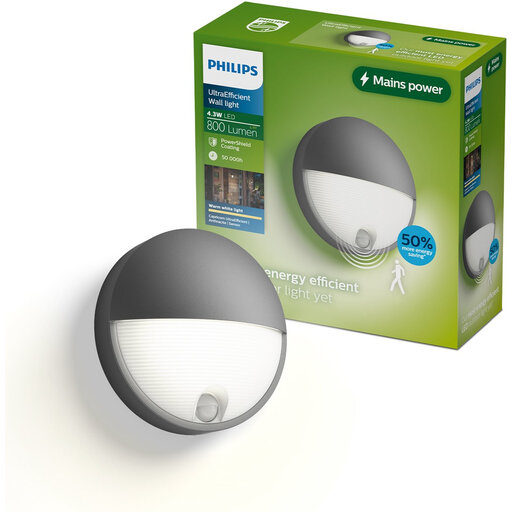
Why it fits this profile: A permanent wall light for an entrance, balcony or garden wall when a wired connection is already available and a compact, modern look is preferred.
The product information separately lists a motion sensor and a dusk sensor, allowing the light to respond not only to movement but also to ambient light.
800 lumens, 2700 K, integrated LED and IP44. The fitting is approximately 21.3 cm high and requires a permanent connection; professional installation is recommended.
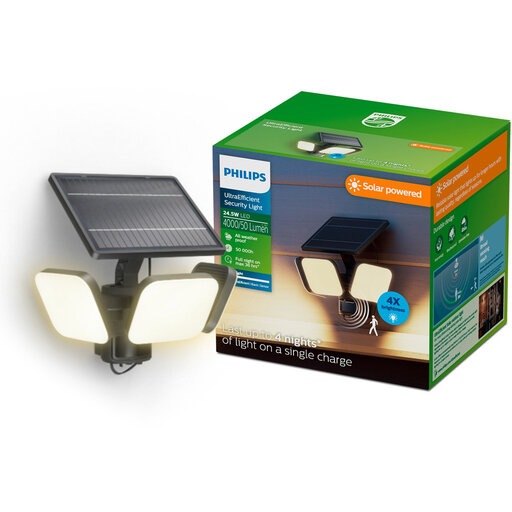
Why it fits this profile: This solar wall light is designed for larger outdoor areas without a power cable, such as a driveway, back garden or side wall.
With IP65, the fitting is, according to the listed specifications, better suited to an exposed location than an IP44 outdoor light. The solar function performs well only in a location with direct daylight.
4000 lumens, 3000 K, two lighting modes and a stated detection range of 8 metres for direct approach and 16 metres from the side.
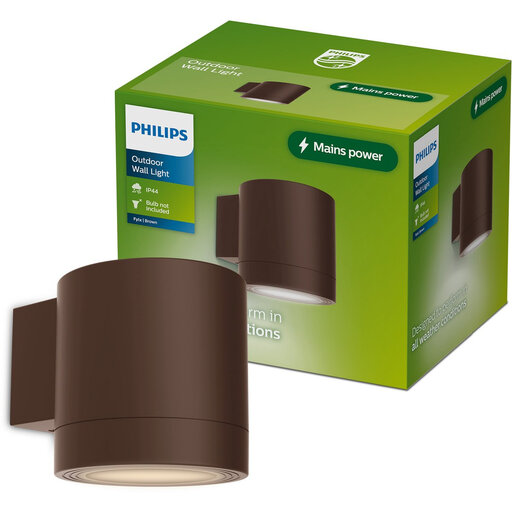
Why it fits this profile: Suitable for anyone who wants to adjust the colour temperature, brightness or smart features later without replacing the entire fitting.
The GU10 light source is selected separately. When purchasing, check whether a bulb is included; this model includes the fitting, but not the GU10 spotlight.
Aluminium housing, one GU10 fitting, IP44 and compact dimensions of approximately 11.6 × 8.9 × 9 cm. A black and a white version are also available.
Browse our current range and compare outdoor lighting by IP rating, fitting, brightness, sensor and power supply.
IP44 is suitable for many sheltered outdoor locations, such as a balcony, covered veranda or façade beneath an eaves. The classification protects against splashing water, but not immersion or powerful water jets. For a completely exposed wall, IP65 may be a more suitable specification.
For orientation lighting by a door, around 300 lumens is often sufficient. For an entrance or garden path, approximately 800 lumens may be more practical. A 4000-lumen model is primarily intended for larger surfaces or targeted security lighting. Also consider the beam angle and mounting height.
A solar wall light does not use mains electricity during normal operation, but the purchase price, battery and performance in low sunlight all need to be taken into account. Clean the solar panel regularly and install the light where it receives direct daylight. Also check how the motion sensor and lighting modes affect runtime.
