
Vandaag of morgen in huis

Kwaliteit gegarandeerd

Welkomstaanbiedingen ontgrendelen: GRATIS bezorging | Tot 80% korting | Gratis 30 dagen JoyPlus-proefperiode
Download de app
An outdoor wall light can make an entrance safer, create a more pleasant ambience on a patio or make a dark driveway easier to see. Yet it’s easy to be disappointed with a purchase. The light may be dimmer than expected, the solar battery may run out quickly or the fitting may not be suitable for the light source you want to use.
So don’t just consider the colour and shape. Light output, IP rating, power supply, sensor and fitting all help determine whether an outdoor wall light is right for your home and how you plan to use it.
More LEDs don’t automatically mean better lighting. For practical brightness, lumens are the most relevant measure. A compact 180 or 300-lumen accent light serves a different purpose from a security light rated at 1,000 lumens or more.
As a guide:
A very bright light can be intrusive at a small entrance. Consider the colour temperature, too. 2,700–3,000 kelvin usually gives a warm white light, while 4,000 kelvin looks more neutral. Check the product listing for the UME light carefully: it states 7,000 kelvin, which may look much cooler in practice than warm white light.
Many outdoor lights are rated IP44. The first 4 means protection against solid objects larger than 1 millimetre. The second 4 means protection against splashing water from different directions. So an IP44 outdoor light is suitable for normal outdoor use, but it shouldn’t be submerged or exposed to direct jets of water for prolonged periods.
For an exposed façade, a spot that gets a lot of rain or a larger solar outdoor light, IP65 can offer greater protection against dust and water jets. The installation location still matters: fit the light according to the manufacturer’s instructions and make sure water can’t collect around the housing.
A solar wall light works without fixed wiring, but its battery still needs to charge during the day. Under a balcony, beside a tall fence or on a north-facing wall, the light may not stay on as long in practice, particularly on dark winter days.
So check:
A solar outdoor light is handy for rented homes, balconies, garden paths and places without a power point. There’s no need to run a cable to the wall. However, how long it stays lit and how bright it is will depend on sunlight, battery capacity and the mode you choose.
A fixed 230-volt wall light offers predictable performance, but it must be connected safely. If you’re unsure, have a hard-wired outdoor light installed by a qualified installer. Switch off the power before carrying out any maintenance.
An outdoor light with a motion sensor switches on when it detects movement. That’s useful by a front door, driveway or garage, and can help prevent the light from being left on unnecessarily. Check the detection range and angle. A sensor pointing towards a busy pavement may switch on more often than you’d like.
A dusk or daylight sensor makes sure the light only operates when there’s little ambient light. Solar wall lights sometimes combine these features with automatic and constant-light modes.
With a GU10 outdoor wall light or E27 outdoor light, you can replace the light source and choose the colour temperature and brightness yourself. Always check the maximum wattage and whether the light is supplied without a bulb.
With integrated LED outdoor lighting, the light source is built into the fitting. This often makes for a compact design, but it may not be possible to replace just the LED. So check the stated lifespan, light output and warranty terms. Lifespan claims come from the brand’s product information and aren’t a guarantee for every use case.
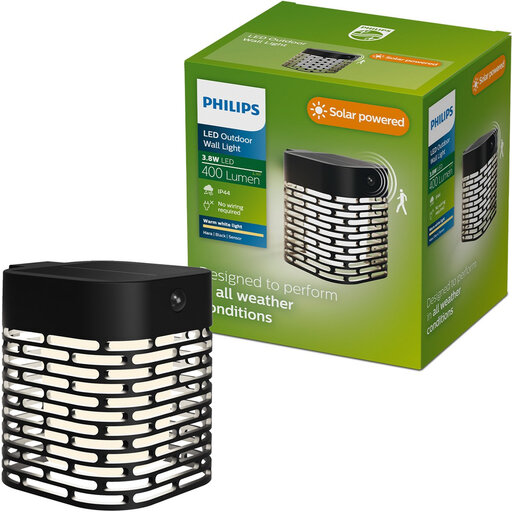
Why it suits this type of user: This solar wall light works without a mains connection and has a compact housing, making it suitable for an entrance, balcony or small patio.
Its 400-lumen output and two modes make its purpose clearer than a marketing claim about having lots of LEDs. IP44 means protection against splashing water, not complete waterproofing.
Solar-powered, integrated LED, 2,700 kelvin and a stated IP44 rating.
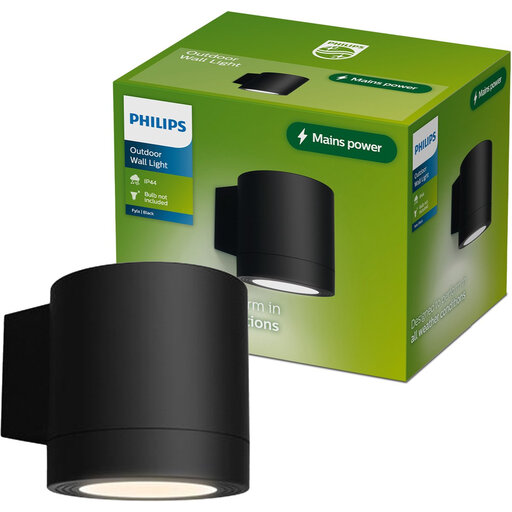
Why it suits this type of user: This outdoor wall light is a good choice if you want to select your own GU10 LED and coordinate the look with your façade, balcony or garden wall.
The GU10 fitting is clearly specified and the light source can be replaced. Bear in mind that the light is supplied without a GU10 bulb.
Aluminium housing, one GU10 light point, downward-facing light and an IP44 rating according to the product details.

Why it suits this type of user: For a driveway, garage, spacious garden or patio, wide light coverage with motion detection is more practical than a small accent light.
The product information states a detection range of 60 feet, a 180-degree angle and three lighting modes. Its IP65 rating offers more protection than IP44, but it still needs to be installed somewhere that gets enough sunlight.
Three adjustable light heads, a stated output of 3,000 lumens, 270-degree coverage and a 1,800 mAh lithium-ion battery.
We’ve put together a complete, up-to-date list of products that meet these strict selection criteria and the applicable European safety requirements.
Mount the outdoor wall light on a solid surface and use wall plugs suitable for brick, concrete or wood. If it has a fixed connection, make sure the power is switched off. An E27 or GU10 bulb must not exceed the fitting’s maximum wattage.
Clean the solar panel regularly with a soft, slightly damp cloth. Don’t clean an IP44 light with a pressure washer. Also check the screws, cable entries and fixings after periods of strong wind.
Yes, IP44 protects against splashing water and solid objects. It’s suitable for many façades, entrances, balconies and sheltered patios. A higher IP rating may be more suitable for places exposed to direct jets of water or harsher conditions.
For accent lighting, 180 to 400 lumens is often enough. For an entrance or driveway, 400 to 1,000 lumens is a good guide. You may need more for lighting a wide outdoor area. A motion sensor helps ensure brighter light only switches on when movement is detected.
A solar outdoor light doesn’t use mains electricity during normal use. Its performance will still depend on the amount of sunlight, the battery, the temperature and the lighting mode you choose. Keep the solar panel clean and install the light somewhere that gets as much direct daylight as possible.
