
Vandaag of morgen in huis

Kwaliteit gegarandeerd

Welkomstaanbiedingen ontgrendelen: GRATIS bezorging | Tot 80% korting | Gratis 30 dagen JoyPlus-proefperiode
Download de app
An outdoor wall light can make an entrance, balcony, garage or patio more practical to use. However, a purchase can sometimes disappoint in practice. For example, a light may provide less illumination than expected, fail to fit the existing connection or not be suitable for the location where you want to install it.
So don’t just consider the colour and shape. The light source, IP rating, installation method and position of the solar panel are just as important in determining whether an outdoor wall light is right for your situation.
An IP44 outdoor light is protected against solid objects larger than 1 millimetre and splashing water from different directions. This does not mean that the light can withstand immersion, a pressure washer or prolonged direct jets of water. IP44 may be suitable for a sheltered façade, balcony or covered patio. For a completely exposed wall, it is worth considering a higher IP rating.
A solar outdoor light works without a mains connection, but the panel still needs to receive enough direct daylight. Under a deep overhang, between tall fences or on a north-facing wall, the battery may not charge properly. Also check whether the light receives enough daylight during winter. A motion sensor helps to limit energy consumption, but it cannot solve the problem of a poorly positioned solar light.
With a GU10 outdoor light or E27 outdoor light, the light source is not always included. This gives you greater freedom of choice, but increases the total purchase price and means you need to check the maximum wattage. An integrated LED outdoor light is ready to use straight away, but the light source usually cannot be replaced by the user.
For a fixed connection, the power must be switched off, and installation by a qualified electrician is advisable. A magnetic or rechargeable light is easier to install, but you should check that the surface and fittings can safely support its weight.
Light output is measured in lumens (lm). For atmospheric lighting beside a patio or balcony, a lower light output may be sufficient. For an entrance, driveway or garage, you will generally want more practical illumination. Also consider the colour temperature:
A motion sensor is useful by a front door or garage, but check that its detection angle and range are suitable for your wall.
The IP code consists of two digits. The second digit refers to protection against moisture. IP44 means protection against splashing water, not complete waterproofing. Install this type of light according to the product information and avoid locations where water can collect.
Also consider the material. Aluminium, plastic, glass and metal each have different characteristics in terms of appearance, weight and maintenance. A black plastic housing may be lightweight and easy to clean; aluminium often creates a different look, but requires sturdy installation.
A mains-powered light works as long as the switch or sensor is receiving power. A solar outdoor light does not need a cable connected to the mains, but it depends on sunlight and a battery. Clean the solar panel regularly and check the fittings.
A rechargeable light gives you greater flexibility when positioning it. However, you will need to recharge it periodically. An integrated LED requires little maintenance, but always check whether the light source can be replaced before buying.
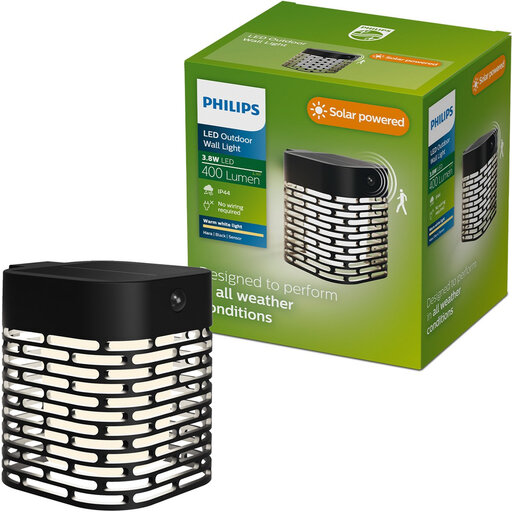
Why it suits this profile: This solar outdoor light works without wiring and offers two lighting modes. That makes it suitable for a balcony, garden path or entrance where no power point is available.
The specifications clearly state IP44, an integrated LED and a motion sensor. However, install the light where the solar panel receives direct daylight.
400 lumens, warm white light at 2700 K, two lighting modes and no mains cable required.
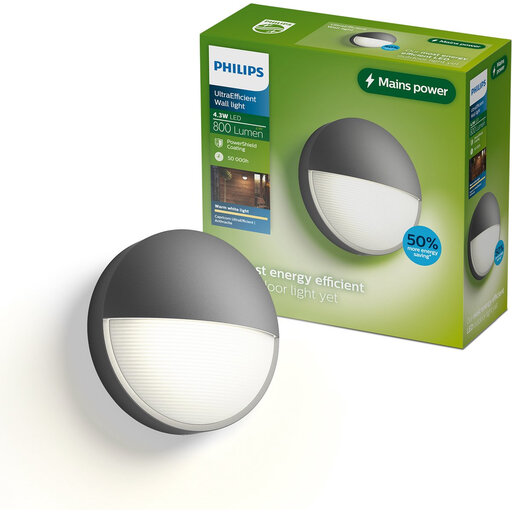
Why it suits this profile: This fixed LED outdoor light is ideal if you are looking for a compact, modern light for a façade, balcony or garden and do not want to choose a separate fitting.
The product information states 800 lumens, 2700 K and IP44. However, the light requires a fixed connection and professional installation.
Integrated LED, 800 lumens, 2700 K and an aluminium housing according to the product description.

Why it suits this profile: With three adjustable heads, this solar lighting is designed for larger areas such as a driveway, garage, patio or spacious garden.
The stated IP65 rating offers greater protection against dust and water than IP44. According to the product information, direct sunlight on the panel remains important.
302 LEDs, a stated light output of 3000 lumens, three modes and a detection angle of 180 degrees.
We have put together a complete, up-to-date list of products that fully meet these strict selection criteria and the applicable European safety regulations.
That depends on the installation location. IP44 provides protection against splashing water and is often suitable for a sheltered façade, balcony or covered patio. The rating does not mean that the light is waterproof. Avoid direct jets of water and locations where rainwater can collect.
During normal use, a solar outdoor light does not use electricity from the mains. According to the product information provided by the brands concerned, the battery is charged via the solar panel during the day. Operating time depends on sunlight, the season, battery condition and the selected lighting mode.
A solar-powered, USB-rechargeable or magnetically mounted light can often be installed without fixed wiring. A mains-powered outdoor light must be connected to the electrical installation. Switch off the power and, if in doubt, have the work carried out by a qualified electrician. Also always check the supplied installation instructions and the fitting’s maximum wattage.
