
Vandaag of morgen in huis

Kwaliteit gegarandeerd

Welkomstaanbiedingen ontgrendelen: GRATIS bezorging | Tot 80% korting | Gratis 30 dagen JoyPlus-proefperiode
Download de app
An outdoor wall light may seem easy to choose, but small differences can determine how well it works in practice. A light may look stylish, but be awkward to install, not provide enough light or be unsuitable for the place where you want to put it.
Three common pitfalls are worth watching out for:
For many covered entrances, balconies, patios and exterior walls, IP44 is a relevant rating. This level of protection guards against splashing water from different directions, but it doesn’t make an outdoor wall light suitable for places where it is constantly exposed to water.
Ideally, install the light on a stable wall and make sure water can’t collect around the fitting. Always check the product description for details of where it can be used. An IP44 wall light may be suitable for outdoor use, but the exact installation location still matters.
Choose between an integrated LED module and a replaceable light source:
Look at lumens rather than wattage alone. The lumen figure tells you how much light the product is specified to emit. A lower brightness is often enough for atmospheric garden wall lighting; an entrance or dark passageway may benefit from more light.
A mains-powered outdoor light is connected to the electricity supply. If in doubt, have the electrical installation carried out by a qualified installer, and switch off the power before installation.
A solar wall light doesn’t need a power cable, but its solar panel needs enough direct daylight. Shade from a canopy, tree or tall fence can affect how well it charges. A light with a motion sensor only switches on when it detects movement, so check the sensor settings and installation height.
For a rented home, balcony or temporary setup, a rechargeable light with magnetic mounting may be more practical. If you choose one, make extra sure the surface is flat, clean and sturdy enough.
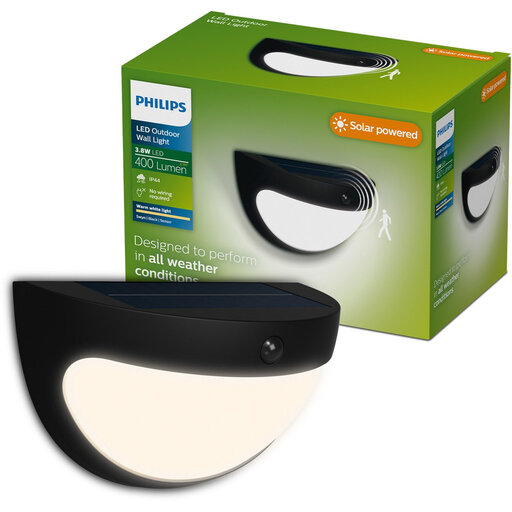
Why it suits this profile: This solar wall light works without fixed wiring and has a motion sensor. That makes it suitable for an entrance, shed or patio where you want to add lighting quickly.
The product information specifies an IP44 rating, two lighting modes and a sensor. Do make sure it gets enough direct sunlight and is protected from direct jets of water.
No mains connection needed; integrated LED with two settings; stated light output of 400 lumens per light source.
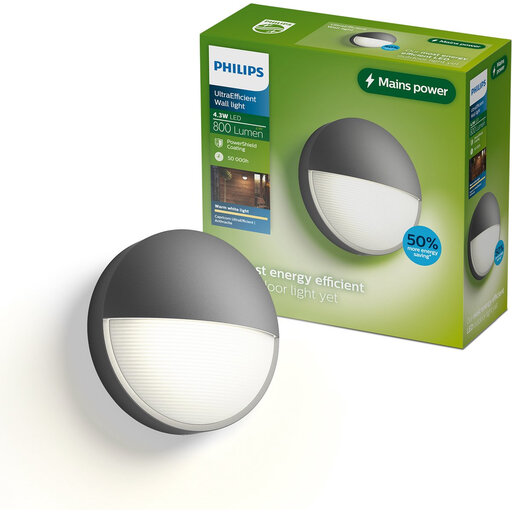
Why it suits this profile: Made from aluminium and plastic, this fixed wall light is for anyone who wants integrated lighting on an exterior wall, garden wall or balcony for the long term.
The specifications state the IP44 rating, the required type of installation and that the integrated LED module is non-replaceable. You’ll know in advance that you can’t replace just the light source.
800 lumens, warm white light at 2700 K and a stated lifespan of up to 50,000 operating hours, according to the product information.

Why it suits this profile: This outdoor wall light is designed for places where brighter light and automatic activation are useful, such as a driveway, back garden or entrance.
The light’s specifications clearly state 1000 lumens, 3000 K, a dusk sensor, a motion sensor and IP44. This makes it easier to assess the brightness and choose the right location in advance.
Solar-powered with no fixed cable; two lighting modes; integrated LED with a stated light output of 1000 lumens.
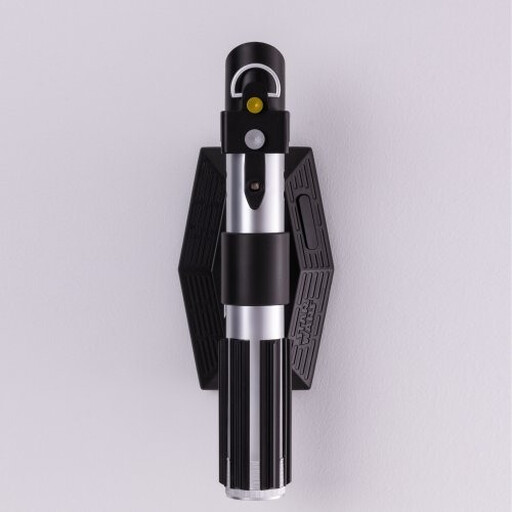
Why it suits this profile: This battery-powered decorative wall light is ideal for a bedroom, gaming corner or themed entertainment space. You don’t need to position it near a power socket.
The product description clearly states that it is battery-powered and for indoor use. This helps you avoid buying a decorative light for a wet outdoor location.
LED lighting; battery-powered; approximately 28 × 9,1 cm; mounting materials are included, according to the product information.
Before you buy, measure the available wall space and check whether you’ll need cables, connection points or mounting materials. For a fixed balcony or patio wall light, make sure the wall is suitable for the supplied or chosen mounting materials.
Clean solar panels and light fittings with a soft cloth. Don’t use abrasive products. Once installed, check that the light is securely fixed. If it has a motion sensor, it’s a good idea to test its range and on-time temporarily before settling on its final position.
We’ve put together a complete, up-to-date list of products that meet these strict selection criteria and the applicable European safety regulations.
IP44 protects against splashing water and solid objects. This makes it suitable for many exterior walls, entrances and covered patios. The light must not be immersed and isn’t designed for direct jets of water. Always follow the installation instructions for the specific model.
A solar wall light uses energy stored in its integrated battery while it is switched on. It doesn’t need a fixed connection to the electricity supply. However, how well it works depends on the amount of daylight it receives, where it is positioned and how the sensor is used.
A solar or battery-powered model can often be installed without an electrical connection. For a light connected to 220–240 volts, it’s advisable to have it installed by a qualified electrician; if in doubt, this is essential. Switch off the power before working on any wiring or fitting.
