
Vandaag of morgen in huis

Kwaliteit gegarandeerd

Welkomstaanbiedingen ontgrendelen: GRATIS bezorging | Tot 80% korting | Gratis 30 dagen JoyPlus-proefperiode
Download de app
An outdoor solar wall light with a motion sensor may seem straightforward to choose. However, models vary considerably in brightness, detection range, moisture protection and operating time. A light that shines brightly beside the front door in a product photo may charge less effectively in a shady garden. A high lumen rating also does not automatically mean that the light is suitable for every situation.
Pay particular attention to these common pitfalls:
Brightness is measured in lumens (lm). As a guide:
Colour temperature is measured in kelvin (K). Warm white light at 2700 or 3000 K creates a softer look for wall lighting in gardens and patios. 4000 K is more neutral, while 5000 K appears noticeably whiter. So do not choose based on brightness alone. Consider the intended purpose: orientation, entrance lighting, ambience or a solar security light.
An IP44 solar light is suitable for general outdoor use in a location where it will not be fully exposed to heavy rainfall or jets of water. Ideally, install the light beneath a sheltered wall, balcony edge or canopy.
An IP65 solar light offers greater protection against dust and jets of water according to the IP classification. This makes this type of weather-resistant outdoor light more suitable for a more exposed wall or a location where rain falls directly on the housing. IP65 lights should still not be immersed, and the installation instructions should be followed.
Before buying, check:
A wireless outdoor light is practical for rented homes, sheds and walls without an existing power connection. However, wireless does not mean that it can be installed anywhere: without sufficient daylight, the battery may not last as long. Keep the solar panel clean and regularly check that the wall mounting is still secure.
The selection below is based on the stated product specifications, such as lumens, colour temperature, IP rating and sensor functions. Brands may make additional claims about lifespan, charging performance or operating time. This information is not presented here as an independently verified result.

Why it suits this profile: This black solar outdoor light provides 400 lumens per light point, warm white light at 2700 K, a motion sensor and two light modes. That makes it a straightforward choice for a first installation at an entrance, on a balcony or on a small patio.
The stated 400 lumens and 2700 K provide a clearer picture than a general claim about brightness alone. The IP44 classification makes it clear that a sheltered installation is advisable.
Two light modes, integrated motion sensor, black plastic housing and installation without a connection to the mains electricity supply.
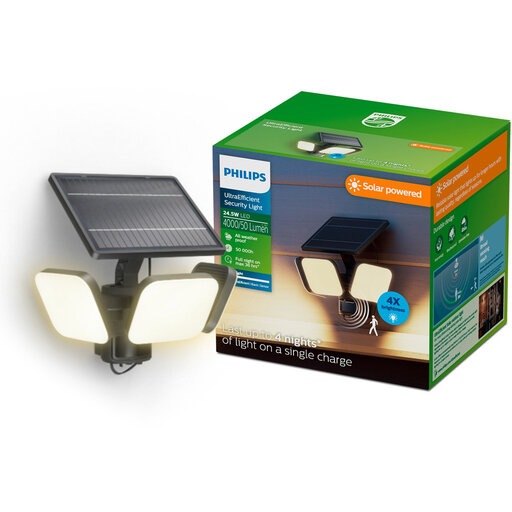
Why it suits this profile: For a larger driveway, exposed wall or broad garden area, the stated light level of 4,000 lumens is significant. The adjustable light head and IP65 rating offer greater flexibility than a compact atmospheric light.
The product specification states both the light level and the sensor range: 8 metres when approached directly and 16 metres when approached from the side. This makes it easier to match the light to its intended location.
IP65, 4,000 lumens, PIR motion sensor, adjustable head and two light modes according to the product information.
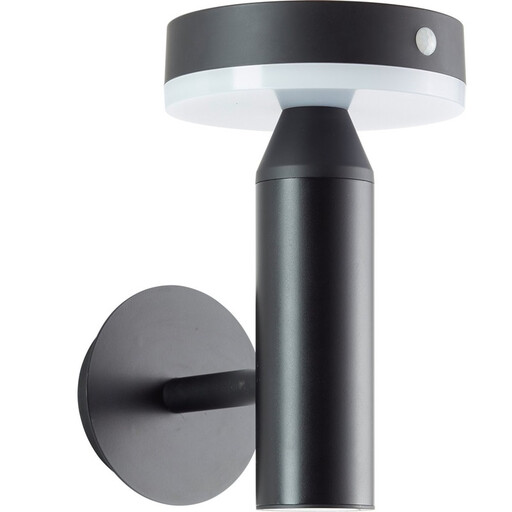
Why it suits this profile: This black outdoor light combines 350 lumens with a neutral colour temperature of 4000 K and a 120-degree motion detection angle. It is well suited to a garden path, patio or side entrance where quick orientation is important.
The 120-degree angle is stated explicitly. At the same time, the IP44 rating makes it clear that installation in a relatively sheltered location is the sensible choice.
350 lumens, 4000 K, 120° motion detection, integrated battery and metal/plastic housing.
A solar light works without a permanent mains connection, but its performance depends on sunlight, battery condition, temperature and operating mode. Always check the product specifications and take local conditions into account.
We have put together a complete, up-to-date list of products that fully meet these strict selection criteria and the applicable European safety regulations.
It can be, but operating time may be reduced by shorter days, cloudy weather and lower charging performance. Position the panel as far from shade as possible and keep it clean. When buying, check whether the manufacturer provides information about battery capacity and operating time.
Lifespan varies depending on the battery, LED module, housing and conditions of use. Some product descriptions state a theoretical light-source lifespan of, for example, 25,000 hours. This is not the same as a guaranteed total lifespan for the light. The integrated battery is also a separate component.
During normal use, an outdoor solar light does not draw electricity from the mains. The solar panel charges the internal battery during the day. Costs may still arise from purchasing, maintaining or replacing components. The light is therefore energy-efficient to use, but not completely independent of sufficient daylight.
