
Vandaag of morgen in huis

Kwaliteit gegarandeerd

Welkomstaanbiedingen ontgrendelen: GRATIS bezorging | Tot 80% korting | Gratis 30 dagen JoyPlus-proefperiode
Download de app
An outdoor solar wall light with motion sensor can automatically illuminate a dark driveway, façade, balcony or garden entrance without a cable connected to the mains. However, some buyers find that performance falls short after a few months. The light receives too little sunlight, the sensor reacts in the wrong place or the IP rating is misinterpreted.
As a Joybuy Product Recommendation Officer, I filter the most important product specifications and compare them with typical use in a Dutch garden or home environment. This helps you choose a solar light for outdoor use more confidently, without relying solely on marketing copy.
A weather-resistant IP44 wall light is protected against splashing water from various directions. This makes it suitable for normal outdoor use, for example under a canopy, on a façade or beside a balcony. However, IP44 does not mean that the light can be submerged or withstand a powerful direct jet of water.
Therefore, do not install the light where rainwater can collect for long periods. Also check that the wall and mounting surface are suitable for outdoor use.
An outdoor solar-powered wall light needs to receive enough daylight during the day to charge its built-in battery. A north-facing wall, a location beneath a covered balcony or a façade with heavy shade can reduce the operating time. In winter, the days are shorter and light levels are often lower.
So do not focus only on the appearance. Check whether the panel can be positioned towards a relatively open, bright area. Keep the surface free from leaves, dust and bird droppings.
Lumens indicate the total light output. A 500-lumen light will generally provide stronger illumination than a 180-lumen model, but the light distribution, mounting height and colour temperature also affect the result. Bright neutral light can be practical for an entrance. On a patio, warm white outdoor lighting is often more relaxing.
A motion sensor also prevents the light from operating at full brightness all night. However, check the detection range and available lighting modes. Not every wall light with a motion sensor offers the same settings.
Pay attention to how the light responds:
A sensor works most effectively when aimed at the route people take. Do not mount the light too high or behind an obstruction. A sensor that mainly detects traffic on the road or moving branches can drain the battery more quickly.
Colour temperature is expressed in kelvin:
Also compare the number of lumens. A small LED wall light for the garden with 180 lumens may be sufficient for a narrow path. For a wider façade or driveway, 350 to 500 lumens is more suitable, depending on the mounting location.
Check whether the battery is integrated and what type is specified. On some models, the battery is not designed to be replaced by the user. This is important information when considering the expected service life.
Wireless outdoor lighting is easy to install, but the surface must be strong enough. Use suitable fixings for brick, concrete, wood or cladding. Clean the solar panel regularly with a soft, dry cloth. Always follow the manufacturer’s safety instructions.

Why it suits this profile: This model combines straightforward wireless installation with two lighting modes, an integrated motion sensor and 400 lumens per light source. This makes it suitable for a front door, balcony or small patio.
The IP44 rating is clearly stated. The light is splash-resistant, but is not designed for submersion. Positioning it in direct sunlight remains essential.
2700K warm white light, two lighting modes, integrated LED and installation without a mains cable.
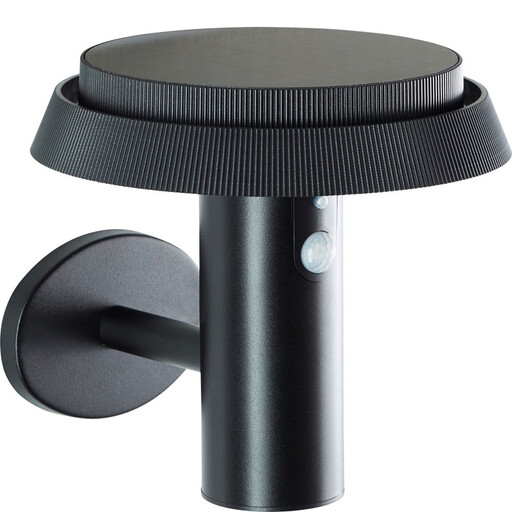
Why it suits this profile: With 500 lumens and 3000K, this model is aimed at anyone wanting a clearly illuminated entrance, façade or driveway. It measures approximately 21 × 20 × 18,2 cm.
The product information states both the light output and the 3000K colour temperature. This makes it easier to match the expected light to the installation location.
500 lumens, solar power, motion sensor, integrated LED and IP44 splash protection.
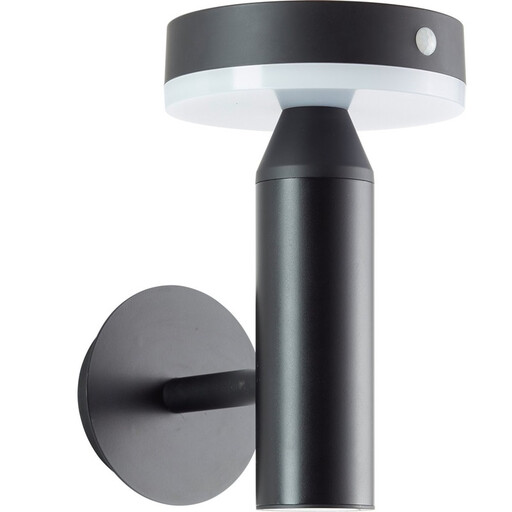
Why it suits this profile: According to the product information, this model has a motion detection angle of 120 degrees and 350 lumens. This suits a wider passage, garden path or patio where movement may come from several directions.
The detection angle and IP44 rating are specified. Bear in mind that IP44 provides splash protection, not protection against submersion.
350 lumens, 4000K neutral white light, dimming function, integrated battery and metal/plastic housing.
Solar garden lighting with IP44 is particularly suitable for façades, balconies, patios and sheltered garden paths. For locations exposed to direct jets of water or prolonged heavy rain, a higher protection rating may be more appropriate; check the official product specifications for guidance.
We have put together a complete, up-to-date list of products that fully meet these strict selection criteria and the applicable European safety regulations.
This depends on the amount of sunlight, battery capacity, temperature and number of activations. The motion sensor helps limit energy consumption because the light does not remain at full brightness continuously. In the darker winter months, the operating time may be shorter.
A model with IP44 is resistant to splashing water, but must not be submerged or exposed to direct jets of water. Mount the light securely and follow the manufacturer’s safety instructions.
The light uses energy stored in the solar panel during the day. This means that no fixed connection to the mains is required. In practice, its performance still depends on sufficient daylight and proper panel maintenance.
