
Vandaag of morgen in huis

Kwaliteit gegarandeerd

Welkomstaanbiedingen ontgrendelen: GRATIS bezorging | Tot 80% korting | Gratis 30 dagen JoyPlus-proefperiode
Download de app
Outdoor solar lights seem simple: put them in place, let them charge during the day and enjoy the light in the evening. In practice, the brightness can sometimes disappoint, a light may become damaged quickly or the design may not suit the spot where you want to use it. The right checks beforehand can help you avoid a poor purchase for your garden, patio, balcony, driveway or path.
A product with dozens of LEDs does not automatically provide sufficient illumination. Look at the light output in lumens. A decorative solar garden light can create a soft glow with just a few lumens, while a solar security light may need hundreds or thousands of lumens to illuminate a driveway clearly.
Also consider the purpose. Warm white solar lanterns or solar garden torches are suitable for creating ambience. For a path, even, gentle lighting is more important than a bright lighting effect.
The designation IP44 means protection against splashing water. This is useful under a canopy or on a sheltered wall, but it is not the same as protection against prolonged rain or direct jets of water. IP65 offers greater protection against dust and water jets, but an IP65 light must not be submerged either.
So, check where you plan to position the light. For open borders, lawns and areas exposed to heavy rain, waterproof outdoor lighting and IP65 solar lights make more sense than a model with IP44.
The stated operating time usually applies under specific conditions, such as a fully charged battery. In the UK, autumn and winter days often provide less direct sunlight. Shade from a fence, tree or house can also reduce charging performance.
Good positioning is therefore at least as important as the battery. Ideally, choose a spot with several hours of direct sunlight and keep the solar panel free from dirt and leaves.
Colour temperature is expressed in Kelvin (K):
For example, the UME solar path lights use 3000K warm white light and provide 10 lumens per light, according to the product specifications. This is suitable for subtle route marking or atmospheric lighting along a border, rather than illuminating an entire driveway.
Many automatic outdoor lights have a light sensor. This switches the light on at dusk and off in daylight. However, check whether the switch needs to be set to “on” before first use. The UME lights are installed using ground spikes, so no wiring is required.
For a solar-powered wall light, the position of the panel is particularly important. A light mounted under a deep canopy may not receive enough sunlight to charge the battery fully. For fixed-mains lighting, such as a GU10 outdoor light, installation by a qualified electrician is required.
Stainless steel, aluminium and robust plastic can all be suitable, but the finish and positioning also affect service life. Look out for:
Solar ground spotlights, solar path lights and solar lanterns each create a different lighting effect. A ground spotlight highlights a tree or façade, while a path light mainly marks the route.
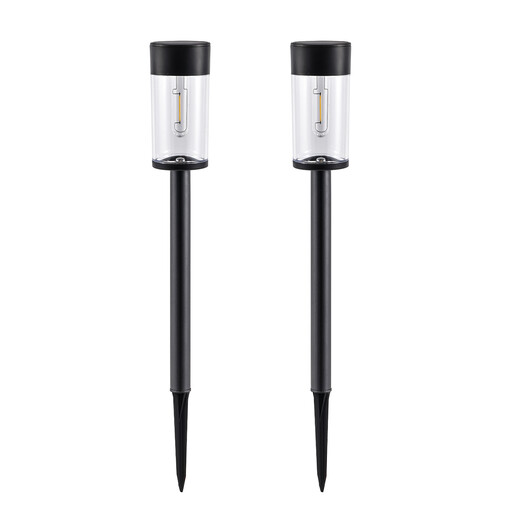
Why it suits this profile: This set is designed for anyone who wants to mark out a garden path, lawn edge or flower bed without cables. Ground installation is straightforward and, according to the specifications, the lights switch on automatically at dusk.
The product specifications state a light output of 10 lumens per light, so you will not mistake its atmospheric function for powerful security lighting. The IP65 rating is suitable for many outdoor conditions, but submersion is still not permitted.
3000K warm white light, two lights per set, IP65 and a stated operating time of 8 to 12 hours after 6 to 8 hours of sunlight.
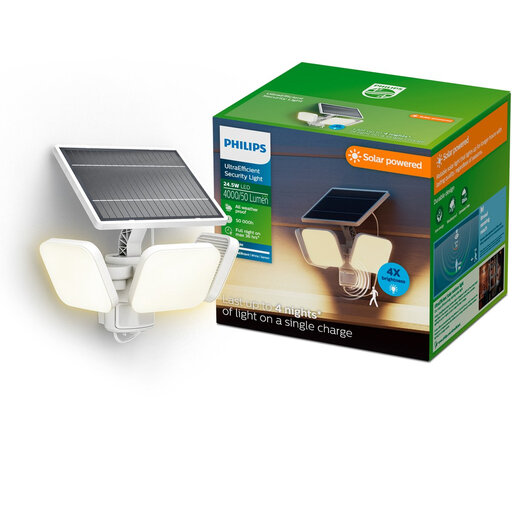
Why it suits this profile: If you are looking for a fixed wall-mounted solution for an entrance, shed or driveway, this model offers a motion sensor, an adjustable head and a stated light output of 4000 lumens.
The IP65 rating and sensor show that this product is designed for practical outdoor lighting. The stated detection range and light output are product specifications; the manufacturer also describes an operating time of up to four nights after a full charge.
4000 lumens according to the product information, 3000K warm white light, PIR detection and two lighting modes.
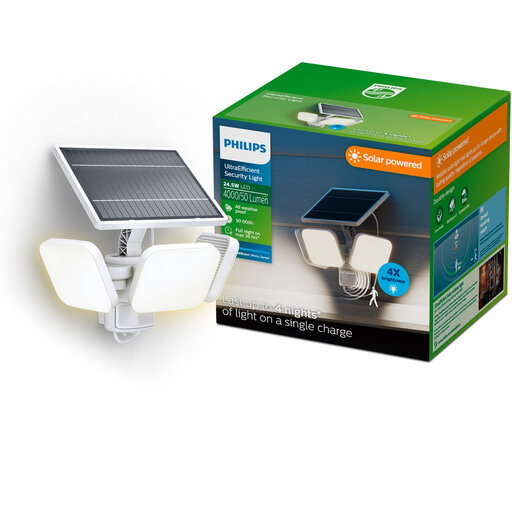
Why it suits this profile: This version is ideal for users who want cool, bright light around a garage, back door or driveway and prioritise visibility over a warm atmosphere.
The 5000K colour clearly distinguishes it from atmospheric lighting. According to the manufacturer, a dusk sensor and motion sensor work together, but the light must be installed in a spot with sufficient direct sunlight.
4000 lumens according to the product information, IP65, adjustable wall mounting and a stated detection range of 8 metres when approached directly.
We have put together a complete, up-to-date list of products that fully meet these strict selection criteria and the applicable European safety regulations.
Solar path lights and low-level solar garden lights are practical for a garden path. Position them at equal distances to avoid dark gaps. A warm white colour helps prevent a harsh look.
Solar ground spotlights are suitable for highlighting trees, planters or a façade. Check the installation or spike depth beforehand and avoid areas where water collects.
Solar lanterns work well on a table, wall hook or wide windowsill. A metal model, such as a 28 cm-high solar lantern, is primarily a decorative choice. Solar garden torches with a flickering light effect add a lively touch along a patio, but are not intended to provide primary lighting.
For a balcony, it is sensible to consider wind, the amount of available sunlight and the fixing options. Freestanding lights are easier to move if you find that the panel is not receiving enough sunlight.
Solar lighting uses energy stored during the day and does not require a fixed mains connection. Running costs while the lights are on are therefore limited to maintenance and any replacement of the battery or product. Actual operating time varies by season and depends on sunlight, temperature, battery capacity and the selected lighting mode.
Clean the panel several times a season with a soft, slightly damp cloth. Check the ground spikes after frost and strong winds. Do not use an IP44 light in a fully exposed location if the manufacturer describes it as suitable only for sheltered outdoor areas.
This varies depending on the battery, LED module, material and operating conditions. Manufacturers sometimes state the service life of the LED source, but this is not the same as the service life of the complete light. Therefore, check the battery, IP rating, warranty and stated operating time separately.
Yes, but usually with a shorter operating time. Shorter days, cloudy weather and the low winter sun provide less charging energy. Position the panel as openly as possible towards the sun and clean it regularly. A model with a motion sensor can save energy because it does not remain on at full brightness continuously.
For basic visibility around an entrance or driveway, a solar wall light with a motion sensor can be suitable. Pay attention to the lumen value, detection range and IP rating. Decorative solar lights with a low lumen output are mainly intended for ambience and marking, not for illuminating a large area or replacing an alarm system.
