
Vandaag of morgen in huis

Kwaliteit gegarandeerd

Welkomstaanbiedingen ontgrendelen: GRATIS bezorging | Tot 80% korting | Gratis 30 dagen JoyPlus-proefperiode
Download de app
A garden light without cables sounds simple, but not every outdoor solar light is suitable for every location. A decorative light for the patio needs different features from a bright outdoor light with a motion sensor for the driveway. So don’t just look at the number of LEDs or the light output. The IP rating, placement, battery and type of light also determine whether your purchase performs well in everyday use.
A high lumen count means that a light can produce a lot of light, but it doesn’t automatically mean your whole garden will be well lit. The light distribution, the angle of the lamp and the position of the solar panel are just as important. For example, a powerful solar security light may be suitable for a driveway, while being unnecessarily bright for a small balcony.
Always check the IP classification. A light with IP44 is protected against splashing water from different directions, but it isn’t designed for immersion or powerful water jets. IP65 outdoor lighting offers greater protection against dust and water jets, and is generally better suited to a more exposed exterior wall or large garden. However, the IP rating doesn’t automatically make a product suitable for every extreme weather condition.
A solar light for a patio, balcony or garden needs enough daylight during the day to charge its battery. Shade from a fence, tree or canopy reduces the charging output. In winter, the days are shorter and sunlight levels are often lower in the Netherlands. So check whether the solar panel receives direct sunlight and whether the stated operating time depends on a fully charged battery.
Light output is measured in lumens (lm). For atmospheric solar garden lighting, a few dozen to a few hundred lumens is often sufficient. For an entrance, garage or driveway, a higher light output may be more practical. Also pay attention to the colour temperature:
An integrated LED solar light generally uses little energy and doesn’t require a separate bulb. However, check whether the LED light source is replaceable. In several models in this category, the LED is integrated and cannot be replaced by the user.
An outdoor light with a motion sensor only switches on when movement is detected. This can help conserve the battery and is useful at an entrance, shed or driveway. Don’t just look for the presence of a sensor; also consider:
A sensor doesn’t respond to every movement in the same way. The mounting height, direction of travel and obstacles all affect how it works.
A solar wall light must be securely attached to a suitable surface. For a solar garden light or stake light, stable, level ground is important. Clean the solar panel regularly with a soft, slightly damp cloth. Also check the mounting and remove any leaves or dirt covering the panel.
For portable lights, pay attention to the difference between solar power and USB charging. Some models aren’t solar lights at all, but use a rechargeable battery charged via USB. This can be practical for mobile use, but the product then belongs under rechargeable outdoor lighting.
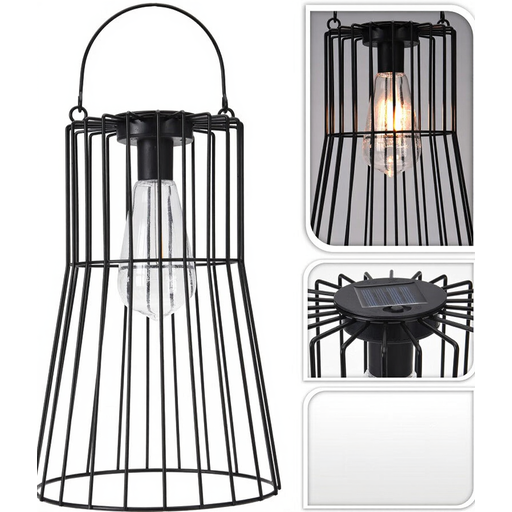
Why it suits this profile: This portable lantern is designed for decorative lighting in the garden, on the patio, balcony or a windowsill. It can stand upright or be hung from its handle.
The product description mentions an automatic dusk sensor and an operating time of up to 6 hours after a full day of charging. Don’t use this light as your primary security lighting.
Powder-coated metal housing, a height of 29.5 cm and an integrated 3V LED, according to the product details.

Why it suits this profile: This solar wall light is ideal for an entrance, shed or exterior wall where automatic lighting is wanted without wiring.
The specifications list a motion sensor, dusk sensor, two light modes and IP44. Position the light in a sheltered spot and avoid direct water jets.
Warm white light at 2700 K, up to 400 lumens per light point and a two-year statutory warranty, according to the product information.

Why it suits this profile: The three adjustable light heads and wide light spread are designed for a garage, large garden, veranda or driveway where greater coverage is needed.
The product details list IP65, three light modes, a detection distance of 60 feet and a detection angle of 180 degrees. When installing it, check that the panel receives direct sunlight.
302 LEDs, a stated light output of 3000 lumens, three light heads and an integrated 1800 mAh battery, according to the product description.
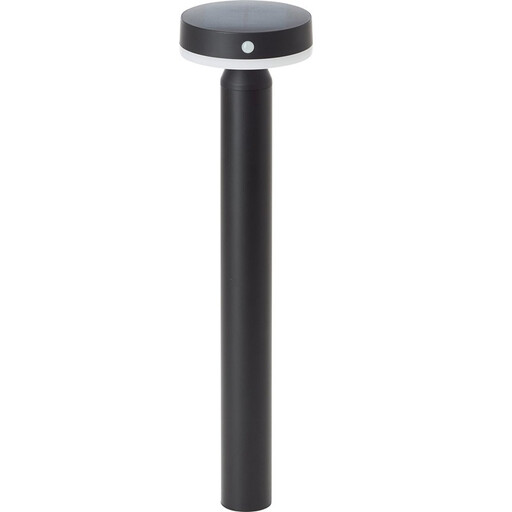
Why it suits this profile: This solar garden light on a pedestal is suitable for a border, path or patio where a permanent, decorative light source is desired.
The IP44 classification makes it clear that this light is protected against splashing water. Place it on a firm, level surface and not somewhere exposed to direct water jets.
A height of 50.2 cm, built-in LED, 350 lumens, 4000 K and a motion sensor, according to the stated specifications.
We’ve put together a complete, up-to-date list of products that fully meet these strict selection criteria and the applicable European safety regulations.
Choose a location where the solar panel receives as much direct sunlight as possible during the day. Don’t point a sensor towards a busy road or moving branches, as this may cause the light to switch on more often. Attach a solar wall light to a sturdy surface and, after installation, check that the beam illuminates the intended area.
Operating time depends on sunlight, battery capacity, temperature, light mode and the age of the battery. A stated operating time is usually based on a fully charged battery under specific conditions. Performance may be reduced in winter. Clean the solar panel and check the battery if the light consistently stays on for less time.
During normal use, energy is stored in the battery via the solar panel during the day. This means no permanent connection to the mains is required. A model with USB charging, such as certain portable rechargeable outdoor lights, does need to be charged via a USB source. So before buying, check whether you’re looking for a genuine solar light or a rechargeable light.
