
Vandaag of morgen in huis

Kwaliteit gegarandeerd

Welkomstaanbiedingen ontgrendelen: GRATIS bezorging | Tot 80% korting | Gratis 30 dagen JoyPlus-proefperiode
Download de app
Outdoor solar lights seem straightforward: place them in the garden, let the solar panel charge during the day and enjoy the light in the evening. In practice, some models can disappoint. A light may receive too little direct sunlight, produce less light than expected or turn out to be unsuitable for an exposed wall.
The main purchasing pitfalls are:
Brightness is measured in lumens (lm). Use these guidelines when comparing solar garden lights:
A warm colour temperature of 2,700K to 3,000K generally creates a softer look. This works well for patio lighting and entrances. 5,000K to 7,000K looks whiter and stands out more for functional lighting. Also check whether the model is dimmable or offers several settings. A motion sensor can prevent a light from operating at full brightness all night.
An IP code consists of two digits. The first digit refers to protection against solid particles; the second relates to water.
A waterproof solar light is not permission to place the product underwater. Always check the safety information and installation instructions for the specific model.
The output of a solar panel depends on the amount of direct sunlight it receives. Place the light somewhere away from tall fencing, trees or overhanging roof edges. For example, the UME pathway light specifies 6 to 8 hours of direct sunlight for optimum charging and a stated lighting time of 8 to 12 hours. According to the manufacturer’s product information, this is an indication under the stated conditions, not a guaranteed duration for every night in the Netherlands.
Also pay attention to:
A solar light with a motion sensor is particularly practical near an entrance or garage. For a garden path, constant, gentle lighting is often more logical than a bright light that only switches on when movement is detected.
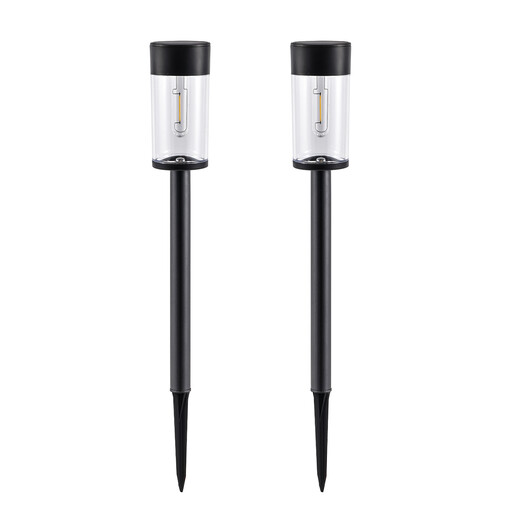
Why it suits this profile: Two ground lights offer a simple way to mark a garden path, border or driveway edge without wiring.
The specifications state 10 lumens per light and IP65. This makes it clear that it is primarily for marking and ambient lighting, rather than acting as a powerful floodlight.
3000K warm white light, automatic on/off function, ground mounting and a stated IP65 rating.

Why it suits this profile: A compact outdoor solar wall light for a façade, balcony or entrance where the option to switch between automatic and manual operation is useful.
The IP44 rating makes its intended use clear: suitable for splashing water, but not for immersion or direct water jets.
400 lumens per light, 2700K warm white light, integrated motion sensor and two lighting modes.
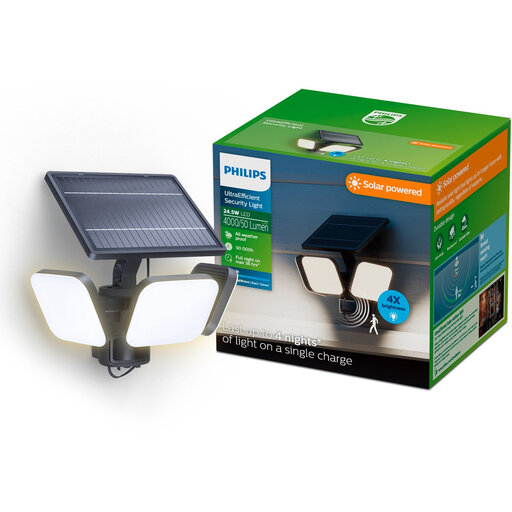
Why it suits this profile: For anyone who wants to illuminate a large area, such as a driveway, garage area or wide façade, with a solar floodlight.
The product information states 4000 lumens, IP65 and a detection range of 8 metres when approached directly and 16 metres from the side. However, check that the installation location allows this coverage.
Adjustable light head, two lighting modes, motion and dusk sensors, and a stated operating time of up to four nights per full charge.
We have compiled a complete, up-to-date list of products that fully meet these strict selection criteria and the applicable European safety regulations.
Lifespan varies depending on the battery, LED module, materials and conditions of use. Manufacturers sometimes state an expected lifespan for the light source, but this is not automatically the lifespan of the complete light. Frost, moisture, dirt and a battery that has not charged sufficiently can affect performance.
Yes, but the runtime may be shorter in winter because of shorter days, less direct sunlight and cloudy weather. Position the panel as openly as possible and keep it clean. A model with a motion sensor generally uses less energy per night than a light that stays on continuously.
During normal use, a solar light does not draw electricity from the mains. The solar panel charges the integrated battery. However, there are circumstances in which the light will run for less time, for example when the battery has not charged sufficiently. When buying, also consider the battery capacity, lighting mode and any timer function.
