
Vandaag of morgen in huis

Kwaliteit gegarandeerd

Welkomstaanbiedingen ontgrendelen: GRATIS bezorging | Tot 80% korting | Gratis 30 dagen JoyPlus-proefperiode
Download de app
Outdoor solar lights seem simple: place the lamp where you want it or screw it to the wall, let the solar panel charge during the day and enjoy the light in the evening. In practice, some models can be disappointing. A lamp may receive too little direct sunlight, have a battery that is too small or produce less light than you need for a driveway.
The right specifications can help you avoid a poor purchase. Below, we explain what to look for in outdoor solar lighting, from a solar wall light to solar ground spotlights, a solar table lamp or a solar string light.
Lumens indicate how much light a lamp produces according to its product specification. A 100-lumen lamp is suitable for atmospheric lighting, but not necessarily for an entrance or dark driveway. For those areas, a model with a higher light output and a motion sensor is often more practical.
Also consider the colour temperature. Around 2700 to 3000 K produces warm white light for a patio or balcony. 6500 K to 7000 K looks much cooler and brighter, making it more suitable for functional lighting around a shed, garage or back door.
IP44 outdoor lighting is protected against splashing water and solid objects of a certain size. This is suitable for many sheltered outdoor locations, but not for immersion or places where the lamp is continuously exposed to powerful water jets.
An IP65 solar lamp offers greater protection against dust and water jets. IP65 does not mean that the lamp can be used underwater. Also check whether the solar panel, connection and housing have the same protection rating.
An outdoor solar light needs sufficient daylight during the day to charge its integrated battery. Shade from a canopy, tree or north-facing wall can reduce the operating time. In the Netherlands, sunshine, cloud and short winter days alternate throughout the year. A model with USB charging can therefore be useful as a supplement to solar power.
First consider what you want to use the lamp for:
A sensor is not always necessary for decorative solar garden lighting. By an entrance or back door, however, a sensor can provide greater convenience.
Check the battery type, capacity and charging method. An integrated lithium-ion battery is common in LED solar lights. Some models charge exclusively through the solar panel, while others combine solar power with USB charging. The latter option offers greater flexibility after a period of limited sunshine.
The stated operating time is a guideline. Actual performance depends on the number of hours of sunlight, panel orientation, temperature, brightness setting and the selected sensor function. A lamp that needs to stay on all night requires a different approach from one that only comes on briefly when movement is detected.
Plastic is lightweight and practical for a solar wall light. Metal can offer a different appearance, but always check the protection rating and fixings. Stainless steel is regularly used for solar ground spotlights and garden path lighting.
Keep the panel free from leaves and dirt. Clean it with a soft, slightly damp cloth and regularly check that wall lights are still securely fixed. A loose or crookedly mounted lamp may charge less effectively and is more likely to cause problems.

Why it suits this profile: This spike light is designed for garden paths, borders and small accents. It requires no wiring and uses a polycrystalline solar panel and NiMH battery.
The specifications state a charging time of 4–6 hours, an operating time of 8–12 hours and an IP44 rating. This makes it clear that it is accent lighting rather than a powerful security light.
Stainless-steel housing, 6500 K colour temperature, stated lifespan of 15,000 hours and a height of 55 cm.

Why it suits this profile: This solar wall light combines an integrated 1000-lumen LED with a motion sensor. It is well suited to an entrance, side path or garage where functional lighting is needed.
The light output and two lighting modes are clearly stated. The IP44 rating also makes it clear that the lamp is splash-resistant, not suitable for immersion.
1000 lumens, 3000 K warm white light, motion sensor and an integrated LED with a stated lifespan of 25,000 hours.

Why it suits this profile: With three adjustable light heads and broad coverage, this model is designed for driveways, patios, garages and larger gardens.
The product specification states 3000 lumens, IP65 and three modes. However, check that the installation location receives enough direct sunlight for the desired performance.
302 LEDs, 3000 lumens, 1800 mAh lithium-ion battery, motion detection and three adjustable light heads.
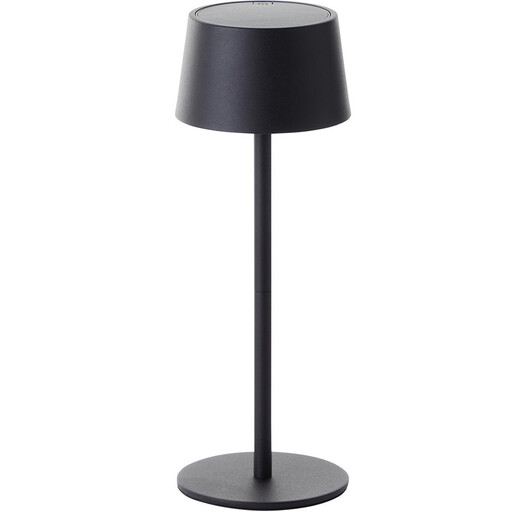
Why it suits this profile: This solar table lamp is suitable for a table, balcony or patio. It can also be charged via USB when there is little sunshine.
The combination of solar and USB charging reduces reliance on sunny days. IP44 also sets a clear limit: splash water, not direct water jets.
170 lumens, 3000 K, three dimming settings, USB charging and two mounting heights.
We have compiled a complete, up-to-date list of products that fully meet these strict selection criteria and the applicable European safety regulations.
Choose a location where the solar panel receives as much direct daylight as possible during the day. Avoid shade from trees, walls and canopies. Aim a solar wall light at the area you want to illuminate and mount it on a sturdy surface. Position spike lights securely along a path or border.
Lifespan varies by model and component. Manufacturers sometimes state an expected LED lifespan, such as 15,000 or 25,000 hours. The battery, solar panel and seals may require maintenance or replacement sooner. Clean the panel regularly and avoid leaving the lamp unnecessarily submerged in water.
During normal use, solar lights draw energy from their solar panel and integrated battery. This means that no permanent electrical connection is required. Models with USB charging can also be charged manually. Actual operating time and charging requirements depend on sunlight, season, light output and the selected mode.
