
Vandaag of morgen in huis

Kwaliteit gegarandeerd

Welkomstaanbiedingen ontgrendelen: GRATIS bezorging | Tot 80% korting | Gratis 30 dagen JoyPlus-proefperiode
Download de app
By Joybuy Product Recommendation Officer, July 28, 2026
Outdoor solar lighting sounds ideal: no hassle with cables, no extra energy costs, and a sustainable choice. Yet, the reality is often more challenging. You enthusiastically buy a set of solar lights, but after a few dark weeks, they only emit a faint glow. Or worse, they stop working altogether after the first major autumn storm.
The problem isn't the technology itself, but the many products that aren't designed for our climate. Before you invest in new solar garden lighting, it's smart to know what to look for. We'll discuss the two most common pitfalls and the specifications that truly matter.
Many solar-powered outdoor lights are promoted with beautiful pictures but fall short in practice. These are the two main reasons why your purchase might be a disappointment.
A common complaint is that solar lights work fine in the summer but barely provide any light in the autumn and winter. This is often due to a combination of a solar panel that's too small and a weak battery. A lamp might have a high light output (lumen) on paper, but if the battery doesn't have enough capacity to store that energy for a long, dark night, it's of little use. Especially in regions with limited winter sun, an efficient panel with a robust battery is essential.
The term "waterproof" is often used, but the IP (Ingress Protection) rating tells the real story. Many cheaper lights have an IP44 classification. This means they are splash-proof, which might be sufficient for a light hanging under a canopy or veranda. However, a solar garden light that is fully exposed to the rain needs more protection. Without a higher IP rating, moisture can penetrate and damage the electronics, leading to a short lifespan.
To avoid a bad purchase, it's best to focus on a few verifiable specifications rather than marketing promises.
These two specifications are inextricably linked. Lumen indicates the brightness of the lamp. For ambient lighting in the garden, a low lumen value (50-150 lumens) is often sufficient. For functional lighting, such as a solar wall light with a sensor by the front door, you'll want to look for something in the 300-1000 lumen range.
The battery capacity, expressed in milliampere-hours (mAh), determines how long the lamp can stay lit. A high-lumen lamp needs a battery with a higher mAh value to last the entire night. A good rule of thumb is to look for a balance that suits your purpose.
As mentioned earlier, the IP rating is crucial for the lifespan of your solar LED outdoor lighting.
By paying attention to these objective features, you can make a choice that is better aligned with the reality of your local weather.
Not everyone needs the same type of lighting. Below are a few options highlighted, linked to a specific user type.
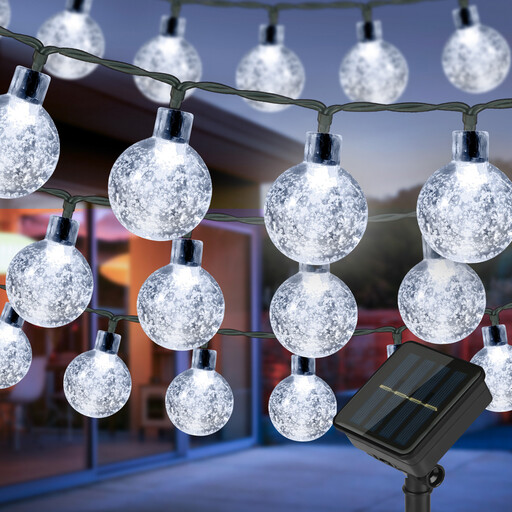
Why This Fits Their Persona: Ideal for anyone looking to add a cosy touch to a balcony, pergola, or fence. This outdoor solar string light is purely decorative, creating a warm atmosphere with its 60 LED bulbs for long summer evenings or festive occasions.
With an IP65 rating, this string light is designed to withstand heavy rain, unlike many decorative lights with a lower IP rating.
The 8 different light modes give you the freedom to adjust the atmosphere. Installation is simple: place the panel in the sun and hang the string.

Why This Fits Their Persona: This solar wall light with sensor is focused on functionality. Perfect for illuminating a driveway, back door, or dark path. The lamp provides a bright light when motion is detected, ensuring safety and visibility.
The motion sensor is the key to winter efficiency. The lamp doesn't stay on at full power constantly but only activates when needed. This saves a significant amount of battery, allowing it to function even after a cloudy day.
With 1000 lumens, this lamp provides a serious amount of light. The installation is wireless, and the lamp is made from durable materials that can withstand various weather conditions.
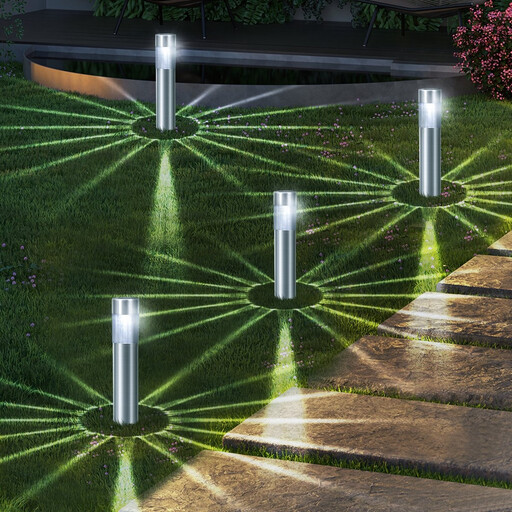
Why This Fits Their Persona: For those who want to mark a garden path, border, or flowerbed without any fuss. This solar garden light is the definition of 'plug-and-play'. No technical knowledge required, just a patch of ground.
This stake light has low power consumption. It's not designed for bright illumination but for orientation. This allows the relatively small battery to power the lamp for a large part of the night, even after a less sunny day.
The biggest advantage is its convenience. You just stick the lamp in the ground, and it works. The IP44 rating is sufficient because the lamp is low to the ground, and the main electronics are housed within the casing.
This is just a selection. There are more types of outdoor solar lighting that meet the criteria for a challenging climate.
Yes, but performance heavily depends on quality. Cheaper models with small panels and weak batteries will struggle during the winter months. Models with more efficient panels, a larger battery capacity (mAh), and/or a motion sensor perform significantly better because they use their stored energy more economically.
Most solar lights need 6 to 8 hours of direct sunlight to fully charge. Therefore, it's important to position the solar panel in a spot where it will receive the most sun, ideally facing south and free from the shade of trees, fences, or buildings.
The lifespan is primarily determined by the battery and the LED. The LED bulbs themselves often last for thousands of hours. The rechargeable battery is usually the component that wears out first. In quality models, the battery will last for several years. The water resistance (IP rating) is also a determining factor for the overall lifespan. A lamp that is well-protected against moisture will last longer.
