
Vandaag of morgen in huis

Kwaliteit gegarandeerd

Welkomstaanbiedingen ontgrendelen: GRATIS bezorging | Tot 80% korting | Gratis 30 dagen JoyPlus-proefperiode
Download de app
An outdoor solar light with motion sensor can illuminate an entrance, driveway, balcony or garden path without running a power cable to the façade. Yet many buyers find that, after a few months, the light output is disappointing, the battery is flat or the sensor responds too slowly. The cause is often not the solar panel itself, but incorrect positioning or comparing incomplete specifications.
This buying guide helps homeowners, tenants and garden enthusiasts assess marketing claims against verifiable product information.
A lamp with a high lumen output can provide bright light, but that does not automatically mean that a large area will be illuminated evenly. Also consider the beam angle, whether the lamp head can be adjusted and where the sensor is positioned. For a balcony or front door, 400 to 1,000 lumens may be sufficient. A wider driveway may benefit from more light.
Also pay attention to the operating mode. A lamp that only switches to full brightness briefly when movement is detected uses less energy than one that remains at maximum brightness throughout the night.
The IP rating indicates which environmental influences the housing is protected against. An IP44 outdoor light is protected against splashing water and is suitable for many sheltered façades, balconies and patios. Do not install this type of lamp where direct jets of water or prolonged exposure to driving rain are likely.
An IP65 lamp offers greater protection against dust and water jets. However, it must not be submerged either. Always check the installation instructions and make sure water cannot enter through any openings.
A PIR sensor responds to changes in heat radiation, such as when someone walks past. A sensor may respond less reliably if it points directly towards the direction of movement, is positioned behind glass or is constantly triggered by branches, pets or traffic.
Check the following before buying:
Lumens (lm) indicate the total luminous flux. An LED outdoor light producing 300 to 500 lumens is suitable for orientation and ambience. Models around 800 to 1,000 lumens provide more functional light by a front door or patio. A solar security light with 4,000 lumens is intended for a much more brightly illuminated area.
Colour temperature is expressed in Kelvin (K):
A wall light with a dusk sensor switches on as the surrounding light fades. A motion sensor then determines when the brightness or operating time changes. These two functions complement each other, but they are not the same.
A solar lamp operates independently of mains electricity, but charging performance depends on direct sunlight. Do not therefore place the solar panel beneath an overhang, close to a tall fence or in the shade of a tree. In winter and during prolonged periods of cloudy weather, the operating time may be reduced.
According to Philips’ product description, the UltraEfficient Zyren can provide up to four nights of illumination when the battery is fully charged. This is a usage time specified by the manufacturer and is not a guarantee for every type of weather in the Netherlands.
Clean the solar panel regularly with a soft, damp or dry cloth, depending on the instructions. Do not use abrasive products and do not attempt to open a built-in lithium battery yourself.
Wireless outdoor lighting or an outdoor lamp without wiring is particularly useful for rented properties and locations without an existing connection point. However, check that the wall is strong enough to support the lamp’s weight and use the supplied mounting hardware.
A product such as the Aigostar PIR-360 is not a solar lamp, but a motion sensor for lighting and other loads. This model operates on mains voltage and must be installed in accordance with the relevant regulations. For permanent electrical installation, switch off the power and have work on the electrical system carried out by a qualified installer.
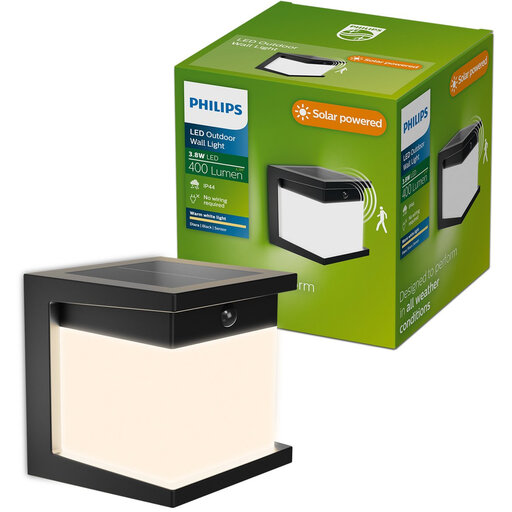
Why it suits this profile: A compact solar wall light for outdoor use, with 400 lumens, warm 2,700 K light and two lighting modes. Suitable for a balcony, garden path or sheltered entrance where no cable is available.
The IP44 rating makes it clear that the lamp is protected against splashing water, not submersion. This puts the need for a mounting location with direct sunlight front and centre.
400 lumens, integrated LED, motion sensor and installation without wiring.
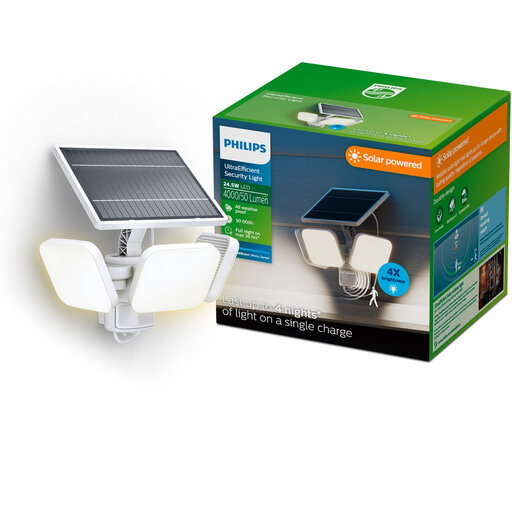
Why it suits this profile: This outdoor solar light with motion sensor combines 4,000 lumens, IP65 protection and an adjustable lamp head. The 5,000 K colour temperature is suitable for a driveway or wide entrance where clear visibility is desired.
The product specifications list the light output, IP rating and detection distance separately: 8 metres for direct approach and 16 metres for sideways movement.
4,000 lumens, IP65, two lighting modes and an adjustable lamp head.
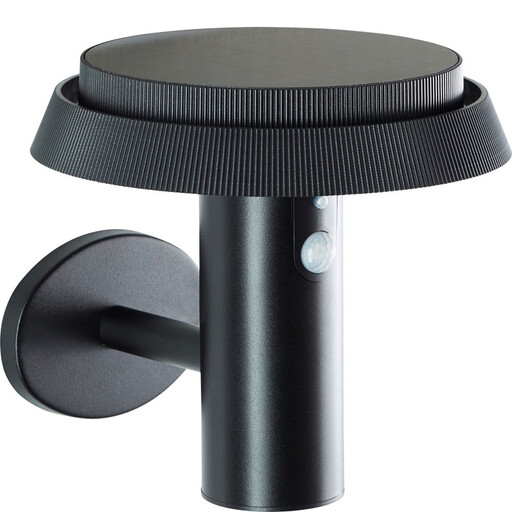
Why it suits this profile: A metal and plastic wall light with an integrated LED, 500 lumens and warm white 3,000 K light. A practical choice for a patio, garden path or entrance, with a modern black housing.
The IP44 rating is clearly stated. This tells you that the lamp is suitable for splashing water, but not for direct water jets or submersion.
500 lumens, 3,000 K, dimmable function and integrated motion sensor.
We have compiled a complete, up-to-date list of products that fully meet these strict selection criteria and the applicable European safety regulations.
For a front door, install the lamp at a height that allows the sensor to monitor the approach clearly, while keeping it out of children’s direct reach. Do not point the sensor towards a busy road or moving shrubs. After installation, check both the detection distance and the desired operating time.
For a solar panel, a clear location with as much direct daylight as possible is more important than a position that simply looks good. Before drilling, set up a temporary test installation and observe where shadows fall throughout the day. In a rented property, a compact battery- or USB-powered lamp with magnetic mounting can be an alternative, provided the surface can safely support its weight.
Its lifespan depends on the battery, LED module, charging conditions and exposure to the weather. Manufacturers sometimes state an estimated LED lifespan, but that does not automatically indicate how long the battery will last. Clean the panel, avoid prolonged shade and follow the maintenance instructions.
A solar lamp does not use electricity from the mains during normal operation. The battery is charged via the solar panel. However, there may be costs for replacing components or the battery when it loses capacity over time.
IP44 is suitable for many sheltered outdoor locations, such as a balcony, covered entrance or façade. For an exposed location with greater exposure to rain, a higher IP rating may be more suitable. Also check the mounting angle and prevent the lamp from standing in puddles or stagnant water for prolonged periods.
