
Vandaag of morgen in huis

Kwaliteit gegarandeerd

Welkomstaanbiedingen ontgrendelen: GRATIS bezorging | Tot 80% korting | Gratis 30 dagen JoyPlus-proefperiode
Download de app
An outdoor sensor light is a smart addition to any home. It offers convenience when you arrive home in the dark, deters unwanted visitors, and can add ambiance to your garden or balcony. But the market is flooded with options, and not every light delivers on its promise. Many people fall into the same traps, resulting in a lamp that fails after just a few months or simply doesn't work as expected.
As a Joybuy Product Recommendation Officer, I'm here to help you see through the marketing jargon. Below, we'll discuss the most common mistakes and what you really need to look for, so you can make a purchase you'll enjoy for years to come.
Before you make a choice, it's important to know where things often go wrong. Pay attention to these three points to avoid a bad purchase.
You don't need to be a technical expert to make the right choice. Focus on these three specifications, and you'll be in a much safer position.
The IP rating indicates the degree of protection against dust and water. For outdoor lighting, this is one of the most important features.
The choice of power source depends on your situation and preferences.
The function of the light determines the brightness and colour you need.
Based on these criteria, we have selected a number of products that suit different user profiles.

Why This Fits Their Persona: Ideal for those who want to create a cosy atmosphere on their balcony or patio. The light is solar-powered, so you can easily place it wherever you want without cables. The warm white light (2700K) provides an inviting ambiance.
This Philips lamp is designed for reliable performance. The solar technology is efficient, so you won't be left with a dead battery. The IP44 rating is appropriate for its intended use in sheltered locations.
Runs on 100% solar energy (no electricity costs) and provides atmospheric warm white light. Simple, wire-free installation.
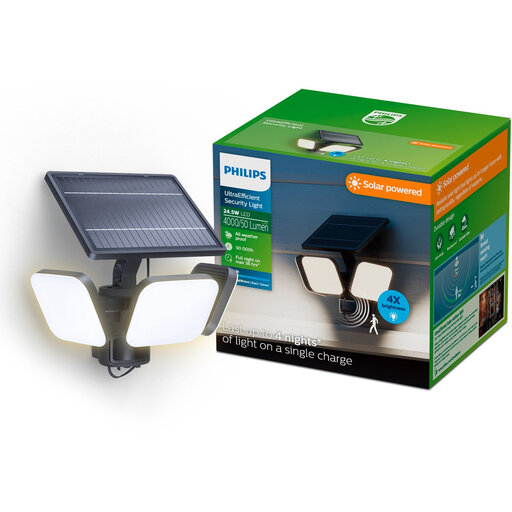
Why This Fits Their Persona: For those seeking maximum visibility and security. With 4000 lumens and bright daylight (5000K), this lamp effortlessly illuminates an entire driveway or backyard. The focus is purely on functionality and deterrence.
With an IP65 rating, this lamp is built for exposed installation. The superior sensor has a large and reliable detection range (up to 16 metres), avoiding the pitfall of a poor sensor. The battery is powerful enough for several nights of light.
Very high light output (4000 lumens) and a wide detection range for maximum security. Efficient solar technology ensures reliability.

Why This Fits Their Persona: Perfect for anyone who doesn't want to deal with installation. This lamp is wireless, rechargeable via USB, and has a magnetic mount. Ideal for renters, camping, or anyone who wants flexibility without drilling.
This lamp bypasses the pitfalls of wiring (mains power) and sunlight dependency (solar). It's a clear, no-nonsense solution for temporary or flexible lighting. The IP44 rating is sufficient for its intended use.
Completely wireless and rechargeable via USB. The magnetic mount makes installation and relocation incredibly easy.
We have compiled a complete, up-to-date list of products that fully meet these strict selection criteria and safety regulations.
This depends heavily on the quality. A good solar-powered outdoor light has an efficient solar panel and a battery with enough capacity to bridge several dark days. Models from well-known brands, like the Philips Zyren, can provide light for up to four nights on a single full charge, according to the manufacturer. Cheaper models often fall short of this.
A dusk-to-dawn sensor (also called a day/night sensor) detects the amount of ambient light. It ensures the lamp only activates when it's dark, to save energy. A PIR (Passive Infrared) sensor is a motion sensor. It reacts to the body heat of people or larger animals that enter its detection field. Most outdoor sensor lights combine both for smart and efficient operation.
That depends on the power source. You can almost always install a solar outdoor light or a battery-powered model yourself. You just need to drill a few holes to hang the lamp. A lamp on mains power (230V) requires more knowledge. If you're not confident working with electricity, it's wise to hire an electrician.
