
Vandaag of morgen in huis

Kwaliteit gegarandeerd

Welkomstaanbiedingen ontgrendelen: GRATIS bezorging | Tot 80% korting | Gratis 30 dagen JoyPlus-proefperiode
Download de app
An outdoor sensor light seems like a simple purchase. It should turn on when you get home and deter unwanted guests. Yet, many people end up with a light that causes more frustration than convenience. As a Product Recommendation Officer at Joybuy, I see where things often go wrong. Before you make a choice, it's wise to be aware of a few common pitfalls.
Many disappointments can be traced back to three issues:
Fortunately, these problems can be avoided by paying attention to the right specifications.
Marketing terms can be confusing. Therefore, focus on the actual specifications. These three points determine whether an outdoor sensor light is a great asset or a waste of money.
The IP rating indicates how well a light is protected against dust and water. This isn't just a detail; it's a crucial factor for its lifespan in our climate.
A higher IP rating means a more durable light that can handle the changing seasons.
Not every light serves the same purpose. The amount and colour of the light determine its function.
An LED outdoor light with a motion sensor combines a low energy bill with a long lifespan, regardless of the lumen or kelvin rating.
The power source determines the installation and reliability.
Based on these criteria, we have selected a few products that suit different needs and situations.

Why This Fits Their Persona: This user wants maximum visibility on their driveway, in the back garden, or in dark corners. Safety and deterrence are the priority. This light offers a very high light output without the hassle of cables.
Philips's efficient solar panel technology is designed to perform even with less sunlight. The IP65 rating guarantees it can withstand heavy rainfall, and the wide detection range prevents 'blind spots'.
Very high light output (4000 lm) and a wide detection range (up to 16 metres) for maximum security. It's solar-powered, so there are no installation costs.
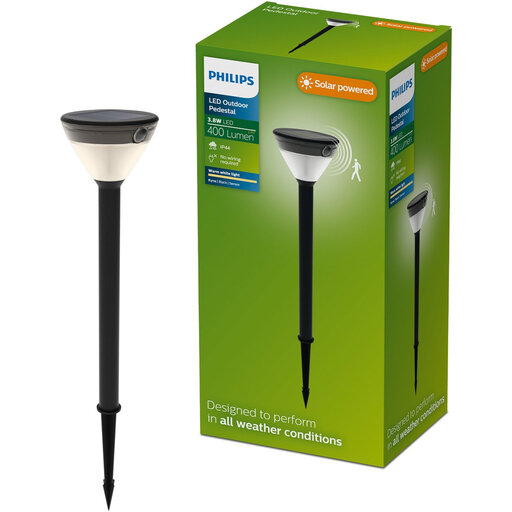
Why This Fits Their Persona: This user wants to create a warm, cosy atmosphere in the garden or on the patio. Ease of installation is important; no fuss with cables, just stick it in the ground and you're set.
This light is specifically designed for ambience, not bright security. The IP44 rating is sufficient for most spots in the garden. The focus is on atmosphere and convenience, not extreme performance.
Very simple installation with the included ground stake. The warm white light (2700K) creates an inviting atmosphere. It runs entirely on solar power.
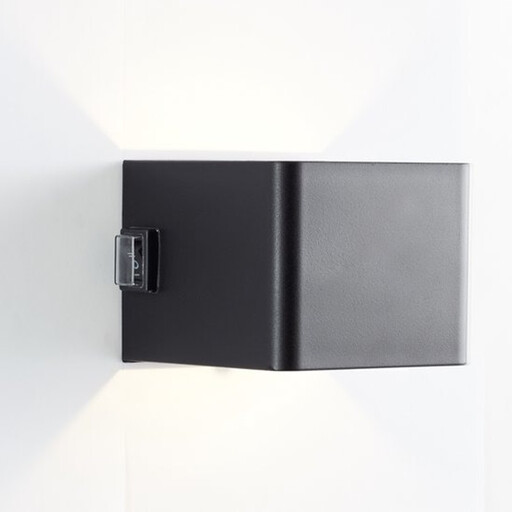
Why This Fits Their Persona: Perfect for a balcony, shed, or under a covered patio where there's no power outlet. This user doesn't want to drill holes and is looking for a solution that's easy to move and recharge.
This wireless outdoor light isn't dependent on the sun, so it can provide reliable light anywhere. You can easily detach it to charge indoors via USB, ensuring you're never left in the dark with a dead battery.
Wireless, rechargeable, and extremely flexible to mount thanks to its magnetic attachment. No drilling or cables required.
We have compiled a complete, up-to-date list of products that fully meet these strict selection criteria and safety standards.
This depends heavily on the quality of the solar panel, the battery capacity, and the amount of direct sunlight. Cheaper models may struggle after a dark day. Models from brands like Philips are often equipped with more efficient panels and batteries that, according to the manufacturer, can last for several nights on a full charge, even with less sun.
An outdoor light with a dusk-to-dawn sensor automatically turns on when it gets dark and off when it gets light. A motion sensor (often a PIR sensor) reacts to movement. Many outdoor lights combine both: the dusk-to-dawn sensor activates the light in a dimmed mode after dark, and the motion sensor then brings it to full brightness upon detection.
In most modern outdoor lights, the LED light source is integrated. This means you cannot replace the bulb itself. This design ensures better waterproofing and a longer overall lifespan. The lifespan of integrated LEDs is often 20,000 to 50,000 operating hours, which translates to many years of use.
