
Vandaag of morgen in huis

Kwaliteit gegarandeerd

Welkomstaanbiedingen ontgrendelen: GRATIS bezorging | Tot 80% korting | Gratis 30 dagen JoyPlus-proefperiode
Download de app
An outdoor sensor light seems like a simple purchase. It turns on when you come home and deters unwanted visitors. Yet, many people end up with a light that fails after a single autumn season, or a sensor that reacts to the neighbour's cat but not to you. As a Joybuy Product Recommendation Officer, I see where things often go wrong. Before you make a choice, it's wise to understand the common pitfalls.
The three biggest mistakes when buying an outdoor light:
solar-powered outdoor lighting sounds ideal, but budget models often have a weak panel and a small battery. After a cloudy day, they provide only a few hours of dim light.A good outdoor light with motion sensor is an investment in convenience and security. Let's look at the specifications that really matter.
Marketing terms mean little. The technical specifications on the box tell the real story. Focus on these three points to make a durable and functional choice.
The IP rating indicates how well a light is protected against dust and water. This is not an afterthought, but a crucial factor for its lifespan.
For a wall-mounted outdoor sensor light that isn't installed under an overhang, a rating of IP54 or higher is recommended.
The choice between solar power and mains power depends on the location and your needs.
Not all light is the same. The function of the lamp determines what you need.
outdoor security light intended to illuminate a driveway or back garden, a high value (e.g., 1000 lm or more) is desirable. For ambient lighting by the front door or on the balcony, 300-500 lm is often sufficient.garden lighting with a sensor or by the front door.An LED outdoor light with a sensor is the standard nowadays, due to its long lifespan and low energy consumption.
Based on these criteria, we have selected a number of products that suit different needs and situations.

Why This Fits Their Persona: Ideal for those who want to powerfully illuminate a driveway, back garden, or dark corner. This lamp combines the benefits of solar energy with the performance of a serious security light.
With an IP65 rating, it is completely weatherproof. The efficient solar technology and large battery prevent the 'dim light' pitfall, even after dark days. The sensor has a wide detection range (up to 16m).
Very high light output (4000 lm) and bright daylight (5000K) for maximum visibility. Simple, cable-free installation.
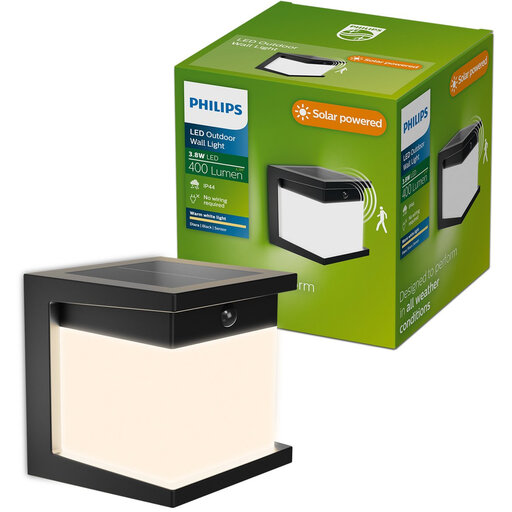
Why This Fits Their Persona: Perfect for those who want to create a cosy atmosphere on the balcony, by the shed, or next to the front door, without the hassle of cables. A durable and stylish choice.
This Philips outdoor light uses an efficient solar panel that performs even on less sunny days. The IP44 rating is sufficient for most sheltered spots, and the UV-resistant synthetic housing won't discolour.
Provides atmospheric warm white light (2700K). Installation is extremely simple: hang it up and you're done. No electricity costs.
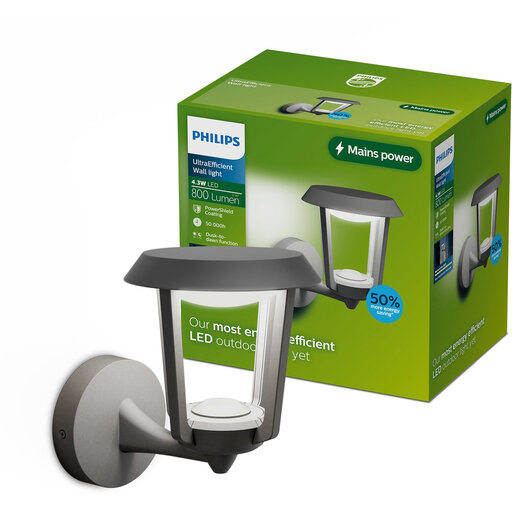
Why This Fits Their Persona: For those who seek absolute reliability and don't want to depend on the sun. This mains-powered light works every time and combines a classic lantern look with modern technology.
Because it's mains-powered, you bypass the dead-battery pitfall. The housing is made of high-quality aluminium with a corrosion-resistant coating, which prevents the 'rust after one season' trap.
Works every time, regardless of the weather. Durable materials and a long lifespan (up to 50,000 operating hours, according to Philips). Provides an inviting warm white light (2700K).
We've compiled a complete, up-to-date list of products that meet these strict selection criteria and local safety regulations.
Yes, but their performance may be reduced. High-quality solar panels, like those on Philips outdoor light models, are designed to charge efficiently even in limited daylight. However, on very dark, short days, the operating time may be shorter than in the summer. Place the light where it will catch the most light during the day.
A major advantage of integrated LED lighting is its lifespan. Many manufacturers, such as Philips, state a lifespan of 25,000 to 50,000 operating hours. With average use, this means the light will last for many years without needing to replace the light source. The housing and the sensor are more often the limiting factors, which is why a good IP rating and choice of materials are so important.
This varies by model. Simpler lights often have a fixed setting. More advanced models have small dials, usually labelled 'SENS' (sensitivity), 'TIME' (how long the light stays on), and 'LUX' (the level of darkness at which the sensor becomes active). These allow you to set the light so it doesn't react to small animals and only turns on when truly needed. Always check the manual for your specific product.
