
Vandaag of morgen in huis

Kwaliteit gegarandeerd

Welkomstaanbiedingen ontgrendelen: GRATIS bezorging | Tot 80% korting | Gratis 30 dagen JoyPlus-proefperiode
Download de app
Peace of mind around your home or business premises is important. A good outdoor security camera can help, whether you want to keep an eye on your driveway, garden, or the entrance to your shop. However, the selection is vast, and the technical specifications can be overwhelming.
My name is Joybuy Product Recommendation Officer. My job is to help you make an informed choice based on factual product features. In this article, we'll discuss what to look for and highlight several popular models that suit different needs and situations.
Before we look at specific products, it's helpful to know which features are important for you. Here are three key points to consider.
Installation starts with the power supply and internet connection.
A camera is only as good as its image. A Full HD (1080p) resolution is the standard today, but models with 2K or 4K offer an even sharper image, allowing you to better zoom in on details like faces or license plates.
A security camera with night vision is essential. There are two common technologies:
Modern cameras can do more than just record. A camera with motion detection sends a notification to your phone as soon as activity is detected. More advanced models can distinguish between people, animals, and vehicles to reduce false alarms.
For monitoring a larger area, such as a wide garden or a parking lot, an outdoor PTZ camera is a compelling option. PTZ stands for Pan-Tilt-Zoom, which means you can remotely pan, tilt, and zoom the camera via the app.
Based on specifications and functionalities, we have selected a few cameras that make a good impression for various applications.
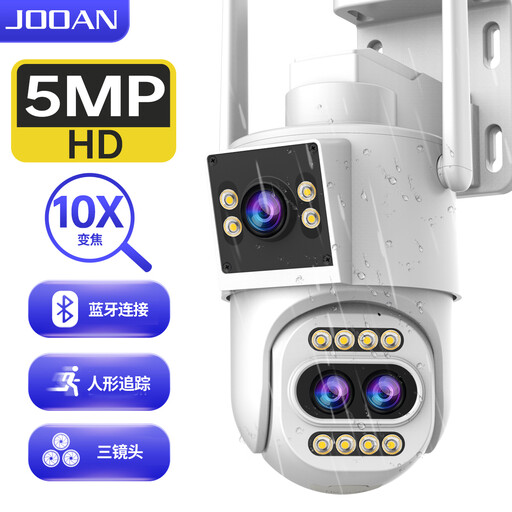
Why It Stands Out: This camera combines three lenses for a unique dual-screen view and, with 10x optical zoom, offers the ability to capture distant details in sharp focus. The PTZ function provides a complete 360° overview.
Pros:
Who Is It For? For homeowners or business owners with a large property, such as a long driveway, a deep backyard, or a parking lot, who need both a wide overview and the ability to zoom in from afar.
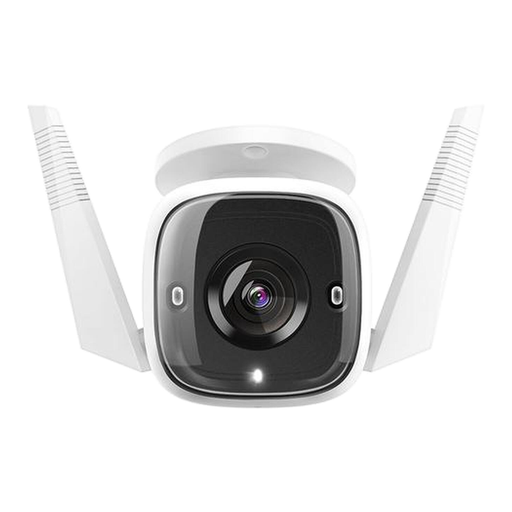
Why It Stands Out: The Tapo C310 from the well-known brand TP-Link is a reliable and accessible all-rounder. It offers a sharp image and the essential features you expect from a modern outdoor camera, in an easy-to-install package.
Pros:
Who Is It For? For anyone looking for a straightforward and reliable outdoor Wi-Fi camera to secure standard locations like the front or back door, without the need for advanced zoom or pan/tilt functions.
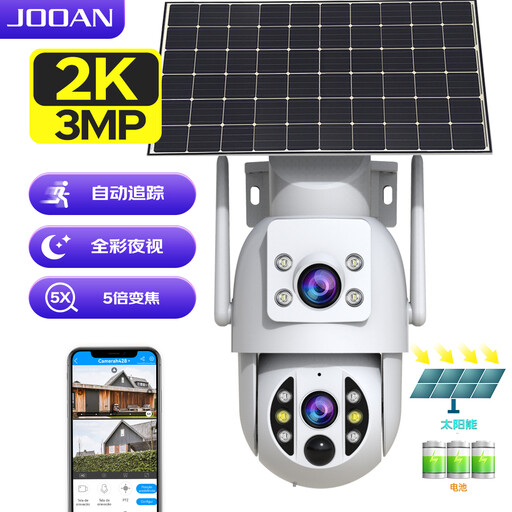
Why It Stands Out: This solar camera is completely wireless and self-sufficient thanks to its built-in battery and the option to connect a solar panel. This makes it perfect for locations where there is no power supply.
Pros:
Who Is It For? Ideal for securing remote spots on a property, such as a shed, garden house, driveway gate, or a corner of the yard where there is no outlet nearby.
Not every situation requires the same solution. The models mentioned above provide a good starting point, but your specific needs may differ. For example, are you looking for a model with specific audio features or a different design?
Then check out our full range of Outdoor Security Camera with Audio Recording for more choices that fit your situation.
1. Do I need a subscription for an outdoor security camera? Not always. Many cameras, like the TP-Link Tapo C310, offer the option to store footage locally on a microSD card. A cloud subscription is then an optional extra for those who want to store footage externally and securely, for example, in case the camera itself is stolen. Always read the product description to see what options are available.
2. What is the difference between a wireless and a wired outdoor camera? A wired camera is connected via a physical cable to both the power grid and the internet (Ethernet). This is very reliable. A wireless outdoor camera connects via Wi-Fi, which offers more placement flexibility. It often still requires a power cable, unless it is a battery-powered security camera. The latter is completely wireless.
3. How does a camera with motion detection work? A camera with motion detection uses software to analyze changes in the image. As soon as enough pixels change, it is registered as motion, and you receive a notification. More advanced systems use PIR sensors (which react to heat) or AI to distinguish between people, animals, and other moving objects, which increases accuracy.
