
Vandaag of morgen in huis

Kwaliteit gegarandeerd

Welkomstaanbiedingen ontgrendelen: GRATIS bezorging | Tot 80% korting | Gratis 30 dagen JoyPlus-proefperiode
Download de app
Securing your property, whether it's your home, garden, or business premises, requires a reliable solution. A quality outdoor security camera can provide essential peace of mind. However, the market is vast, and the specifications can often be confusing. This guide is here to help. We'll cut through the marketing jargon and focus on what truly matters: the specifications and features that fit your specific situation.
The location of your camera determines the best choice. Do you have a power outlet and a strong Wi-Fi signal nearby? Then a Wi-Fi outdoor camera is a practical option. For locations without power or stable internet, such as a remote shed, driveway, or business park, a 4G outdoor camera offers a solution. This type operates on the mobile network. An increasingly popular option is a solar-powered camera. This wireless security camera recharges itself and is ideal for those seeking a sustainable and completely independent solution.
An outdoor camera must be able to withstand the elements. Pay close attention to the IP rating. An IP66 waterproof camera is dust-tight and protected against powerful water jets, making it suitable for any climate. For image quality, resolution is key. Higher resolutions (like 2K or 5MP) provide a sharper image, which helps in identifying details. Good night vision is also indispensable. Some models use infrared (black-and-white image), while others with sensitive sensors can record in colour even at night.
Modern surveillance cameras are often a smart camera with an app. This allows you to watch live footage, review recordings, and receive notifications on your smartphone. Need to monitor a large area? Consider a PTZ camera. PTZ stands for Pan-Tilt-Zoom, meaning you can remotely rotate, tilt, and zoom the camera. Also, think about video storage: locally on a MicroSD card or via a (often paid) cloud service.
Below is a selection of cameras with different specifications, suitable for various situations.
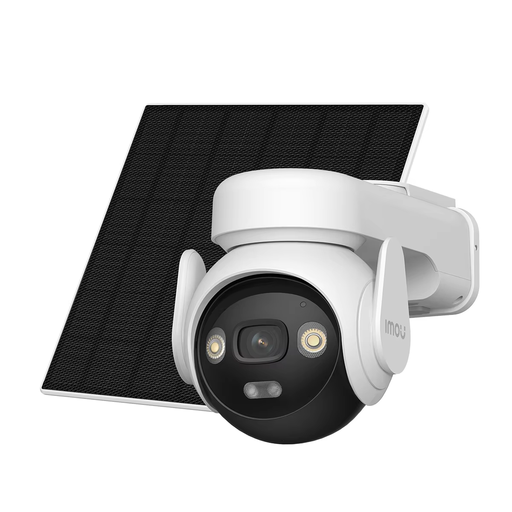
Why it stands out: This camera is designed for complete autonomy. Thanks to the combination of a 5W solar panel, a 10,000mAh battery, and 4G connectivity, it operates entirely independently of the power grid and Wi-Fi.
Key Features:
Who is it for?: Ideal for securing locations without a fixed power or internet connection, such as a holiday home, a large outdoor area, an equestrian centre, or a construction site.
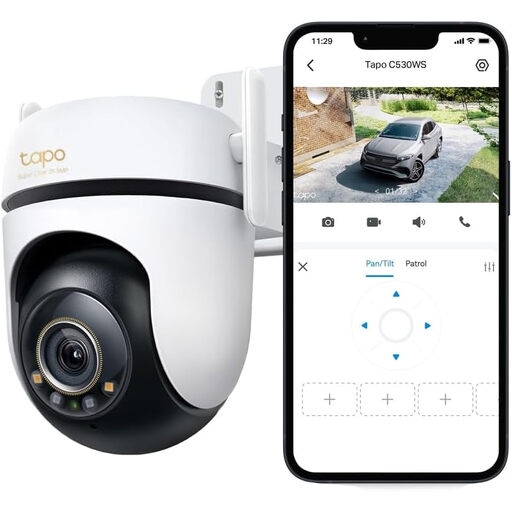
Why it stands out: This camera combines very high image resolution with both wired and wireless connectivity options, making it a flexible and powerful choice for permanent installations.
Key Features:
Who is it for?: A solid choice for homeowners and SMB owners looking for a reliable, fixed outdoor IP camera to monitor a driveway, garden, or entrance, and who value superior image quality.
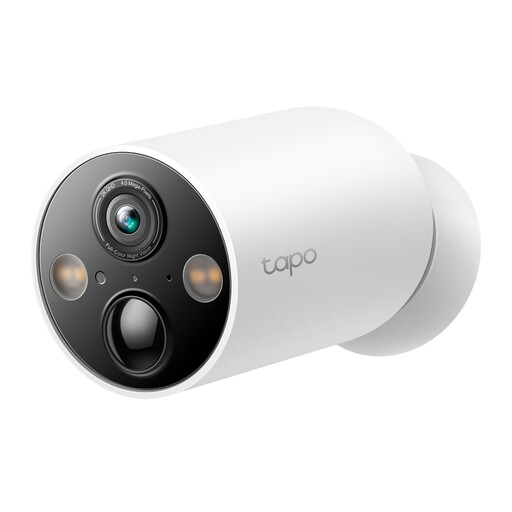
Why it stands out: Ease of installation is the central feature here. This camera is 100% wireless and can be attached to a metal surface in seconds thanks to its magnetic base, or installed with the included wall mount.
Key Features:
Who is it for?: Perfect for users looking for maximum flexibility and ease of installation. Think of renters who are not allowed to drill holes, or for temporarily monitoring a specific spot without the hassle of cables.
Every situation is unique and requires a specific solution. If the options above don't quite match your needs, or if you are specifically interested in models that run on solar power, there is more to discover.
Browse our wider range and find the camera that's right for you.
? Discover more Solar-Powered Wireless CCTV Cameras
An outdoor IP camera is a type of camera that transmits images over a computer network (the Internet Protocol, or IP). Virtually all modern smart cameras are IP cameras. This allows you to view live footage via an app on your phone or computer, wherever you are. Older, analogue systems (CCTV) are often closed circuits without a direct internet connection.
Not always. Basic functions, such as live viewing and receiving motion alerts via the smart camera with an app, are typically free. However, many brands offer an optional paid subscription (cloud service) for extras, such as longer cloud storage of recordings or advanced AI detection (e.g., distinguishing between people, packages, and animals). If you don't want a subscription, choose a camera that supports storage on a MicroSD card.
A solar-powered camera is designed to function even with less sunlight. Its efficiency depends on the size of the solar panel, the battery capacity, and the amount of direct sunlight. During the darker winter months, the battery may charge more slowly. Manufacturers often recommend mounting the camera in a location that catches as much sunlight as possible (south-facing) and using energy-saving settings in the app, such as lowering the motion sensor's sensitivity. Some models, like the IMOU mentioned above, have technology that improves charging in low temperatures.
